You open a message and see three simple letters: “yfm?”
Now you pause.
Is it a typo?
Is it slang?
Is the person asking something… or telling you something?
This tiny phrase shows up everywhere now — in group chats, TikTok comments, Snapchat streaks, gaming chats, and even dating apps.
Because of that, thousands of people search for “yfm meaning in text” every day trying to figure out what someone actually meant.
The confusing part is that YFM can mean slightly different things depending on the situation. Sometimes it’s used to check if someone understands something.
Other times it’s used casually like a friendly “right?” at the end of a sentence.
Modern texting moves fast, and Gen Z slang often drops vowels, shortens phrases, or turns full sentences into just a few letters. That’s exactly what happened with YFM.
In this guide, you’ll learn the exact meaning of YFM in text, how people use it in real conversations, whether it sounds rude or flirty, and how you should reply when someone sends it.
By the end, you’ll never feel confused when you see “yfm?” again.
What Does “yfm meaning in text/” Mean in Text?
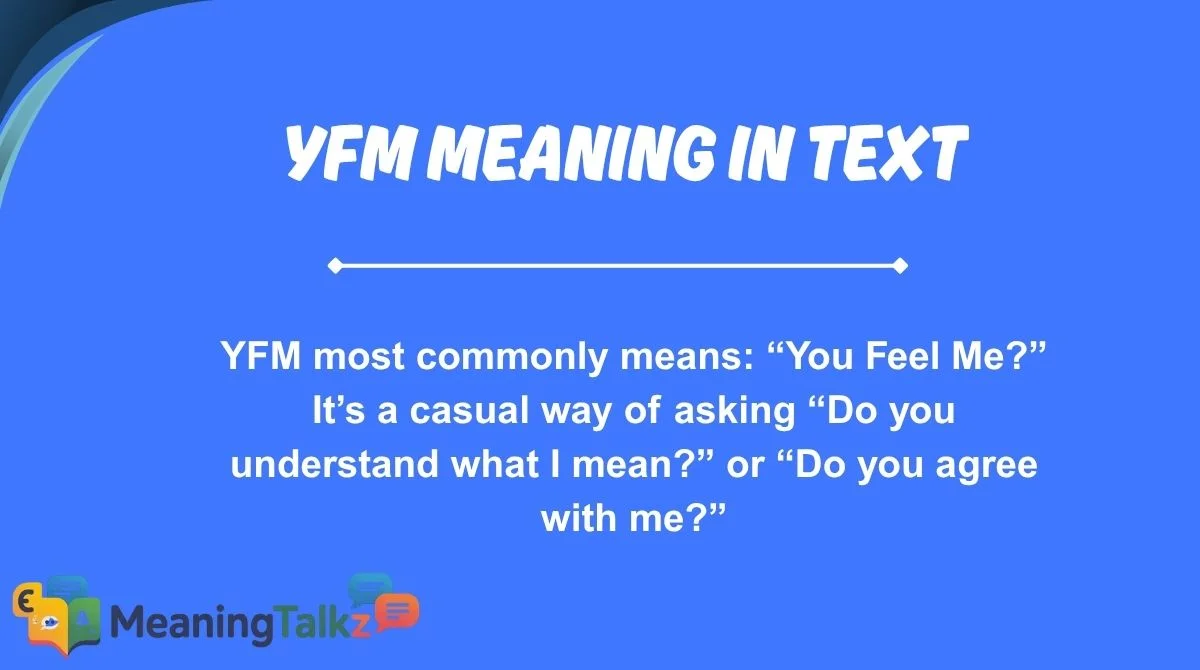
YFM most commonly means: “You Feel Me?”
It’s a casual way of asking “Do you understand what I mean?” or “Do you agree with me?”
People use it to check if the other person gets their point. In some situations it can also mean:
- “Do you get what I’m saying?”
- “Right?”
- “You know what I mean?”
- “You understand?”
The tone is usually friendly and informal.
The Most Common Meanings of “yfm meaning in text/”
Even though “You Feel Me?” is the main meaning, the phrase can carry slightly different tones depending on the conversation.
1. “You Feel Me?” (Checking Understanding)
This is the most common meaning.
The sender wants to know if you understand their point or agree with what they just said.
Example:
“I swear that movie was overrated, yfm?”
Meaning:
“Do you get what I mean?”
Another example:
“You gotta focus on your goals and stop wasting time, yfm?”
Here the person is checking if you understand their advice.
2. “You Know What I Mean?”
Sometimes YFM works like a casual filler phrase people add at the end of a thought.
Example:
“That class was way harder than the teacher said, yfm.”
Meaning:
“You know what I mean.”
It’s similar to saying:
- “Right?”
- “You know?”
- “Get me?”
3. Agreement Check
Sometimes YFM is used to confirm agreement.
Example:
“We should leave early so we avoid traffic, yfm?”
Meaning:
“Does that make sense?”
This version invites the other person to confirm or respond.
4. Friendly Emphasis
In casual conversations, it can just add personality.
Example:
“That pizza place is the best in town, yfm.”
Here it adds a relaxed tone rather than asking a real question.
How “yfm meaning in text/” Is Used in Real Conversations
Understanding slang is easier when you see how people actually use it.
Friends & Casual Texting
Among friends, YFM appears often.
It’s quick, casual, and relaxed.
Examples:
“I’m telling you that game is addictive, yfm?”
“Late night snacks always hit different, yfm.”
“Life’s easier when you stop caring about drama, yfm.”
In these chats, it simply means:
“Do you get what I mean?”
Instagram & Snapchat
On social media, people use YFM in captions, comments, or replies.
Examples:
Caption:
“Grinding every day till it pays off, yfm.”
Comment:
“That beat goes control, yfm.”
Reply:
“Summer nights feel different, yfm.”
It adds personality and connection with followers.
Dating Apps
In dating chats, YFM can sometimes feel playful or flirty.
Example:
“Good food and good music is the perfect date, yfm?”
Meaning:
“Don’t you agree?”
Another example:
“You seem like someone who loves adventures, yfm?”
It can create a casual, friendly vibe.
Gaming & Online Communities
Gamers use YFM when explaining strategies or reacting to gameplay.
Example:
“Stay with the team instead of rushing alone, yfm?”
Or:
“That boss fight is easy once you learn the pattern, yfm.”
It helps players explain things in a relaxed way.
Work or Professional Chat
This is where slang gets tricky.
YFM is rarely used in professional chats.
Example someone might send in a casual work chat:
“We should double check the numbers before sending the report, yfm?”
But most workplaces prefer clearer language.
Instead of YFM, people usually say:
- “Does that make sense?”
- “Do you agree?”
Is “yfm meaning in text/” Rude, Flirty, or Offensive?
Most of the time, YFM is neutral and friendly.
But tone can change depending on context.
When It Feels Friendly
Used between friends or peers.
Example:
“Saving money now means less stress later, yfm?”
Here it sounds supportive and conversational.
When It Feels Confident
Sometimes people use it when making a strong point.
Example:
“You gotta stay consistent if you want results, yfm?”
This tone is confident but not rude.
When It Might Sound Slightly Aggressive
If someone uses it after criticism.
Example:
“You can’t keep being late to everything, yfm?”
Here it might feel slightly confrontational.
Can It Be Flirty?
Yes, in certain conversations.
Example:
“Sunset views and good music… best combo, yfm?”
That tone can feel playful or charming.
Is It Offensive?
No.
The phrase itself is not offensive.
However, tone and context always matter.
How to Respond When Someone Says “yfm meaning in text/”
Your reply depends on the conversation.
Here are some easy ways to respond.
Casual Replies
These work in normal texting.
Examples:
“Yeah I get you.”
“Facts.”
“True.”
“Definitely.”
“Yep I feel you.”
Funny Replies
If you’re joking with friends.
Examples:
“Maybe… depends on snacks.”
“I feel you spiritually.”
“Only if pizza is involved.”
“Half feel you.”
Neutral Replies
If you’re unsure.
Examples:
“I think so.”
“Explain more.”
“Yeah that makes sense.”
“Got you.”
Professional Replies
If the message somehow appears in work chat.
Examples:
“Yes, I understand.”
“That makes sense.”
“I agree.”
“Thanks for explaining.”
Common Misunderstandings About “yfm meaning in text/”
Many people misunderstand this slang.
Here are the most common mistakes.
Thinking It Means “Your Favorite Music”
Some people confuse YFM with other abbreviations.
But in texting, it almost always means:
“You Feel Me?”
Thinking It’s a Question Only
Sometimes YFM isn’t actually asking something.
It can just emphasize a statement.
Example:
“Hard work always wins, yfm.”
The person is making a point.
Assuming It’s Rude
Because it can sound blunt, some people think it’s rude.
But usually it’s just casual slang.
Confusing It With “YKWIM”
Another slang phrase is:
“You know what I mean.”
The meaning is similar, but the abbreviations are different.
Similar Slang Terms You Should Know
Here are other texting slang phrases with similar meanings.
1. YKWIM
“You know what I mean.”
2. FR
“For real.”
3. IYKYK
“If you know, you know.”
4. IMO
“In my opinion.”
5. TBH
“To be honest.”
6. NGL
“Not gonna lie.”
7. SMH
“Shaking my head.”
8. IDC
“I don’t care.”
9. TBF
“To be fair.”
10. FWIW
“For what it’s worth.”
11. IK
“I know.”
12. RN
“Right now.”
These show up often in modern texting.
When You Should Avoid Using “yfm meaning in text/”
Even though slang is fun, there are situations where using YFM is not a good idea.
Professional Settings
Work emails and formal messages should avoid slang.
Example to avoid:
“Let’s finish the report today, yfm.”
Better version:
“Does that make sense?”
Cross-Cultural Conversations
Not everyone understands internet slang.
Someone from another country might find it confusing.
Using clear language prevents misunderstandings.
Talking to Older Audiences
Many older people are unfamiliar with texting slang.
If clarity matters, use full sentences.
Sensitive Situations
If discussing serious topics, slang can feel dismissive.
Example topics:
- Conflict
- Personal issues
- Emotional conversations
In those moments, clearer communication is better.
Final Thoughts.
The phrase YFM might look small, but it carries a lot of meaning in modern texting.
Most of the time, “yfm meaning in text” simply stands for “You Feel Me?” — a quick way to ask if someone understands or agrees with what you’re saying.
It’s popular because it’s:
- Short
- Casual
- Easy to type
- Friendly in tone
You’ll see it often in:
- Group chats
- Social media comments
- Gaming communities
- Dating conversations
The key to understanding YFM is context. In most cases, the sender is just checking if you get their point.
Once you know this, the phrase becomes easy to recognize and respond to.
FAQs
What does YFM mean in texting?
YFM usually means “You Feel Me?” It asks if someone understands or agrees with what the sender said.
Is YFM slang?
Yes. YFM is internet slang used in casual texting, social media, and online chats.
Is YFM rude to say?
No. It is generally friendly and casual. However, tone and context can affect how it sounds.
Can YFM be used in professional messages?
It’s better not to use it in professional communication. Formal messages should use clear language instead.
Is YFM the same as “You know what I mean”?
The meaning is similar. Both check if the other person understands your point.
Why do people say YFM?
People use it because it is faster than typing full sentences like “Do you understand what I mean?”
Is YFM popular on social media?
Yes. It appears often in captions, comments, and casual online conversations.
Conclusion
Understanding modern slang helps you navigate online conversations with confidence. The yfm meaning in text is simple: it usually stands for “You Feel Me?”, a relaxed way to ask if someone understands or agrees with what you said.
Whether it appears in a Snapchat message, a gaming chat, or a comment on social media, the phrase is mostly friendly and conversational. Once you recognize the context, replying becomes easy.
As texting language keeps evolving, staying familiar with common slang like YFM helps you communicate clearly and avoid confusion in everyday digital conversations.