You’re texting someone. They send a funny message. Then suddenly you see “ROFL.”
Now you pause.
Does it mean laughing? Is it sarcasm? Are they actually laughing that hard? Or are they just being polite?
This confusion happens to thousands of people every day. Text slang moves fast, and what people type doesn’t always match what they really mean. That’s why many users search “rofl meaning in text” when they see it in chats, social media comments, gaming messages, or dating apps.
In simple terms, ROFL is one of the oldest internet slang terms for extreme laughter, but its tone depends on where and how it’s used.
In some chats it means someone finds something hilarious. In others, it can feel sarcastic, playful, or even dismissive.
This guide breaks everything down clearly. You’ll learn:
- The exact rofl meaning in text
- How people actually use it today
- When it sounds friendly or rude
- How to reply to it naturally
- And when you should avoid using it
By the end, you’ll understand ROFL like a native internet user and never feel confused when you see it in messages again.
What Does “ROFL Meaning in Text” Mean?
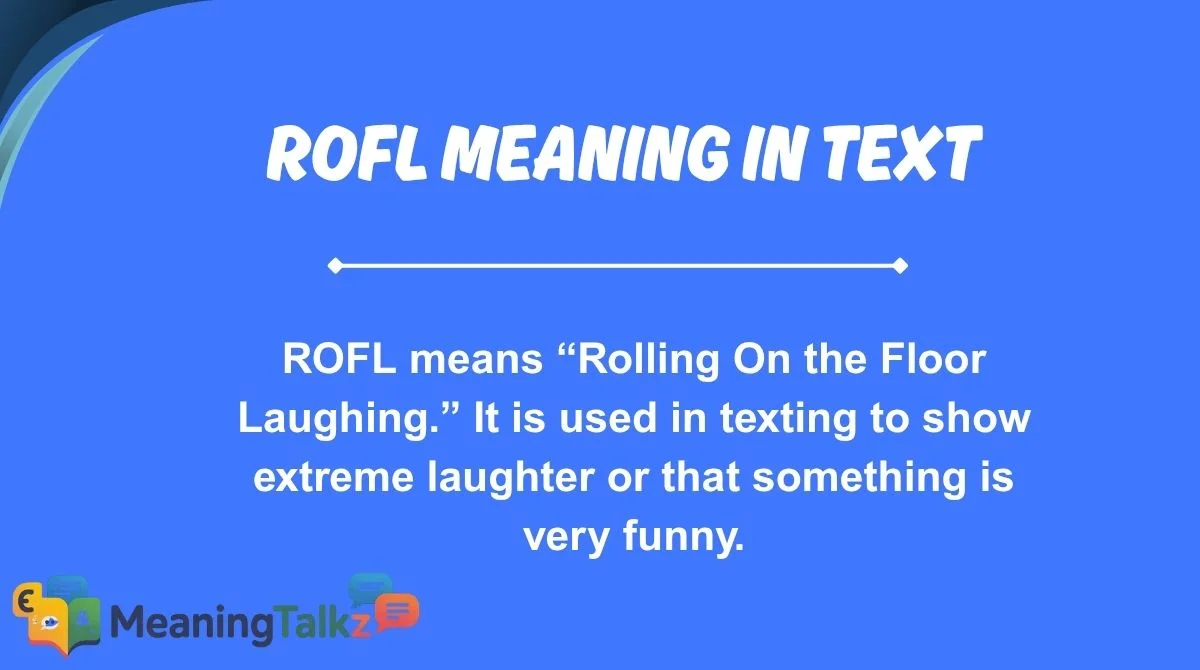
ROFL means “Rolling On the Floor Laughing.” It is used in texting to show extreme laughter or that something is very funny.
In modern messaging, ROFL can also mean:
- Someone found a joke hilarious
- A playful reaction to a funny comment
- Light sarcasm
- A dramatic way to say “that’s funny”
Most of the time, ROFL simply signals strong laughter in digital conversation.
The Most Common Meanings of “ROFL”
Although the core meaning stays the same, ROFL can carry slightly different tones depending on context.
1. Genuine Loud Laughter
This is the classic meaning. Someone finds something extremely funny.
Example:
Friend:
“I tried to microwave a boiled egg and it exploded.”
Reply:
“ROFL that must have been a disaster.”
Here the person is reacting to something hilarious.
2. Dramatic Internet Laugh
Sometimes people use ROFL just to exaggerate a laugh online.
Example:
“That meme you sent is ROFL.”
They might be smiling, not literally rolling on the floor.
3. Friendly Playful Reaction
ROFL can also react to teasing or jokes between friends.
Example:
“You said you’d wake up early but it’s noon.”
“ROFL okay you caught me.”
This keeps the tone light.
4. Light Sarcasm
In some conversations, ROFL can sound slightly sarcastic.
Example:
Boss:
“Let’s finish this 10-hour project in 30 minutes.”
Employee to friend:
“ROFL sure that will happen.”
Here it expresses disbelief more than laughter.
How “ROFL” Is Used in Real Conversations
Different platforms shape how people use slang. ROFL meaning in text can shift depending on the environment.
Friends & Casual Texting
Among friends, ROFL simply means strong laughter.
Examples:
“That story is ROFL.”
“ROFL I can’t stop laughing.”
It usually shows comfort and casual humor.
Instagram & Snapchat
On social media, ROFL often appears in comments.
Examples:
“ROFL this video is chaos.”
“ROFL the dog stole the pizza.”
Users type it to react quickly to funny content.
Dating Apps
In dating chats, ROFL usually signals:
- Interest
- Enjoying someone’s humor
- Relaxed conversation
Example:
“You tried cooking pasta and made soup.”
“ROFL okay that actually happened.”
However, overusing it may sound forced.
Gaming & Online Communities
Gamers often use ROFL during funny gameplay moments.
Examples:
“ROFL that glitch saved us.”
“ROFL the boss just fell off the map.”
In gaming chats, it usually means shared amusement.
Work or Professional Chat
ROFL appears rarely in professional environments.
If used, it usually happens in casual team chats.
Example:
“ROFL that autocorrect mistake.”
Still, many workplaces prefer simpler reactions like:
“lol”
“haha”
Is “ROFL” Rude, Flirty, or Offensive?
The phrase itself is not rude or offensive. But tone depends on context.
When ROFL Feels Positive
It feels friendly when used with:
- Jokes
- Memes
- Funny stories
- Casual chats
Example:
“ROFL that was the best joke today.”
This shows enjoyment.
When ROFL Feels Sarcastic
If used after serious comments, it may feel dismissive.
Example:
“I worked all night on this.”
“ROFL.”
This can sound insensitive.
When ROFL Sounds Flirty
Sometimes laughter builds connection in dating chats.
Example:
“ROFL you’re actually funny.”
This signals comfort and engagement.
When ROFL Feels Negative
It may feel rude if used:
- During arguments
- When mocking someone
- After emotional messages
Tone matters more than the word itself.
How to Respond When Someone Says “ROFL”
Your reply depends on the mood of the conversation.
Casual Replies
Use simple laughter responses.
Examples:
“Right? That was hilarious.”
“Glad you liked it.”
“Yeah that moment was wild.”
Funny Replies
If the conversation is playful, add humor.
Examples:
“Mission accomplished.”
“I should start a comedy career.”
“I knew you’d laugh.”
Neutral Replies
When you want to keep the chat simple:
Examples:
“True.”
“Exactly.”
“That’s what I thought.”
Professional Replies
In work chats, stay neutral.
Examples:
“Glad you found it funny.”
“That was a surprising moment.”
Avoid matching slang unless the environment is very relaxed.
Common Misunderstandings About “ROFL”
Many people misinterpret the phrase.
Here are the most common mistakes.
Thinking It Means Literal Floor Rolling
People rarely mean literal rolling on the floor.
It simply exaggerates laughter.
Confusing It With LOL
Both express laughter, but ROFL usually suggests stronger amusement.
LOL = mild laugh
ROFL = bigger reaction
Assuming It’s Always Genuine
Sometimes people type ROFL just to keep a conversation friendly.
They may not actually be laughing hard.
Believing It’s Only for Young People
While Gen Z uses many new slang terms, ROFL is used across multiple age groups online.
Similar Slang Terms You Should Know
Internet conversations include many laughter expressions.
Here are common ones.
LOL – Laughing out loud
LMAO – Laughing very hard
LMFAO – Extreme laughter expression
HAHA – Basic text laughter
HEHE – Playful or shy laughter
XD – Laughing face emoticon
OMG – Expression of surprise
BRB – Be right back
TBH – To be honest
SMH – Shaking my head
IDK – I don’t know
ICYMI – In case you missed it
Learning these helps you understand online conversations faster.
When You Should Avoid Using “ROFL”
Even though it’s harmless slang, there are situations where it’s better not to use it.
Professional Settings
In formal communication, slang may look unprofessional.
Avoid using ROFL in:
- Emails
- Client chats
- Job interviews
- Business messages
Cross-Cultural Conversations
Not everyone understands internet slang.
If you’re chatting with someone unfamiliar with online culture, ROFL may confuse them.
Use simple laughter instead.
Sensitive Situations
Never use ROFL when discussing:
- Personal problems
- Emotional topics
- Serious news
- Apologies
It may appear disrespectful.
Final Thoughts
The rofl meaning in text is simple once you understand the context.
At its core, ROFL means “rolling on the floor laughing,” a strong expression of amusement in digital conversations.
People use it when:
- Something is very funny
- They want to react dramatically
- They are joking with friends
- They are keeping the tone light
But like most internet slang, the real meaning comes from the situation. In casual chats it feels friendly and playful. In serious conversations it can sound sarcastic or dismissive.
Knowing when and how to use ROFL helps you communicate more naturally online. Instead of guessing the tone, you’ll recognize exactly what someone means and respond confidently.
Smart texting is not about using every slang word. It’s about using the right one at the right time.
FAQs
What does ROFL mean in texting?
ROFL means “Rolling On the Floor Laughing.” It is used to show that something is extremely funny.
Is ROFL stronger than LOL?
Yes. ROFL usually expresses stronger laughter than LOL.
Do people still use ROFL in 2026?
Yes, although some people prefer newer slang, ROFL is still widely understood and used in texting and online chats.
Is ROFL rude?
No, ROFL is not rude by itself. However, it can feel disrespectful if used in serious or emotional conversations.
Can ROFL be sarcastic?
Yes. Sometimes people use ROFL sarcastically to react to something unrealistic or ironic.
Should I use ROFL in professional messages?
Generally no. Professional communication usually avoids internet slang like ROFL.
What is the difference between ROFL and LMAO?
Both show strong laughter. ROFL emphasizes dramatic laughter, while LMAO expresses intense amusement.
Conclusion
Understanding the rofl meaning in text makes modern digital conversations much easier to follow.
While the phrase originally described extreme laughter, today it works more as a quick signal that something is funny, entertaining, or absurd.
Whether it appears in casual texts, social media comments, or gaming chats, ROFL simply keeps the conversation light and expressive.
The key is using it in the right place. With the context tips and examples in this guide, you can now recognize when someone truly finds something hilarious, when they are being playful, and when it might carry sarcasm.
Mastering simple slang like ROFL helps you read tone better and respond more naturally in online conversations.