Last updated on September 27th, 2026 at 06:43 am
You’re scrolling through messages and suddenly someone texts: “wtms?”
Now you pause.
Is it a typo?
Is it slang?
Are they asking something?
Short text shortcuts like this show up everywhere today — Snapchat, Instagram DMs, gaming chats, and even regular SMS. Because people type fast, many phrases get shortened into quick acronyms.
Some are obvious, like “lol.” Others are confusing at first glance.
That’s why many people search for wtms meaning in text. They want to know what the sender actually meant and how they should respond.
The tricky part is that slang often changes based on context. The same letters can carry different meanings depending on the conversation, the relationship between people, or the platform where the message appears.
In this guide, you’ll learn the real wtms meaning in text, how people use it in real conversations, whether it sounds rude or friendly, and how to reply the right way.
By the end, you’ll understand exactly what someone means when they send “wtms” — and you’ll never feel confused seeing it again.
What Does “wtms” Mean in Text?
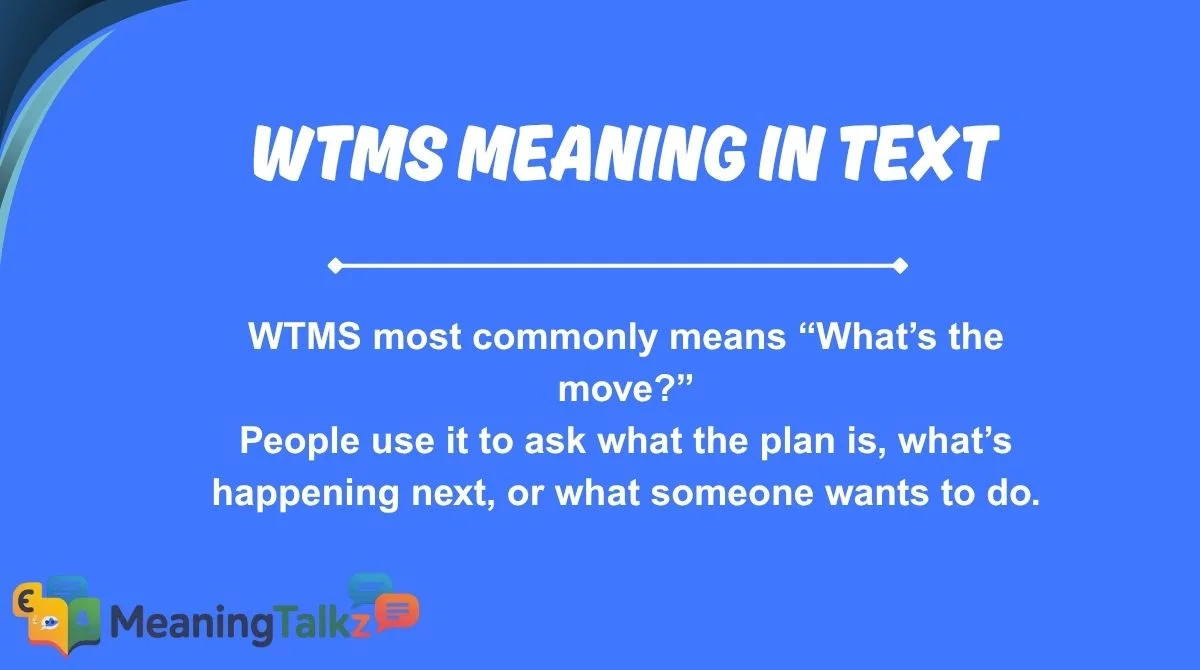
WTMS most commonly means “What’s the move?”
People use it to ask what the plan is, what’s happening next, or what someone wants to do.
In casual texting, it can also mean:
- asking about plans
- checking what someone is doing
- suggesting hanging out
- starting a conversation
The meaning usually depends on the situation and tone of the chat.
How to Tell What WTMS Means From the Conversation
Although WTMS commonly means “What’s the move?”, the easiest way to understand what someone intends is to look at the conversation around it. Texting acronyms can sometimes have different interpretations, so context is important.
Start by checking what was discussed immediately before the message. If the conversation is about going somewhere, meeting friends, or deciding what to do, WTMS probably means “What’s the move?” In other words, the person wants to know the next plan.
For example:
Person 1: “I finish work at 7.”
Person 2: “Same.”
Person 1: “wtms?”
Here, WTMS clearly relates to making plans. The person is asking what they should do next.
The same acronym can feel slightly different when used in a social media DM. Suppose someone sends:
“Hey, you’re in town? wtms?”
The surrounding message suggests that they may be asking about plans or whether you are available to do something.
The relationship between the people also provides useful context. Close friends may use WTMS casually because they already understand each other’s texting habits. Someone you barely know might use the same acronym simply as a conversation starter.
You should also pay attention to punctuation. A simple “wtms?” usually sounds like a straightforward question. A message such as “WTMS 😂” may feel more playful. If someone writes “wtms tonight?”, the time reference makes it more likely that they are asking about plans for the evening.
The messages that come after WTMS can provide another clue. If the person follows up with suggestions such as “movie?”, “food?”, or “wanna go out?”, then they are almost certainly talking about plans.
Another useful clue is the platform. WTMS is more likely to appear in casual environments such as group chats, gaming communities, Snapchat messages, Instagram DMs, and informal texting. If you see it in a formal business email, the sender may either be using slang unusually or may intend something different.
It is also helpful not to assume that every acronym has only one possible meaning. Internet slang evolves quickly, and different communities sometimes create their own shortcuts. If the surrounding conversation does not make the meaning clear, asking is perfectly reasonable.
You could reply:
“What do you mean by WTMS?”
or simply:
“What’s the move?”
The second response can work especially well if you already suspect the person is asking about plans.
Most importantly, avoid interpreting WTMS based on the letters alone. Look at the topic, previous messages, relationship, platform, punctuation, and what happens afterward.
In most casual conversations, these clues will point toward “What’s the move?” But context is what confirms the intended meaning. Understanding that small difference can help you avoid misreading a short message and make your reply feel natural.
Why Do People Use WTMS Instead of “What’s the Move?”
Texting is all about speed, convenience, and keeping conversations moving. That is one of the main reasons people use WTMS instead of typing the full phrase “What’s the move?” When someone sends “wtms?” they can communicate the same idea with just four letters, making the message quick and easy to type.
Modern conversations often happen while people are busy doing other things. Someone might be walking, studying, gaming, watching a video, or talking with other people while checking their phone. Short acronyms make it easier to send a message without stopping to type a complete sentence.
WTMS also fits naturally into the informal style of social media and messaging apps. Platforms such as Snapchat, Instagram, Discord, and group chats encourage short messages. Users often expect conversations to be quick rather than written like formal emails. In that environment, a phrase such as “What’s the move?” can easily become “wtms?”
Another reason people use WTMS is that it sounds casual. Saying “What’s the plan?” can sometimes feel more direct or serious. “wtms?” has a relaxed tone that can make it easier to start a conversation about hanging out or deciding what to do.
For example, imagine a group of friends who have finished their classes for the day. One person might text:
“Everyone free now. wtms?”
The message is short, but everyone understands that the sender is asking what the group wants to do next.
WTMS can also make conversations feel more spontaneous. Instead of making a detailed plan in advance, someone can simply check what is happening at the moment. A person might send:
“wtms tonight?”
This leaves the conversation open. The other person can suggest dinner, a movie, a gaming session, a drive, or simply staying home.
There is also a social reason for using abbreviations. Internet slang can create a sense of familiarity between people who regularly communicate online. When both people understand terms such as WTMS, WYA, WYD, and LMK, they can exchange messages quickly without explaining every phrase.
However, WTMS is still informal slang. Its usefulness depends on the audience. A close friend may immediately understand “wtms?”, while a parent, teacher, client, or coworker may not know what the acronym means.
That is why the full phrase can sometimes be a better choice. If you are talking to someone unfamiliar with texting slang, simply writing “What’s the move?” or “What’s the plan?” removes confusion.
Ultimately, WTMS is popular because it combines speed, convenience, and a casual tone. It allows people to ask about plans without making the message feel overly formal. Once you understand the abbreviation, seeing “wtms?” in a group chat or DM becomes much easier to interpret.
The Most Common Meanings of “wtms”
1. What’s the Move?
This is the most common meaning of wtms in texting.
It simply means:
“What are we doing?”
or
“What’s the plan?”
People use it when they want to know what’s happening next.
Example:
Friend 1:
“Everyone’s free tonight.”
Friend 2:
“Bet. wtms?”
Translation:
“What’s the plan tonight?”
This use is very common among Gen Z and college-age groups.
2. Asking About Plans
Sometimes wtms isn’t about a group plan. It can just be someone asking what you’re doing.
Example:
“Hey wtms later?”
Meaning:
“What are you doing later?”
It’s a casual way to start conversation.
3. Suggesting Hanging Out
In some chats, wtms is a subtle way of saying:
“Let’s do something.”
Example:
“I’m bored. wtms?”
This means the person is open to making plans.
4. Starting a Conversation
Some people use wtms the same way others say:
- “What’s up?”
- “What’s good?”
- “You free?”
Example:
“Yo wtms?”
Meaning:
“What’s going on?”
How “wtms” Is Used in Real Conversations
Friends & Casual Texting
This is where wtms appears the most.
Friends use it when making quick plans.
Example:
“Game night tonight. wtms?”
or
“Everyone’s online. wtms?”
Here it simply means:
“What are we doing?”
The tone is relaxed and friendly.
Instagram & Snapchat
On social platforms, wtms often appears in DMs.
Example:
“Hey you in the city tonight? wtms?”
This usually means:
“What are the plans tonight?”
Sometimes it can also be a way to start talking without sounding too direct.
Dating Apps
On dating apps, wtms can sometimes feel slightly flirty.
Example:
“You free later? wtms?”
Here the person might be testing interest in meeting up.
It’s casual and low-pressure.
Instead of asking directly:
“Do you want to hang out?”
They ask:
“wtms?”
Gaming & Online Communities
Gamers often use wtms when deciding what to play.
Example:
“We finished that mission. wtms?”
Meaning:
“What should we do next?”
or
“What game mode now?”
The phrase helps keep the conversation short and fast.
Work or Professional Chat
This is one place where wtms is rarely used.
Professional conversations usually avoid slang.
Instead of saying:
“wtms?”
People might say:
“What’s the next step?”
or
“What’s the plan for today?”
Using slang like wtms at work may sound unprofessional unless the team has a casual culture.
Is “wtms” Rude, Flirty, or Offensive?
The phrase itself is not rude.
But tone changes based on context.
When It Feels Friendly
With friends, it feels normal and casual.
Example:
“Everyone done studying. wtms?”
Tone: relaxed and social.
When It Feels Flirty
In dating conversations, wtms can feel slightly suggestive.
Example:
“You still out tonight? wtms?”
It might mean the person wants to meet up.
When It Feels Neutral
Sometimes it’s just a simple question.
Example:
“wtms after class?”
No hidden meaning.
When It Might Feel Annoying
If someone repeatedly asks “wtms” without offering ideas, it can feel lazy.
Example:
Friend group chat:
Person 1:
“wtms?”
Person 2:
“idk you tell us”
In this case the person expects others to decide.
How to Respond When Someone Says “wtms”
Your reply depends on the situation.
Casual Replies
If you know the plan, just say it.
Examples:
“We’re meeting at 8.”
“Going to the mall.”
“Movie night.”
Funny Replies
Friends often respond with humor.
Examples:
“Food. Always food.”
“Survive the night.”
“Sleep honestly.”
These keep the chat playful.
Neutral Replies
If you’re unsure, you can turn the question back.
Examples:
“You tell me.”
“No idea yet.”
“What do you want to do?”
Professional Replies
If this somehow appears in work chat, respond clearly.
Example:
“Let’s review the plan for today.”
Avoid replying with slang.
Common Misunderstandings About “wtms”
Thinking It’s an Insult
Some people see wtms and think it’s criticism or sarcasm.
It usually isn’t.
Most of the time it’s just asking about plans.
Confusing It With Similar Acronyms
Many texting shortcuts look alike.
People sometimes mix wtms with:
- wtm
- wts
- wya
Each one means something different.
Misreading the Tone
Tone in text is tricky.
“wtms?” can sound:
- curious
- bored
- excited
- lazy
The surrounding conversation usually reveals the real tone.
Thinking It’s Rare Slang
Actually, wtms is becoming more common in younger texting circles.
Especially in:
- group chats
- college communities
- gaming chats
Similar Slang Terms You Should Know
Here are some slang shortcuts often used with wtms.
WTM – What’s the move
WYA – Where you at
WYD – What you doing
WSP – What’s up
HBU – How about you
IDK – I don’t know
BRB – Be right back
IMO – In my opinion
TBH – To be honest
LMK – Let me know
NVM – Never mind
SMH – Shaking my head
Knowing these helps you understand modern texting faster.
When You Should Avoid Using “wtms”
Even though wtms is common online, there are times when it’s better not to use it.
Professional Settings
Avoid slang in:
- work emails
- client messages
- formal meetings
It can look careless.
Cross-Cultural Conversations
Not everyone understands internet slang.
If you’re texting someone older or from a different background, the message may confuse them.
Instead of saying:
“wtms”
You could write:
“What’s the plan?”
Sensitive Situations
Serious conversations need clear language.
Examples include:
- conflict discussions
- emotional talks
- serious decisions
Slang may make the message feel dismissive.
Final Thoughts
Texting language changes quickly, and new shortcuts appear every year.
The wtms meaning in text is simple once you understand it: “What’s the move?”
People use it to ask about plans, suggest hanging out, or start a casual conversation. You’ll most often see it in friend groups, social media chats, and gaming communities.
It’s informal, relaxed, and part of modern digital culture. But like many slang terms, it works best in casual settings.
Understanding acronyms like wtms helps you read conversations faster and respond naturally. Instead of feeling confused when you see it, you’ll instantly know the sender is simply asking:
“What’s the plan?”
FAQs
What does wtms mean in texting?
WTMS usually means “What’s the move?” It asks about plans or what someone wants to do next.
Is wtms the same as wtm?
Yes, they are very similar. Both often mean “What’s the move?” and are used to ask about plans.
Is wtms slang used by Gen Z?
Yes. WTMS is mainly used by younger people, especially in casual texting, social media chats, and group messages.
Is wtms rude in text messages?
No. It’s usually friendly and casual. However, tone depends on the conversation context.
Can wtms be flirty?
Sometimes. On dating apps or private chats, wtms may hint that someone wants to hang out.
Should I use wtms in work messages?
It’s better not to. Professional conversations should avoid slang and use clear language.
Why do people use wtms instead of full sentences?
Texting culture favors speed and short messages. Acronyms like wtms help people communicate quickly.
Conclusion
The phrase wtms meaning in text is simple once you see how people use it. It mainly stands for “What’s the move?”, a quick way to ask about plans or what someone wants to do next.
You’ll often see it in casual chats, group messages, and social media conversations where people prefer short, fast texting.
While it’s perfectly normal among friends and online communities, it’s best avoided in professional or formal situations.
Understanding slang like wtms helps you read messages faster, respond naturally, and stay in sync with modern digital conversations.