Last updated on September 9th, 2026 at 06:31 am
You open a message. Someone replies with just four letters: “dwbi.”
Now you pause.
Is it an insult? A joke? A secret code? A typo?
Short texting slang spreads fast online, especially on TikTok, Snapchat, gaming chats, and group messages. But when a new abbreviation pops up, many people have no idea what it means.
That confusion is exactly why thousands of people search “dwbi meaning in text” every month.
Unlike older slang like “LOL” or “BRB,” newer text abbreviations appear quickly inside online communities and then spread across social media. If you don’t know the meaning, the message can feel confusing or even awkward.
This guide explains exactly what “dwbi” means in text messages, how people use it in real conversations, and how you should respond when someone sends it to you.
By the end, you will clearly understand the tone, the context, and when it is safe—or risky—to use it yourself.
What Does “dwbi” Mean in Text?
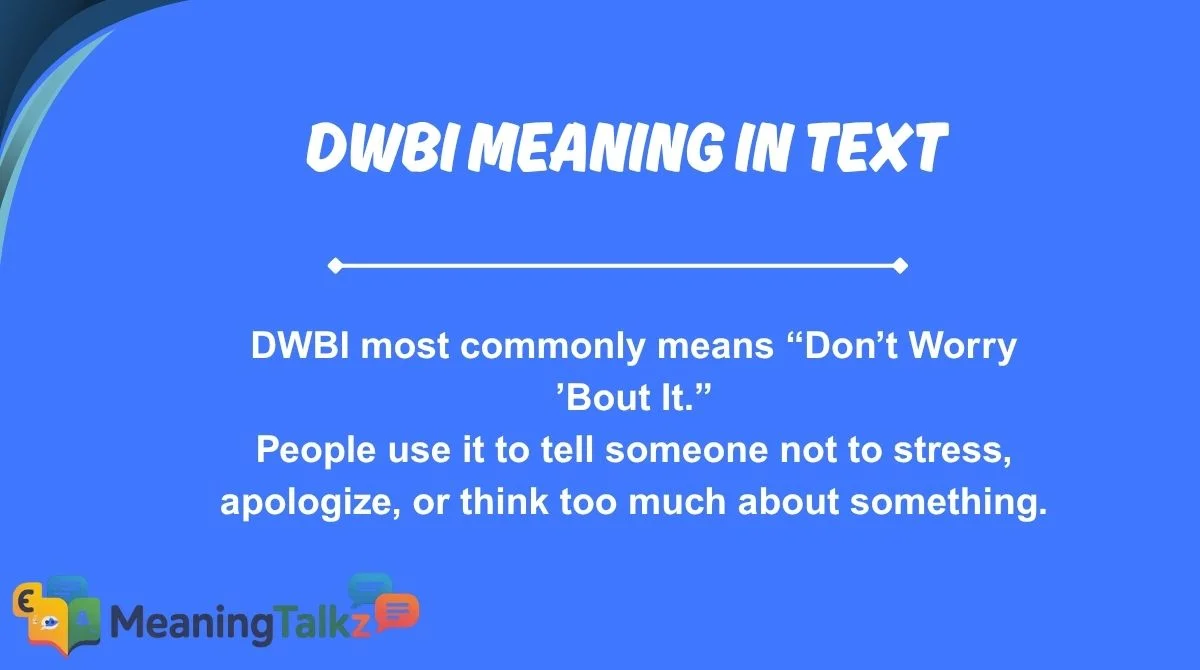
DWBI most commonly means “Don’t Worry ’Bout It.”
People use it to tell someone not to stress, apologize, or think too much about something.
In texting, it can also have a few similar interpretations depending on the situation:
- Don’t Worry About It
- Don’t Worry, Be Easy
- Don’t Worry, I’ll handle it
In almost every case, the message carries a calm or reassuring tone.
What Does “DWBI” Mean From a Crush?
If your crush sends you “DWBI,” it usually still means “Don’t Worry ’Bout It” or “Don’t Worry About It.” The abbreviation itself is not a secret romantic code. Instead, it usually reassures you after an apology, awkward moment, delayed reply, or small mistake.
For example, if you text, “Sorry, I got nervous and said something weird,” and they reply, “dwbi lol,” they are probably telling you that everything is fine. However, a bare “dwbi” does not necessarily mean they are flirting. Look at their overall behavior, the conversation, and any emojis or follow-up messages before reading romantic meaning into it.
DWBI vs. DW: What’s the Difference?
DWBI and DW are closely related, but they are not exactly the same. DW usually means “Don’t Worry,” while DWBI means “Don’t Worry About It” or the more casual “Don’t Worry ’Bout It.” DWBI is often used when responding to a specific mistake, apology, concern, or situation that someone is stressing over.
For example, “I’m nervous about being late” might get a reply of “dw,” while “Sorry I forgot to send the file” could naturally receive “dwbi.” Both are reassuring, but DWBI more directly dismisses or closes out the particular issue being discussed. Tone still depends on context, especially when the abbreviation appears by itself.
The Most Common Meanings of “dwbi”
Even though the letters stay the same, dwbi can carry slightly different meanings depending on the conversation.
Here are the most common ways people use it.
1. Don’t Worry ’Bout It (Most Common)
This is the main meaning.
Someone says dwbi when they want you to relax and stop worrying about something.
Example:
Friend:
“Sorry I replied late.”
Reply:
“dwbi, I just got online too.”
The message means the delay is not a big deal.
2. Don’t Worry About It
This version sounds slightly more neutral.
It is used when someone apologizes or feels guilty.
Example:
Person 1:
“I forgot to bring your book.”
Person 2:
“dwbi, bring it tomorrow.”
It removes pressure from the situation.
3. I’ve Got It Covered
Sometimes dwbi means the sender will handle the situation.
Example:
Friend:
“Do we need snacks for the party?”
Reply:
“dwbi, I already bought some.”
Here it means “Don’t worry, I took care of it.”
4. Relax, It’s Not Serious
In casual chats, dwbi can signal that a problem is small or not important.
Example:
Friend:
“I think I messed up that game round.”
Reply:
“dwbi, it was just for fun.”
This tone keeps things light.
How “dwbi” Is Used in Real Conversations
Where the message appears often changes how it feels. Let’s look at how dwbi appears across different online spaces.
Friends & Casual Texting
Among friends, dwbi is used the most.
It helps remove awkwardness when someone apologizes too much.
Example conversation:
Friend:
“Sorry I missed your call.”
Reply:
“dwbi, what’s up?”
The phrase tells the friend everything is fine.
It keeps the conversation relaxed.
Instagram & Snapchat
On social media messages, people use dwbi quickly in replies.
These chats move fast, so short slang helps keep things simple.
Example:
Message:
“Sorry I spammed your story replies.”
Reply:
“dwbi lol”
Here it means the sender does not mind.
Sometimes it is used in story reactions too.
Dating Apps
On dating apps, tone matters more.
When someone says dwbi, they are usually trying to avoid making the other person feel embarrassed.
Example:
Person 1:
“Sorry if that question was weird.”
Person 2:
“dwbi, it’s fine.”
It reassures the other person that nothing bad happened.
But tone depends on context.
Sometimes a short reply like this can feel slightly distant.
Gaming & Online Communities
Gamers use short text abbreviations constantly.
In multiplayer chats, dwbi often appears after mistakes.
Example:
Player 1:
“Sorry I lost that round.”
Player 2:
“dwbi, we’ll win next one.”
Here it keeps team morale positive.
Many gaming chats rely on quick supportive responses like this.
Work or Professional Chat
In work chat tools like Slack or Teams, dwbi appears less often.
It is still casual internet slang.
Example:
Coworker:
“Sorry for the late file upload.”
Reply:
“dwbi, I saw it.”
While it may appear between friendly coworkers, full words are usually safer in professional settings.
Is “dwbi” Rude, Flirty, or Offensive?
Most of the time, dwbi is neutral or friendly.
It is meant to reduce stress in a conversation.
However, tone depends on how it is written.
Positive Tone
It feels friendly when:
- Someone apologizes
- Someone worries about a mistake
- Someone overthinks a situation
Example:
“dwbi, it’s all good.”
This sounds supportive.
Neutral Tone
Sometimes the phrase is simply practical.
Example:
“dwbi, I already fixed it.”
Here the message is calm and direct.
Slightly Dismissive Tone
In rare cases, it can sound a bit cold.
Example:
Person:
“I’m really sorry about that.”
Reply:
“dwbi.”
Because the message is short, it may feel like the sender does not want to discuss the topic further.
Adding extra words helps soften the tone.
Example:
“dwbi, it’s honestly fine.”
How to Respond When Someone Says “dwbi”
When someone sends dwbi, your reply depends on the situation.
Here are different types of responses you can use.
Casual Replies
These work best with friends.
Examples:
- “Alright cool.”
- “Got it.”
- “Thanks.”
- “Okay good.”
These keep the chat relaxed.
Funny Replies
Sometimes humor makes the conversation better.
Examples:
- “Too late, I already worried.”
- “I will still worry a little.”
- “My brain worries automatically.”
Funny replies work best with people you know well.
Neutral Replies
These keep things simple.
Examples:
- “Okay.”
- “Good to know.”
- “Alright.”
They move the conversation forward.
Professional Replies
If the conversation is work-related, keep it more formal.
Examples:
- “Thanks, I appreciate it.”
- “Understood.”
- “Good to know, thank you.”
These responses stay polite and clear.
Common Misunderstandings About “dwbi”
Because the phrase is short, people sometimes misunderstand it.
Here are a few common mistakes.
Thinking It Is an Insult
Some people assume dwbi sounds rude.
But the meaning is usually the opposite.
It is meant to calm someone down.
Confusing It With Random Letters
Since the abbreviation is not widely known everywhere, some readers think it is:
- A typo
- A username
- A code
But in texting, it usually just means “Don’t worry ’bout it.”
Misreading the Tone
Tone is the biggest issue in text messages.
Example:
“dwbi.”
vs
“dwbi it’s fine.”
The second message sounds warmer.
Adding a few words removes confusion.
Thinking It Means “Don’t Bother”
Some people confuse dwbi with phrases like “don’t bother.”
But the meanings are very different.
“Don’t bother” can sound dismissive.
“dwbi” is meant to reduce stress.
Similar Slang Terms You Should Know
If you are learning modern texting slang, these related abbreviations also appear often.
NVM
Means “Never Mind.” Used when something is no longer important.
IDC
Means “I Don’t Care.” Often used casually between friends.
BRB
Means “Be Right Back.”
TBH
Means “To Be Honest.”
IDK
Means “I Don’t Know.”
IMO
Means “In My Opinion.”
SMH
Means “Shaking My Head.” Shows disbelief.
FYI
Means “For Your Information.”
LMK
Means “Let Me Know.”
NP
Means “No Problem.”
DW
Means “Don’t Worry.”
NBD
Means “No Big Deal.”
These abbreviations appear across texting, gaming chats, and social media.
When You Should Avoid Using “dwbi”
Even though the phrase is harmless, there are times when it is better not to use it.
Professional Settings
In emails or formal work communication, full sentences look more professional.
Better option:
“Don’t worry about it, everything is handled.”
Cross-Cultural Conversations
Not everyone understands internet slang.
If you are speaking with someone older or from another culture, they may not know the abbreviation.
Using full words prevents confusion.
Serious Conversations
If someone is talking about a real problem, a short message like dwbi can feel dismissive.
Example:
Friend:
“I’m stressed about losing my job.”
Reply:
“dwbi.”
This response may seem insensitive.
A better response would show empathy.
When Tone Matters
Short text slang removes emotional cues.
If the message could be misunderstood, write the full sentence.
Example:
“Don’t worry about it, it’s honestly okay.”
Final Thoughts.
The internet creates new slang faster than ever. Short text codes like dwbi appear suddenly and spread across chats, gaming communities, and social media.
In most situations, dwbi simply means “Don’t worry ’bout it.”
People use it to calm someone down, accept an apology, or show that something is not a big deal.
The key to understanding the phrase is context. Look at the conversation around it. In friendly chats, it usually carries a relaxed and supportive tone.
If you want to use it yourself, stick to casual conversations with friends or online communities where slang is common.
Knowing small phrases like this helps you read messages faster and understand modern online culture.
FAQs
What does dwbi mean in texting?
DWBI means “Don’t Worry ’Bout It.” People use it to reassure someone that a mistake or problem is not important.
Is dwbi rude in messages?
No. Most of the time it is friendly or neutral. It simply tells someone not to stress about something.
Where did dwbi come from?
The abbreviation comes from casual texting culture where people shorten phrases to save time while typing.
Is dwbi the same as “don’t worry”?
Yes, but it usually carries a slightly more relaxed tone like “don’t worry about it.”
Can I use dwbi in work messages?
It is better to avoid it in formal communication. Writing the full phrase looks more professional.
Do people use dwbi on social media?
Yes. It appears in Instagram DMs, Snapchat chats, gaming chats, and group texts.
Is dwbi popular slang in 2026?
It is becoming more common as short internet abbreviations spread through online communities and messaging apps.
Conclusion
If you ever see “dwbi” in a message, you now know exactly what it means.
The phrase is simple: “Don’t worry ’bout it.”
It is used to calm someone, accept an apology, or show that something is not a big deal. While it works great in casual chats with friends, it is best avoided in formal conversations where clarity matters more than speed.
Understanding small texting shortcuts like this helps you read online conversations faster and communicate more naturally in modern digital spaces.