Last updated on September 26th, 2026 at 06:05 am
You open a message and see just three letters: “RLS.”
No emoji. No explanation. Just RLS.
Now you’re stuck wondering what it means. Is it a joke? A typo? Some new internet slang everyone knows except you?
This kind of confusion happens a lot in modern texting. People on Snapchat, Instagram, gaming chats, and group messages love short forms. They cut full phrases into tiny codes that only make sense if you know the trend.
That’s why many people search for “rls meaning” online. They want a quick answer before replying to a message or reacting in a chat.
The truth is that RLS can mean different things depending on the context. In casual texting it often stands for a slang phrase, but in other cases it can mean something totally different.
This guide breaks everything down in simple terms. You’ll learn the real meaning of RLS, how people use it in conversations, when it might sound rude, and how to respond without sounding awkward.
By the end, you’ll never feel confused when someone sends “RLS” again.
What Does “RLS Meaning” Mean in Text?
In texting, RLS most commonly means “Real Life Stuff” or “Real Life Situation.”
People use it when they want to say they are busy with things happening outside the internet.
Other possible meanings include:
- Real Life Situation
- Real Life Stress
- Real Life Sh*t (informal frustration)
- Release (in gaming or tech chats)
The exact meaning depends on who sent it and where the conversation is happening.
Why Do People Use RLS Instead of Saying “Real Life”?
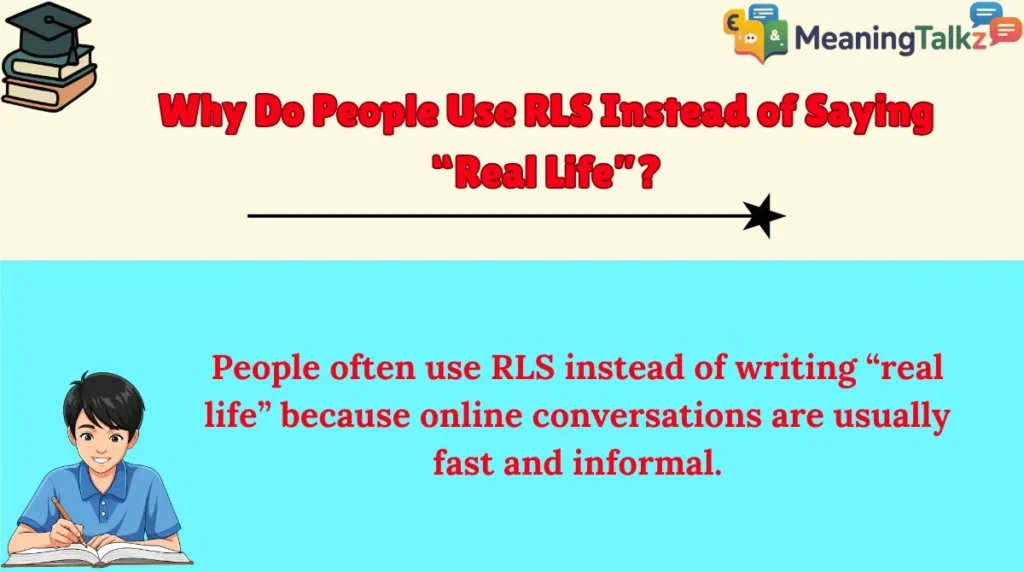
People often use RLS instead of writing “real life” because online conversations are usually fast and informal. When someone is texting a friend, chatting in a gaming community, or responding in a group conversation, they may prefer a short abbreviation that communicates the idea quickly. Instead of writing a full explanation about everything happening away from the internet, RLS can summarize the situation in just three letters.
One major reason people use RLS is convenience. Texting is different from formal writing. People often shorten words and phrases because they want to respond quickly. Similar abbreviations include IRL, BRB, AFK, IDK, and TBH. RLS fits naturally into this style of communication because most people using internet slang already understand the idea of shortening common phrases.
RLS can also be useful when someone does not want to explain personal details. Imagine someone has been away from a group chat for several days. Instead of explaining that they had school, work, family responsibilities, appointments, or other personal matters, they might simply say, “Sorry, been dealing with RLS.” This gives the other person enough information to understand that something happened offline without requiring a detailed explanation.
Privacy is therefore another reason people may use RLS. Not every situation needs to be explained in detail. Someone might be dealing with a private family matter or simply have a busy schedule. Saying “RLS” allows them to acknowledge their absence while keeping the details personal.
The abbreviation is especially useful in gaming communities. Online players may regularly communicate about schedules, matches, raids, streams, or tournaments. If someone cannot participate because of something happening offline, RLS provides a quick explanation. A message such as “Can’t join tonight, RLS” is much shorter than explaining every real-world responsibility that caused the person to miss the session.
RLS can also make conversations feel more casual. Internet communities develop their own language, and abbreviations can create a sense of familiarity between people who understand the same terms. A person who regularly chats online may naturally use RLS without thinking about it.
Another benefit is that the meaning can remain intentionally broad. “Real life stuff” could refer to something completely ordinary, such as homework or shopping, or something more complicated, such as work pressure or family responsibilities. Because RLS does not specify the exact situation, the sender can keep the message simple.
However, RLS is not appropriate for every conversation. Someone unfamiliar with internet slang may not understand it immediately. In professional communication, formal emails, customer messages, or serious discussions, writing “personal matter” or giving a clear explanation is usually better.
It is also worth remembering that RLS is not always used in exactly the same way. Some people may use it to mean “real life stuff,” while others may interpret it as “real life situation” or another phrase. The surrounding conversation helps determine what the sender means.
Overall, people use RLS because it is short, convenient, private, and easy to fit into casual online conversations. It lets someone explain that real-world responsibilities are affecting their online activity without writing a long message.
How to Know Which RLS Meaning Someone Intended
The abbreviation RLS can have different meanings, so context is the most useful tool for understanding what someone intended. Instead of immediately assuming that RLS means “Real Life Stuff,” look at the topic, surrounding words, platform, and situation in which the abbreviation appears.
The first clue is the subject of the conversation. If you are chatting with a friend about being unavailable, RLS probably refers to something happening in real life. For example, if someone says, “Sorry I couldn’t play last night, RLS,” they are most likely explaining that personal responsibilities prevented them from joining.
The platform can provide another important clue. In gaming chats, RLS may refer to real-life responsibilities when players explain why they cannot join a game. In social media conversations, it may describe taking a break from posting because of offline responsibilities. In a technical conversation, however, the same abbreviation could have a completely different meaning.
Look at the words surrounding RLS. If the message includes words such as “busy,” “offline,” “family,” “work,” “school,” “tonight,” or “can’t join,” the real-life meaning becomes much more likely. For example, “Can’t stream today, RLS” clearly suggests that something outside the internet is preventing the person from streaming.
You should also pay attention to whether RLS is being used as a noun or as part of a sentence. A message like “Too much RLS lately” usually means the person has been dealing with many real-world responsibilities. A message such as “RLS tomorrow” could require more context because it may refer to a release or another abbreviation used within a specific community.
The tone can provide additional information. If someone says, “Sorry for disappearing, RLS,” the tone is generally explanatory. They are probably telling you why they were unavailable. If they say, “I’m tired of this RLS,” the abbreviation may refer to stressful real-life problems. In this situation, the surrounding sentence suggests that the person is frustrated.
The conversation history is another useful clue. If someone has already mentioned school, work, family, or personal responsibilities, RLS likely connects to that earlier discussion. Reading the previous messages can prevent misunderstandings.
It is also important not to confuse RLS with IRL. IRL means “In Real Life,” while RLS can be used for phrases such as “Real Life Stuff” or “Real Life Situation.” They can appear in similar conversations, but they are not automatically interchangeable.
If the message still does not make sense, asking for clarification is perfectly normal. A simple response like “RLS as in real-life stuff?” can quickly confirm the meaning. There is no need to guess when the abbreviation could have multiple interpretations.
Finally, consider whether the conversation is medical or technical. RLS can have meanings outside internet slang, including Restless Legs Syndrome in a medical context. Therefore, if the conversation is about health, the abbreviation should not automatically be interpreted as internet slang.
The safest way to understand RLS is to combine context, platform, surrounding words, conversation history, and tone. Once you consider these clues, the intended meaning is usually much easier to identify.
The Most Common Meanings of “RLS”
1. Real Life Stuff
This is the most common meaning in texting.
People say RLS when they are busy with personal responsibilities offline.
Examples:
- “Sorry I wasn’t online yesterday. Had some RLS.”
- “Can’t game tonight. Too much RLS to deal with.”
Here, the person simply means real-world tasks or problems.
Typical situations include:
- school work
- family issues
- job responsibilities
- personal errands
It’s a quick way to say “I’m dealing with things in real life.”
2. Real Life Situation
Sometimes RLS refers to a specific event happening offline.
Examples:
- “I left the call because of an RLS.”
- “Not ignoring you. Just handling an RLS right now.”
In this context, it means something urgent happening outside the internet.
It can include:
- family matters
- emergencies
- unexpected problems
This version often appears when someone needs to step away from online chats quickly.
3. Real Life Stress
Some people use RLS to talk about stress from everyday life.
Examples:
- “Been quiet lately. Too much RLS.”
- “Gaming helps me escape RLS.”
Here the meaning is closer to personal pressure or mental stress from daily life.
Common examples:
- work pressure
- exams
- money worries
- relationship issues
It’s often used when someone feels overwhelmed.
4. Release (Gaming or Tech Context)
In gaming communities, RLS sometimes stands for release.
Examples:
- “Is the update RLS yet?”
- “New patch RLS tomorrow.”
Here it simply refers to a new version or update being released.
This meaning is less common in casual texting but appears often in tech forums and gaming chats.
How “RLS” Is Used in Real Conversations
Friends & Casual Texting
Among friends, RLS usually means real life responsibilities.
People use it when explaining why they were inactive online.
Examples:
- “Sorry for late reply. confused got confused today.”
- “Can’t hang out online tonight. Too much RLS.”
The tone here is relaxed and friendly.
It basically means:
“I’m busy with real-world things.”
Instagram & Snapchat
On social media, RLS appears in captions, stories, or messages.
Example uses:
- “Been quiet lately. Just RLS.”
- “Taking a break for some RLS.”
Influencers sometimes use it when stepping away from posting for a while.
Followers usually understand it as life outside social media.
Dating Apps
On dating platforms, RLS often explains delayed replies.
Examples:
- “Sorry I disappeared yesterday. RLS happened.”
- “Was dealing with some RLS but I’m back.”
Here it means the person had real-life commitments.
Most users interpret it as:
“I wasn’t ignoring you, I was just busy.”
Gaming & Online Communities
In gaming chats, RLS is very common.
Gamers often use it when they can’t join matches or streams.
Examples:
- “Skipping tonight’s raid. RLS.”
- “Lagged out because of RLS distractions.”
Gamers often joke about real life interrupting gaming time.
You might see memes like:
“Wish I could pause RLS.”
Work or Professional Chat
In professional communication, RLS is rarely used.
However, in casual team chats it might appear.
Example:
- “Sorry for delay. Had some RLS to handle.”
Still, many workplaces prefer clearer explanations, such as:
- personal matters
- family responsibilities
- urgent tasks
Using slang like RLS in formal work emails can look unprofessional.
Is “RLS” Rude, Flirty, or Offensive?
Most of the time, RLS is neutral.
It’s simply a short way to say real life issues or responsibilities.
But tone can change depending on context.
When It Feels Neutral
Examples:
- “Sorry I was offline. RLS.”
- “Busy week because of RLS.”
These messages are polite and normal.
When It Feels Slightly Negative
Sometimes people use RLS to show frustration.
Example:
- “Can’t deal with this right now. Too much RLS.”
Here it means the person feels stressed or overwhelmed.
The tone isn’t rude, but it shows pressure.
When It Sounds Dismissive
Rarely, it might sound like an excuse.
Example:
- “Didn’t reply because of RLS.”
If used repeatedly, people may think the person is avoiding conversation.
But in most cases, it’s not meant to be offensive.
How to Respond When Someone Says “RLS”
If someone tells you they’re dealing with RLS, your reply should match the situation.
Casual Replies
These are simple and friendly.
Examples:
- “No worries.”
- “Hope everything goes well.”
- “Take your time.”
Funny Replies
If you know the person well, humor works.
Examples:
- “Real life always ruining the internet.”
- “RLS sounds like a boss level.”
- “Hope you defeat the RLS monster.”
Keep jokes light so they don’t sound insensitive.
Neutral Replies
These are safe for most chats.
Examples:
- “Got it.”
- “Thanks for letting me know.”
- “Message me when you’re free.”
Professional Replies
In work settings, keep things respectful.
Examples:
- “Thanks for the update.”
- “Hope everything is handled smoothly.”
- “Let me know when you’re available again.”
Professional responses should stay supportive but simple.
Common Misunderstandings About “RLS”
Because internet slang spreads fast, people often misunderstand it.
Thinking It Has Only One Meaning
Many assume RLS always means one thing.
But depending on context, it could mean:
- real life stuff
- real life situation
- release
Understanding the conversation helps identify the correct meaning.
Confusing It With Medical Terms
In medical contexts, RLS can mean Restless Leg Syndrome.
But in texting, this meaning is rare unless discussing health topics.
Assuming It’s Negative
Some people think RLS always means drama or problems.
In reality, it often just means normal life tasks.
Example:
- homework
- work shift
- errands
Nothing dramatic.
Misreading the Tone
Text messages lack voice tone, so RLS can sound colder than intended.
Example:
“Busy. RLS.”
This might seem blunt, but the sender may simply be in a hurry.
Similar Slang Terms You Should Know
Modern texting includes many short forms similar to RLS. Here are common ones.
IRL – In Real Life. Used when talking about offline activities.
BRB – Be Right Back. Means someone will return soon.
AFK – Away From Keyboard. Common in gaming chats.
TBH – To Be Honest. Used before giving honest opinions.
IMO – In My Opinion. Shows a personal viewpoint.
IDK – I Don’t Know. Expresses uncertainty.
TMI – Too Much Information. Used when something feels overly detailed.
SMH – Shaking My Head. Shows disappointment or disbelief.
FOMO – Fear Of Missing Out. Anxiety about missing events.
GOAT – Greatest Of All Time. Used to praise someone.
ICYMI – In Case You Missed It. Often used when sharing news.
TLDR – Too Long Didn’t Read. A short summary of long text.
Learning these terms helps you understand online conversations faster.
When You Should Avoid Using “RLS”
Even though RLS is common online, it doesn’t work everywhere.
Professional Settings
Avoid using slang like RLS in:
- job emails
- client messages
- formal reports
Clear communication looks more professional.
Instead say:
- personal matter
- scheduling conflict
- urgent task
Cross-Cultural Conversations
Not everyone knows internet slang.
Using RLS with international contacts may cause confusion.
Some people may ask:
“What does RLS mean?”
In global conversations, simple language works better.
Sensitive Situations
If someone is discussing serious issues, slang can feel insensitive.
Example situations:
- illness
- family emergencies
- emotional problems
In these cases, direct and respectful language is better.
Final Thoughts
Short slang like RLS shows how quickly internet language evolves.
Most of the time, RLS simply means “Real Life Stuff.” It’s a quick way to say someone is busy with responsibilities outside the internet.
People use it across text messages, gaming chats, social media, and casual conversations.
The key to understanding it is context. Look at the situation and the platform where the message appears.
In relaxed chats with friends, RLS is normal and harmless. But in professional or serious settings, it’s better to use clear words instead of slang.
Once you understand the meaning, you can respond naturally and avoid confusion.
Modern texting is full of short codes like this. Learning them helps you communicate smarter online and stay in sync with digital culture.
FAQs
What does RLS mean in texting?
RLS usually means “Real Life Stuff” or “Real Life Situation.” People use it to explain they are busy with offline responsibilities.
Is RLS slang or an abbreviation?
RLS is an internet abbreviation often used as slang in casual conversations and online chats.
Does RLS mean something rude?
No. In most cases, RLS is neutral and simply refers to real-world tasks or problems.
Is RLS the same as IRL?
Not exactly. IRL means “In Real Life,” while RLS refers to real-life situations or responsibilities.
Why do gamers say RLS?
Gamers often use RLS when real-life responsibilities stop them from playing or joining online sessions.
Can RLS mean Restless Leg Syndrome?
Yes, in medical discussions RLS can mean Restless Leg Syndrome, but in texting it usually refers to real life situations.
Should I use RLS in work emails?
No. In professional communication it’s better to avoid slang and use clear explanations instead.
At the provide me Conclusion paragraph.
Understanding the RLS meaning helps you navigate modern online conversations without confusion.
In most cases, the term simply refers to real life responsibilities or situations that pull someone away from the internet.
By paying attention to context and platform, you can quickly recognize how it’s being used. While it works well in casual chats, it’s best avoided in formal communication.
Learning slang like RLS keeps you connected with digital culture and makes texting smoother and easier.