Have you ever opened a text message and seen someone reply with just “wut”? If so, you may have paused for a second and wondered whether they were confused, joking around, being sarcastic, or simply typing fast.
Many people search for wut meaning in text because this short slang word appears everywhere today. You can find it in text messages, Snapchat conversations, Instagram comments, gaming chats, dating apps, and even viral social media posts.
While it looks simple, its meaning can change depending on the situation and the tone of the conversation.
The good news is that understanding “wut” is usually easy once you know the context.
In most cases, it is simply an informal way of saying “what.” However, people also use it to show surprise, disbelief, confusion, shock, or playful humor.
This guide explains exactly what “wut” means in text, how people use it online, when it may sound rude, and how you can respond naturally. By the end, you will know how to understand and use this slang term with confidence.
What Does “Wut Meaning in Text” Mean in Text?
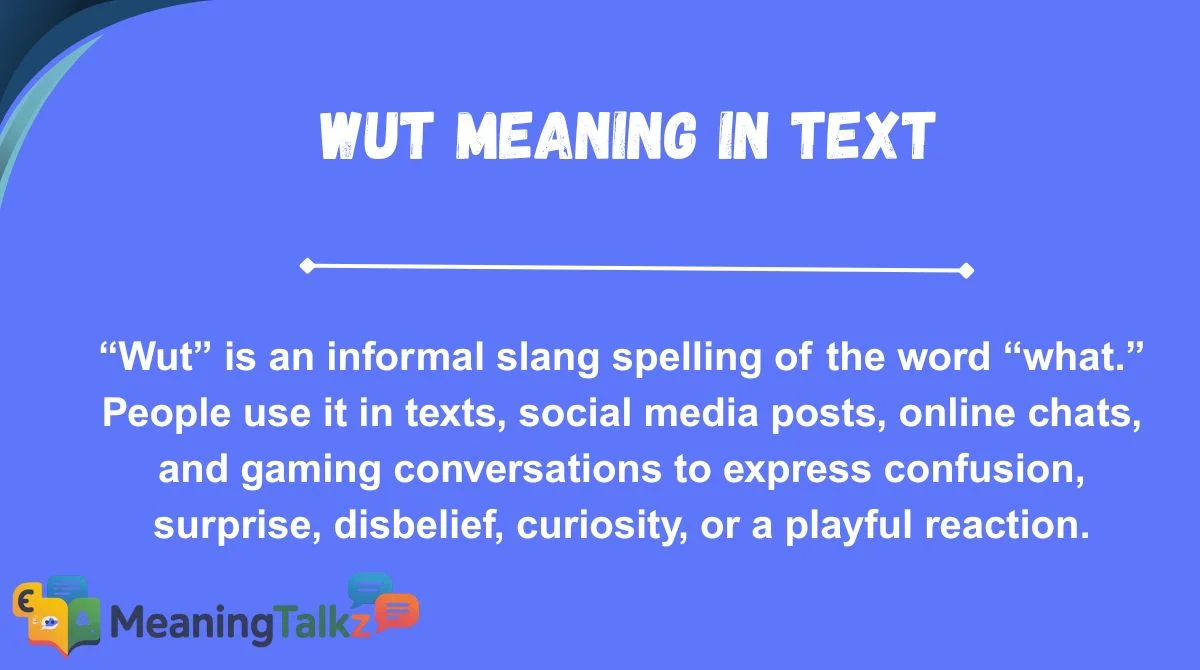
“Wut” is an informal slang spelling of the word “what.” People use it in texts, social media posts, online chats, and gaming conversations to express confusion, surprise, disbelief, curiosity, or a playful reaction.
Depending on the context, “wut” can mean:
- What?
- What did you say?
- I am confused.
- Are you serious?
- That surprised me.
The Most Common Meanings of “Wut”
Simple Replacement for “What”
The most common meaning is simply a casual version of the word “what.”
People often type “wut” because it feels more relaxed and conversational.
Example:
Person A: I’m going skydiving tomorrow.
Person B: Wut?
In this case, “wut” simply means “what?”
Expression of Confusion
Sometimes people use “wut” when something does not make sense.
Example:
Person A: I accidentally put my phone in the refrigerator.
Person B: Wut?
The response shows confusion and curiosity.
Expression of Shock or Surprise
Many people type “wut” after hearing unexpected news.
Example:
Person A: I won $10,000 in a giveaway.
Person B: Wut?!
The extra punctuation often increases the surprise.
Showing Disbelief
“Wut” can also mean that someone finds a statement hard to believe.
Example:
Person A: I finished a whole pizza by myself.
Person B: Wut no way.
Here, the person is expressing disbelief.
Playful or Funny Reaction
Friends often use “wut” jokingly during casual conversations.
Example:
Person A: My cat stole my sandwich.
Person B: Wut 😂
The tone is lighthearted and humorous.
Asking for Clarification
Sometimes a person genuinely did not understand what was said.
Example:
Person A: The algorithm changed after the patch update.
Person B: Wut do you mean?
In this context, the person is asking for more details.
How “Wut” Is Used in Real Conversations
Friends & Casual Texting
Among friends, “wut” is extremely common. It creates a relaxed and informal tone.
Examples:
Friend 1: Guess who I met today.
Friend 2: Wut?
Friend 1: Your cousin.
Friend 1: I dyed my hair green.
Friend 2: Wut lol.
The term often makes conversations feel more natural and friendly.
Instagram & Snapchat
On social media platforms, users frequently comment “wut” under surprising photos, videos, or stories.
Examples:
- Wut did I just watch?
- Wut is happening here?
- Wut that’s mistaken.
People often use it to react quickly without writing a full sentence.
Dating Apps
In dating conversations, “wut” can signal interest, surprise, or playful teasing.
Examples:
Person A: I have eaten pineapple pizza every week for ten years.
Person B: Wut? Seriously?
Person A: I own seven pet snakes.
Person B: Wut lol.
Here, the word helps keep the conversation casual and engaging.
Gaming & Online Communities
Gamers frequently use “wut” during live matches or group chats.
Examples:
- Wut was that move?
- Wut happened?
- Wut are you doing?
Gaming communities often favor short and fast messages, making “wut” a popular choice.
Work or Professional Chat
In professional environments, “wut” is generally uncommon.
Examples:
Informal:
- Wut does this report mean?
Professional:
- Could you clarify what this report means?
Using proper spelling usually creates a more professional impression.
Is “Wut” Rude, Flirty, or Offensive?
The answer depends on context.
Usually Not Rude
Most of the time, “wut” is harmless slang.
People use it casually without negative intentions.
Example:
Friend: I bought a pet goat.
You: Wut?
This sounds curious rather than rude.
Can Sound Slightly Rude
If the tone is already tense, “wut” may appear dismissive.
Example:
Person A: I need to talk about something important.
Person B: Wut.
The short reply may seem uninterested.
Can Be Flirty
Some people use playful confusion as a form of flirting.
Example:
Person A: I think you’re cute.
Person B: Wut? 😏
The person may already understand but is teasing.
Rarely Offensive
The word itself is not offensive.
Problems usually come from tone, sarcasm, or surrounding messages rather than the word itself.
Context Psychology
People often use “wut” when they experience an emotional reaction.
Common emotions include:
- Surprise
- Confusion
- Curiosity
- Excitement
- Disbelief
- Amusement
Understanding the emotional context helps determine the intended meaning.
How to Respond When Someone Says “Wut”
Casual Replies
Use simple explanations.
Examples:
- Let me explain.
- I said I’m moving next month.
- You heard me right.
- That’s what happened.
Funny Replies
Add humor to keep the conversation entertaining.
Examples:
- You heard me.
- The plot thickens.
- Welcome to the chaos.
- That’s only the beginning.
Neutral Replies
Provide clarification without extra emotion.
Examples:
- Let me explain.
- Here’s what I mean.
- I can clarify that.
- I’ll give more details.
Professional Replies
If the conversation is work-related, respond clearly.
Examples:
- Allow me to explain further.
- Here are the details.
- Let me provide clarification.
- I will elaborate below.
Common Misunderstandings About “Wut”
Assuming It Is Always Rude
Many people believe “wut” sounds disrespectful.
In reality, it is usually casual slang with no negative intent.
Thinking It Means Anger
The word often signals surprise rather than frustration.
Someone saying “wut” is usually confused, not angry.
Confusing It with a Typing Error
While it may look like a misspelling, many people intentionally write “wut” because it has become internet slang.
Misreading the Tone
The same word can have different meanings.
Compare:
- Wut?
- Wut lol
- Wut?!
- Wuttt
Each version creates a different emotional tone.
Assuming Everyone Understands It
Some users, especially older generations or non-native English speakers, may not recognize internet slang immediately.
Similar Slang Terms You Should Know
Huh
Shows confusion or surprise.
Bruh
Expresses disbelief, frustration, or amusement.
Lol
Means laughing or finding something funny.
Omg
Shows shock, surprise, or excitement.
Wdym
Short for “What do you mean?”
Idk
Short for “I don’t know.”
Ngl
Short for “Not gonna lie.”
Tbh
Short for “To be honest.”
Fr
Means “for real.”
Wtf
Expresses strong surprise or confusion.
Hmm
Shows thinking or uncertainty.
Eh
Expresses indifference or mild confusion.
When You Should Avoid Using “Wut”
Professional Settings
Business communication usually requires standard spelling.
Instead of:
- Wut happened?
Use:
- What happened?
Professional language creates a stronger impression.
Cross-Cultural Chats
Not everyone understands internet slang.
Using standard English reduces confusion.
Sensitive Situations
When discussing serious topics, “wut” may seem careless.
Examples:
- Medical issues
- Family emergencies
- Workplace conflicts
- Personal problems
A more thoughtful response is often better.
Formal Education
Teachers, professors, and academic environments typically expect standard spelling.
Customer Service Conversations
Businesses generally prefer clear and professional communication.
Using “what” instead of “wut” helps avoid misunderstandings.
Final Thoughts.
The meaning of “wut” in text is usually simple. It is an informal internet slang version of the word “what.” People commonly use it to express confusion, surprise, disbelief, curiosity, or playful humor.
Although the word is extremely common in texting, social media, gaming, and online communities, it is generally best reserved for casual conversations. In professional or sensitive situations, standard spelling is often the safer choice.
Understanding the tone, context, and relationship between speakers will help you interpret “wut” correctly almost every time.
FAQs
What does wut mean in texting?
Wut is a casual slang spelling of the word “what.” It usually expresses confusion, surprise, or curiosity.
Is wut the same as what?
Yes. In most situations, “wut” simply replaces the word “what” in an informal way.
Is wut rude?
Usually no. It is generally friendly and casual, though tone and context can affect how it is perceived.
Why do people type wut instead of what?
People use it because it feels quicker, more playful, and more conversational in online communication.
Can wut be flirty?
Yes. In some dating conversations, people use “wut” playfully to tease or continue a flirtatious exchange.
Is wut used on Snapchat and Instagram?
Yes. It is commonly used on Snapchat, Instagram, TikTok, gaming platforms, and text messaging apps.
Should I use wut in work emails?
No. Professional communication usually requires proper spelling, so “what” is a better choice.
Conclusion
Understanding wut meaning in text is easy once you recognize that it is usually just a casual version of “what.” Whether someone is surprised, confused, curious, or joking around, the meaning almost always depends on the conversation’s tone.
The term is widely used across texting, social media, gaming communities, and dating apps because it feels quick and natural. While it works well in informal chats, it is best avoided in professional or sensitive situations.
Knowing how and when people use “wut” helps you interpret messages correctly and communicate more confidently in today’s digital world.