You open a message on Instagram or a dating app. The person says, “Hey! What are your pronouns?”
Many people pause at that moment. Some feel confused. Some wonder if they said something wrong. Others simply do not know what the question means.
That is why thousands of people search “what are your pronouns” every day.
The question shows up in texts, social media bios, work chats, and online communities. For many people, it is just a polite way to ask how someone wants to be referred to in conversation.
But if you have never seen it before, the meaning can feel unclear.
This guide explains everything in simple terms. You will learn what the phrase means, why people ask it, and how it appears in real conversations online.
By the end, you will know how to answer the question with confidence and avoid common misunderstandings in modern digital communication.
What Does “What Are Your Pronouns” Mean in Text?
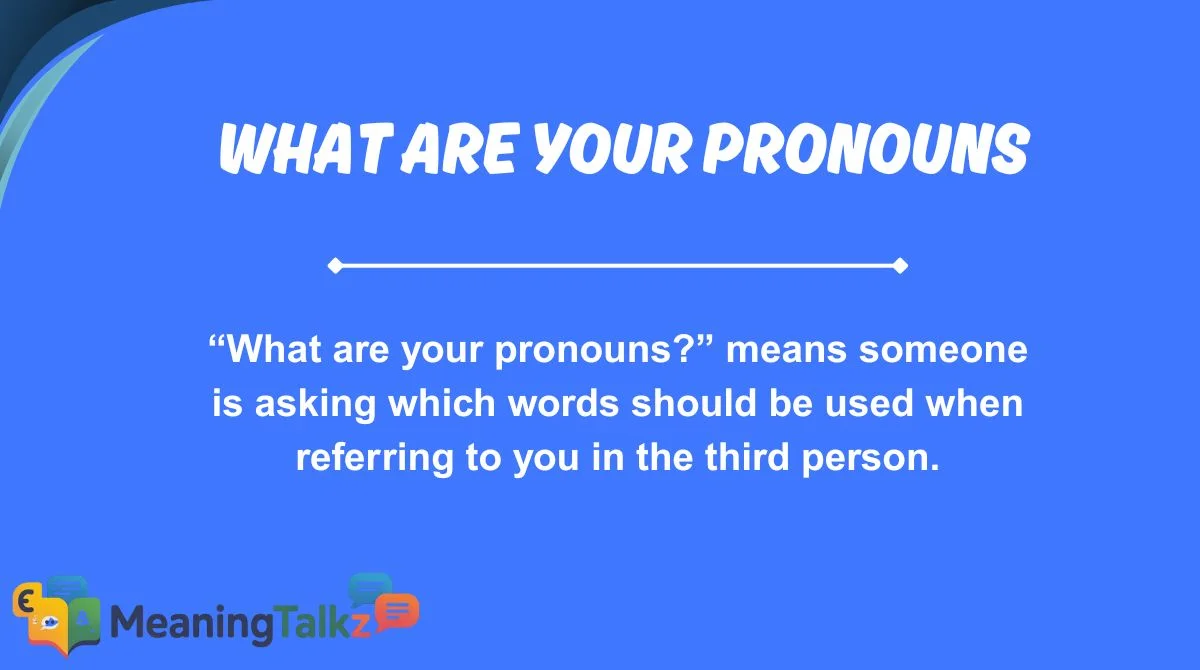
“What are your pronouns?” means someone is asking which words should be used when referring to you in the third person.
Pronouns are words like he, she, they, him, her, them, his, or hers.
In texting and online chats, this question can mean:
- Someone wants to speak respectfully
- They want to avoid guessing your gender
- They are filling out a profile or introduction
- They are learning about identity or inclusivity
Most of the time, the question is polite and meant to show respect.
The Most Common Meanings of “What Are Your Pronouns”
Asking How to Refer to You
The most common meaning is simple. The person wants to know what pronouns to use when talking about you.
Example:
Person A: “What are your pronouns?”
Person B: “She/her.”
This helps avoid mistakes in conversation.
Example sentence:
“Alex said they will join the meeting later.”
Without knowing pronouns, people may guess incorrectly.
Showing Respect
Many people ask this question to show kindness and respect.
Instead of assuming someone’s gender, they ask directly.
Example:
“I want to make sure I address you correctly. What are your pronouns?”
This shows the person cares about how you identify.
Part of Introductions
In some spaces, people share pronouns during introductions.
You may see it in:
- School groups
- Work meetings
- Online communities
- Conference events
Example introduction:
“Hi, I’m Jordan. My pronouns are he/him.”
This helps everyone communicate clearly from the start.
Profile Information
On social media or apps, pronouns often appear in bios.
Example:
“Sam | they/them | designer”
This lets people know how to refer to the person before even talking to them.
How “What Are Your Pronouns” Is Used in Real Conversations
Friends & Casual Texting
Among friends, the question may appear when meeting someone new.
Example:
“Hey, before we start the group chat, what are your pronouns?”
Friends often ask this to avoid awkward mistakes.
In casual chats, answers are short:
“she/her”
“he/him”
“they/them”
Sometimes people also write:
“any pronouns are fine.”
Instagram & Snapchat
On social platforms, pronouns appear in bios and DMs.
Example bio:
“Chris | he/him | music lover”
If someone cannot find pronouns in the bio, they may ask directly.
Example DM:
“Hey! Quick question. What are your pronouns?”
This is normal in many online spaces today.
Dating Apps
Dating apps often include pronoun fields in profiles.
But if someone does not list them, the question may appear in conversation.
Example:
“Nice to meet you! What are your pronouns?”
In dating apps, the question usually means the person wants to be respectful before continuing the chat.
Gaming & Online Communities
In gaming groups or Discord servers, pronouns help people talk about teammates.
Example:
“Jamie said they will join the raid later.”
Without knowing pronouns, players may not know which words to use.
That is why some gaming communities ask members to share pronouns when joining.
Work or Professional Chat
In modern workplaces, pronouns are sometimes shared in introductions.
Example:
“Hi everyone, I’m Maya. My pronouns are she/her.”
Some people also add pronouns to email signatures.
Example:
Maya Patel
Marketing Manager
Pronouns: she/her
This makes communication clearer for coworkers.
Is “What Are Your Pronouns” Rude, Flirty, or Offensive?
The tone depends on context.
Most of the time, the question is neutral and respectful.
When It Feels Positive
It feels positive when the question is asked politely.
Example:
“I want to make sure I address you correctly. What are your pronouns?”
This shows care and respect.
Many people appreciate being asked instead of being guessed.
When It Feels Neutral
In group introductions or forms, the question is simply informational.
Example:
“Name:
Role:
Pronouns:”
No emotion is attached. It is just part of the format.
When It Might Feel Uncomfortable
Sometimes people feel awkward if the question appears suddenly in private chat.
Example:
Random message:
“What are your pronouns?”
Without context, the message may feel confusing.
But even then, it is rarely meant to offend.
How to Respond When Someone Says “What Are Your Pronouns”
You do not need a long answer. Most replies are very short.
Casual Replies
These are simple and common.
Examples:
“he/him”
“she/her”
“they/them”
Many people respond with just two words.
Funny Replies
Some people respond playfully among friends.
Examples:
“he/him but mostly tired”
“she/her and coffee lover”
“they/them and pizza fan”
These add humor while still answering the question.
Neutral Replies
If you want a calm tone, try these:
“My pronouns are she/her.”
“I use he/him.”
“I use they/them.”
Clear and simple.
Professional Replies
In work settings, use a polite full sentence.
Examples:
“My pronouns are she/her.”
“I go by he/him pronouns.”
“I use they/them pronouns.”
Professional chats usually avoid jokes.
Common Misunderstandings About “What Are Your Pronouns”
Thinking It Is an Insult
Some people believe the question is rude.
In reality, it is usually meant to avoid being disrespectful.
The person asking wants to speak correctly.
Assuming It Is Only for Certain Groups
Another misunderstanding is thinking only specific people have pronouns.
In fact, everyone uses pronouns.
Examples:
He went to the store.
She finished the project.
They joined the meeting.
Pronouns exist in everyday language.
Confusing It With Personal Questions
Some think the question asks about personal life.
It does not.
It only asks which words should be used in conversation.
Thinking You Must Answer
You are not required to answer if you feel uncomfortable.
You can say:
“I’m okay with any pronouns.”
“Just use my name.”
That is perfectly acceptable.
Similar Slang Terms You Should Know
Modern online chats use many related terms.
Here are common ones.
such pronouns
The pronouns a person wants others to use.
Pronoun check
A quick moment in a meeting where people share pronouns.
They/them
Pronouns used for someone without specifying gender.
Any pronouns
A person is comfortable with any pronoun.
No pronouns
The person prefers only their name.
Pronouns in bio
When someone lists pronouns in a profile.
Misgendering
Using incorrect pronouns for someone.
Gender-neutral language
Words that avoid gender assumptions.
Name-only reference
Using a person’s name instead of pronouns.
Pronoun sharing
The act of telling others your pronouns.
When You Should Avoid Using “What Are Your Pronouns”
Although the question is usually respectful, there are times when it may not fit the situation.
Professional Settings With Strict Culture
Some workplaces or formal cultures may not use pronoun discussions.
In these environments, it may feel unusual.
If unsure, observe how others communicate first.
Cross-Cultural Conversations
In some countries, the topic is unfamiliar.
People might feel confused by the question.
When chatting internationally, simple language is often better.
Sensitive Situations
Avoid asking in public if the person may feel uncomfortable.
For example:
- In front of a large crowd
- During serious conversations
- When the person is already stressed
If you must ask, private and polite messages are better.
Final Thoughts.
The phrase “what are your pronouns” has become common in modern texting, social media, and online communities.
At its core, the question is simple. It asks which words people should use when referring to you in conversation.
Most of the time, the intention is respectful. People ask because they want to avoid guessing and communicate correctly.
Understanding the phrase helps you feel more comfortable in digital conversations. It also helps prevent awkward moments when chatting with new people online.
When someone asks the question, you can answer quickly and clearly. A short reply like “she/her” or “he/him” is usually enough.
Clear communication makes online conversations smoother for everyone.
FAQs
Why do people ask “what are your pronouns”?
People ask to know which words should be used when referring to you in conversation. It helps avoid mistakes and shows respect.
What is the best way to answer “what are your pronouns”?
A short reply works best. Examples include “she/her,” “he/him,” or “they/them.”
Is asking someone’s pronouns rude?
No. In most situations, it is considered polite because it avoids making incorrect assumptions.
Do I have to answer the question?
No. You can say you prefer using your name or that any pronouns are fine.
Why do people put pronouns in their bio?
Listing pronouns in a profile helps others know how to refer to the person before starting a conversation.
Can someone use more than one pronoun?
Yes. Some people use multiple pronouns such as “she/they” or “he/they.”
Is this question common on social media?
Yes. It appears often on platforms like Instagram, Discord, and dating apps where people meet new users online.
Conclusion
The question “what are your pronouns” is now a normal part of online communication in 2026. It appears in texts, social media, workplaces, and digital communities around the world.
While it may feel confusing at first, the meaning is simple. The person asking wants to know the correct way to refer to you in conversation. This helps avoid mistakes and keeps communication respectful.
Knowing how to understand and answer this question makes modern online interactions easier. A short, clear reply is usually all that is needed.
As digital conversations continue to grow, understanding small phrases like this can help you communicate smarter, avoid misunderstandings, and feel more confident when meeting new people online.