Last updated on October 1st, 2026 at 06:14 am
You open a message and see just two letters: “tf?”
Now you pause.
Are they confused? Are they mad? Did you say something wrong?
Short text slang like this shows up everywhere today—Snapchat, Instagram DMs, group chats, gaming chats, and even comment sections. Because people type fast, they shorten words into tiny codes. One of the most common ones is tf.
That’s why many people search “tf meaning in text” when they see it in a message and are not sure how to read the tone.
Sometimes it means shock. Sometimes it means confusion. In other cases it can sound funny or even a little rude depending on how it’s used.
The tricky part is that two letters can change meaning based on the situation, tone, and relationship between people.
This guide explains the real meaning of tf in text, how people actually use it in 2026 conversations, when it sounds friendly, and when you should avoid using it.
By the end, you’ll know exactly what someone means when they type tf—and how to reply without making things awkward.
What Does “tf meaning in text” Mean in Text?
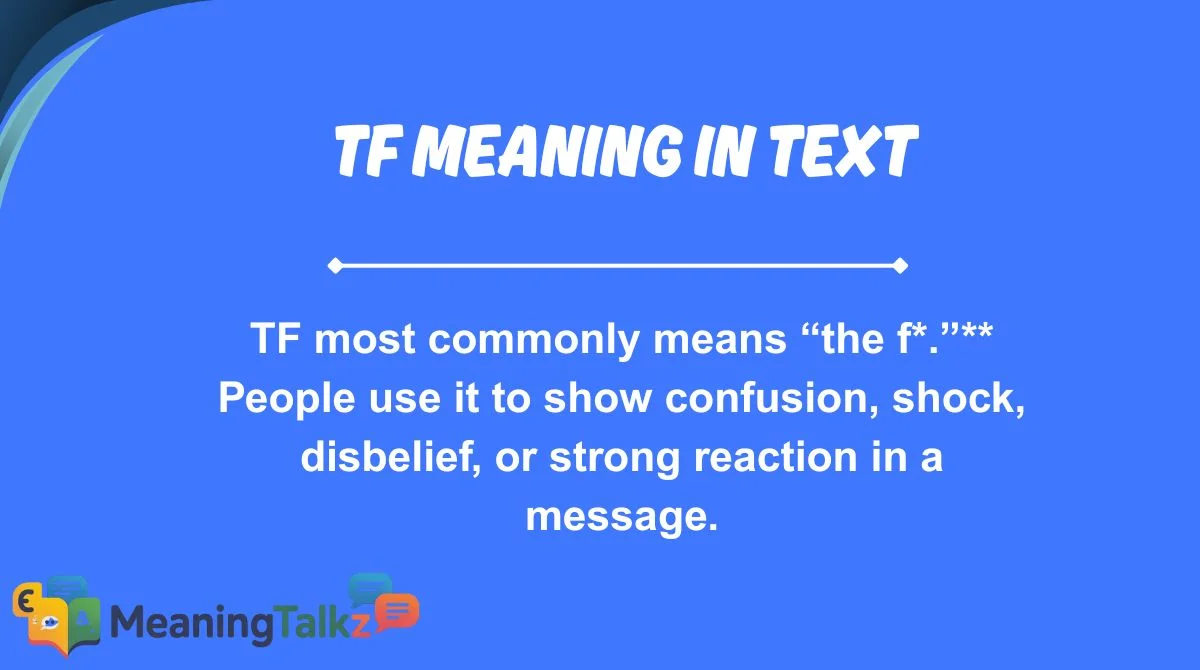
TF most commonly means “the f*.”**
People use it to show confusion, shock, disbelief, or strong reaction in a message.
In texting, tf often appears in phrases like:
- “what tf”
- “where tf”
- “why tf”
It can also stand alone as “tf?” when someone feels confused or surprised. In some cases, people use it in a playful or joking way.
Why Do People Use TF Instead of Writing a Full Reaction?
People use TF because it allows them to express a strong reaction quickly without typing a complete sentence. Modern texting is often fast and informal, so users naturally shorten words and phrases that are already familiar within online communities. Instead of writing “What is going on?” or “How did that happen?”, someone may simply type “TF?” and expect the other person to understand the emotion behind it.
One major reason for using TF is speed. Text conversations often happen in real time, especially during gaming, live events, group chats, and social media discussions. When something surprising happens, people want to react immediately. Typing a short expression such as “tf?” takes much less effort than writing a full explanation.
TF also adds emotional emphasis. Compare “Why did you do that?” with “Why tf did you do that?” The second message feels much stronger. It tells the reader that the sender is confused, shocked, frustrated, or strongly interested in the answer. The abbreviation therefore works not only as a shortcut but also as a way to communicate emotion.
Another reason is that online conversations have developed their own language. People regularly use abbreviations such as LOL, IDK, FR, BTW, WTF, and SMH. Once someone becomes familiar with these terms, they can understand them almost instantly. TF fits into the same pattern of quick digital communication.
Social media has also made short reactions extremely common. A person watching a surprising video may comment “tf?” instead of writing a full sentence. Someone seeing an unexpected post might write “what tf” or “how tf.” These expressions are short enough to work naturally in comment sections while still communicating a strong reaction.
TF is particularly common in gaming communities. Games can create unexpected situations within seconds. A player might suddenly lose a match, see an unusual glitch, or watch another player perform an impressive move. Instead of stopping to type a long reaction, they may simply write “tf was that?” The abbreviation keeps the conversation moving.
The term can also make a message feel more conversational. People do not usually write internet slang the same way they would write a formal email. TF gives the message a casual, spontaneous quality. It can make the sender sound surprised or emotionally involved rather than distant.
However, the same feature can create problems. Because TF contains profanity in its expanded form, some people may consider it inappropriate. Someone unfamiliar with internet slang might also interpret it as aggressive even when the sender intended it as a joke.
This is why audience matters. Using TF with close friends may be completely normal, while using it with a teacher, employer, customer, or unfamiliar person can create the wrong impression.
Overall, people use TF because it is quick, expressive, familiar, and emotionally strong. It lets users react instantly while adding emphasis to a question or statement. Its meaning is usually clear among people who understand online slang, but the tone depends heavily on the situation and relationship between the speakers.
How to Understand the Tone Behind “TF” in a Message
Understanding the meaning of TF is only part of the challenge. The more important question is often what tone the sender intended. A simple message such as “tf?” can sound confused, surprised, annoyed, or humorous depending on the conversation.
The first thing to consider is the relationship between the people involved. Close friends often use TF casually without intending to offend each other. If a friend sends “where tf are you 😂,” the message may be playful rather than angry. The relationship provides important context.
Next, look at the words surrounding TF. The abbreviation can make an existing emotion stronger. For example, “How tf did you do that?” may express genuine amazement. The sender could be impressed rather than angry. On the other hand, “Why tf would you do that?” may sound more critical because the question suggests disagreement.
Punctuation can also change the tone. “TF?” is short and ambiguous. “TF???” usually communicates stronger surprise. “What tf 😭” may be humorous or dramatic, while “What tf is wrong with you?” is much more confrontational.
Emojis are another useful clue. Internet users often use emojis to show that a message is playful. A laughing emoji, crying emoji, or shocked emoji can make TF feel less serious. Without any tone markers, the reader may need to rely more heavily on the rest of the conversation.
The situation itself matters too. If something unexpected just happened, TF is probably a spontaneous reaction. For example, if a friend tells you they accidentally sent a private message to the wrong person, replying “tf 😭” could simply mean “I can’t believe that happened.”
Gaming conversations provide another example. A player might write “how tf did he win?” after an unexpected move. The sender could be frustrated, impressed, or simply surprised. Looking at what happened in the game helps determine the intended emotion.
The platform can provide additional context. On TikTok, Instagram, Snapchat, and other social platforms, TF often appears in exaggerated reactions. People may use it for humor even when they are not genuinely angry. In private messages, however, the same phrase could carry a more personal tone.
You should also consider the conversation before the message. If the two people were joking around, TF is more likely to be playful. If they were arguing, the same expression could be confrontational. A single abbreviation should never be interpreted completely separately from the previous messages.
If you are unsure, you can respond neutrally rather than assuming the sender is angry. A simple response such as “What happened?” or “What do you mean?” gives the person a chance to explain.
It is also important not to treat every use of TF as offensive. Internet slang often uses strong language for emphasis without intending actual hostility. However, that does not mean every use is harmless. When TF is combined with insults, accusations, or aggressive wording, the tone can become clearly negative.
The best way to understand TF is therefore to consider the relationship, surrounding words, punctuation, emojis, platform, and previous conversation. These clues usually reveal whether the sender is joking, surprised, confused, frustrated, or genuinely upset.
Once you learn to read these signals, a short message like “tf?” becomes much easier to understand. Instead of focusing only on the abbreviation, you can recognize the emotion and respond according to the actual situation.
The Most Common Meanings of “tf meaning in text”
Even though tf usually points to the same idea, the tone can change depending on the message.
1. “The F***” (Shock or Confusion)
This is the main meaning.
People add tf to show they are shocked or confused about something.
Example:
- “What tf happened here?”
- “Where tf did you go?”
In this case, the person is reacting strongly.
It is similar to saying:
- “What is going on?”
- “This makes no sense.”
But the slang version feels more emotional.
2. Strong Emphasis
Sometimes tf is used just to make a question stronger.
Example:
- “Why tf are you awake at 4am?”
- “How tf did you win that game?”
The person is not always angry. They might just be surprised.
Tone matters here.
3. Reaction to Something Weird
If someone posts something strange or unexpected, people may respond with tf.
Example:
Friend: “I ate pizza with chocolate.”
Reply:
“tf?”
The message means:
“Wait… what?”
4. Funny or Dramatic Reaction
Many people use tf in a playful way.
Example:
Friend: “I accidentally sent the wrong text to my boss.”
Reply:
“WHAT TF”
In this situation, it shows dramatic surprise.
How “tf meaning in text” Is Used in Real Conversations
The meaning stays similar across platforms, but the tone changes depending on where it is used.
Friends & Casual Texting
Among friends, tf usually feels relaxed and playful.
Example:
Friend:
“I just dyed my hair green.”
Reply:
“LMAO what tf”
This shows surprise but not anger.
Friends often use it jokingly.
Example:
“why tf are you eating noodles at 2am”
Here it feels funny, not rude.
Instagram & Snapchat
On social media, tf is very common in reactions.
People use it when they see:
- strange posts
- shocking videos
- unexpected news
Example comments:
- “what tf is this”
- “how tf did this happen”
- “tf did I just watch”
These comments are usually emotional reactions.
Sometimes they are exaggerated for humor.
Dating Apps
On dating apps, tone becomes more sensitive.
Example:
Person A:
“I have 12 cats.”
Person B:
“12 cats tf??”
This could be playful.
But it could also feel rude depending on the tone.
People sometimes use tf when something unexpected appears in a profile.
Still, it is safer to avoid it with someone new.
Gaming & Online Communities
Gamers use tf constantly during gameplay.
Example:
- “how tf did you kill me”
- “where tf is the boss”
- “what tf was that”
In gaming chat, it usually means:
- surprise
- frustration
- confusion
Because gaming is fast and emotional, short slang like tf spreads quickly.
Work or Professional Chat
This is where tf should not be used.
Typing tf in a work message can sound:
- rude
- unprofessional
- aggressive
Example:
Bad message:
“Why tf is this report late?”
Better message:
“Can you explain why the report is delayed?”
Even if the person meant it casually, it can create tension.
Is “tf meaning in text” Rude, Flirty, or Offensive?
The answer depends on context and relationship.
When It Feels Neutral
Among friends, tf often feels normal.
Example:
“where tf are you lol”
The lol softens the tone.
This makes the message playful.
When It Feels Funny
Some people use tf to exaggerate reactions.
Example:
“tf did I just read”
This shows shock in a humorous way.
When It Feels Rude
If someone writes:
“what tf is wrong with you”
That clearly sounds aggressive.
The tone becomes insulting.
When It Feels Slightly Offensive
If used in serious conversations, tf can feel disrespectful.
Example:
“why tf did you do that”
The message sounds accusatory.
Tone markers like lol or emojis usually soften the message.
Without them, tf can sound harsh.
How to Respond When Someone Says “tf meaning in text”
Your reply should match the tone of the conversation.
Casual Replies
If it is a friendly chat, keep things relaxed.
Examples:
- “lol I know right”
- “I was thinking the same”
- “it’s inexplicable”
These keep the conversation smooth.
Funny Replies
If the message is playful, humor works well.
Examples:
- “don’t ask”
- “long story”
- “chaos happened”
These keep the energy light.
Neutral Replies
If you are unsure about tone, stay neutral.
Examples:
- “what do you mean?”
- “what part confused you?”
- “I can explain”
This avoids misunderstanding.
Professional Replies
In work settings, ignore the slang tone and stay calm.
Example:
Message:
“tf happened with the file?”
Reply:
“I’ll check the issue and update you.”
This keeps the conversation professional.
Common Misunderstandings About “tf meaning in text”
Many people misread tf when they see it.
Here are common mistakes.
Thinking It Always Means Anger
Not always.
Sometimes tf simply means surprise.
Example:
“tf that movie was amazing”
The person is excited.
Confusing It With “WTF”
Both are similar but wtf feels stronger.
- tf = softer slang
- wtf = stronger reaction
People often shorten it to tf to sound less intense.
Assuming It Is Always Rude
Among friends, it is usually harmless.
Tone, punctuation, and relationship matter.
Reading Too Much Into It
Text lacks voice tone.
A short message like “tf?” might just mean:
“Can you explain?”
Not anger.
Similar Slang Terms You Should Know
Internet slang evolves fast. Here are related expressions.
WTF – What the f***, stronger reaction.
FR – For real.
IDK – I don’t know.
TBH – To be honest.
SMH – Shaking my head.
NGL – Not gonna lie.
BRUH – Reaction to something ridiculous.
LMAO – Laughing very hard.
IKR – I know right.
OMFG – Extreme shock or surprise.
LOL – Laughing.
SUS – Something feels suspicious.
These often appear together in the same conversations.
Example:
“bruh what tf was that lol”
When You Should Avoid Using “tf meaning in text”
Even though the slang is common, there are times when you should not use it.
Professional Settings
Work chats should stay clear and respectful.
Avoid slang like:
- tf
- wtf
- bruh
Professional language prevents misunderstanding.
Cross-Cultural Conversations
Not everyone understands internet slang.
Some people may see tf as offensive.
If you are speaking with someone from another culture or age group, simple language is safer.
Sensitive Situations
Avoid tf during serious conversations.
Examples:
- arguments
- emotional talks
- family issues
Instead of saying:
“why tf did you do that”
Say:
“can you explain what happened?”
This keeps the conversation calm.
Final Thoughts.
Short slang like tf shows how fast online language changes. Two letters can carry strong emotion in a text message.
In most cases, tf meaning in text refers to “the f*,” used to express confusion, shock, or disbelief.** It often appears in phrases like “what tf,” “why tf,” or simply “tf?”
Among friends and online communities, it usually feels casual or humorous. But tone matters. Without context, it can also sound rude or aggressive.
The safest way to understand tf is to look at the full conversation, the relationship between people, and the platform where it appears.
When used carefully, it’s just another small piece of modern texting language.
Knowing these slang meanings helps you read messages more clearly—and respond without awkward misunderstandings.
FAQs
What does tf mean in texting?
In texting, tf usually means “the f*.”** People use it to show confusion, shock, or disbelief in messages.
Is tf the same as wtf?
They are similar, but wtf is stronger. Many people shorten it to tf to sound less aggressive.
Is tf rude in text messages?
It can sound rude depending on the context. Among friends it may feel casual, but in serious conversations it can seem disrespectful.
What does “what tf” mean in text?
“What tf” is a reaction to something confusing or shocking. It means “what is going on?” or “how did that happen?”
Do people still use tf in 2026?
Yes. It is still common in texting, social media comments, gaming chats, and casual online conversations.
Can tf be used in professional messages?
No. It is best to avoid slang like tf in work emails, professional chats, or formal communication.
Why do people shorten wtf to tf?
People shorten it to type faster and make the reaction feel slightly less intense.
Conclusion
The phrase tf meaning in text is searched by many people because modern texting is full of fast slang and tiny abbreviations. In most situations, tf simply means “the f*,” used to express surprise, confusion, or disbelief.**
While it is common in casual conversations, gaming chats, and social media reactions, it is important to understand the tone before using it.
Among friends it may sound funny or playful, but in serious or professional settings it can feel rude.
The key to using internet slang well is context awareness. When you understand how and where terms like tf are used, you can read messages correctly and communicate more clearly in today’s fast digital conversations.