Last updated on September 12th, 2026 at 04:51 am
You open a message and see just two letters: “rd.”
No emoji. No extra words. Just rd.
Now you’re stuck wondering what it means. Is the person saying okay? Are they annoyed? Or is it some kind of slang you missed?
This is exactly why thousands of people search for “rd meaning in text” every month. Short texting slang keeps changing, especially with Gen Z and social media users.
Apps like Snapchat, Instagram, and gaming chats are full of tiny shortcuts that can confuse anyone who isn’t used to them.
The tricky part is that “rd” can mean different things depending on the situation. In most cases it simply means “alright,” but sometimes it can signal agreement, confirmation, or even a slightly cold response.
In this guide, you’ll learn the real rd meaning in text, how people actually use it in conversations, and how to reply without sounding awkward. By the end, you’ll never have to guess what “rd” means again.
What Does “RD” Mean in Text?
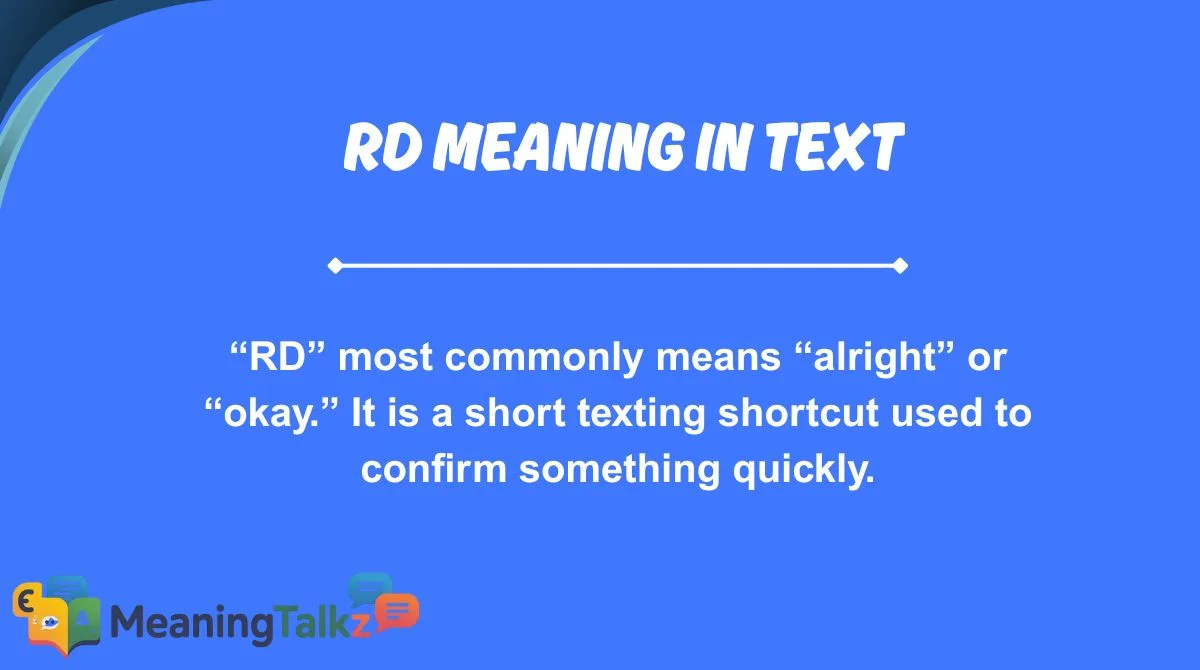
“RD” most commonly means “alright” or “okay.” It is a short texting shortcut used to confirm something quickly.
People often use it when they want to acknowledge a message without typing a full reply.
Common interpretations include:
- Alright / Okay
- Understood
- Sounds good
- Ride or Die (less common slang meaning loyal friend)
Most of the time, rd simply shows agreement or acknowledgment in casual chats.
Does “RD” Always Mean “Alright”?
No. Although “alright” or “okay” is a common meaning when someone sends “rd” as a short reply, the abbreviation is not completely standardized. Context can change the meaning. In gaming, for example, “rd” may mean “round,” as in “next rd starts soon.” In a message about reading something, it can sometimes be shorthand for “read.” Some social-media slang sources also document “real deal” as another use.
The safest approach is to look at the words around “rd.” If it appears alone after a plan or question, “alright” is usually the most natural interpretation.
RD vs. “ALR” vs. “Aight”: What’s the Difference?
RD, ALR, and Aight can all communicate agreement, but they are not equally common or standardized. “ALR” is a familiar shortening of “alright,” while “aight” is an established informal spelling of the same word. “RD” is more context-dependent and can have several meanings beyond “alright.”
For example, “alr, I’ll come” and “aight, I’ll come” clearly mean “okay” or “sure.” A standalone “rd” can mean the same thing, but its meaning should be checked against the conversation. This is especially important in gaming, comments, or professional chats, where other interpretations may fit better.
The Most Common Meanings of “RD”
Although it looks simple, rd can have a few different meanings depending on context. Here are the ones you will see most often.
1. “Alright” or “Okay”
This is the most common meaning of rd in text messages.
People use it as a quick response when they accept something or understand what was said.
Example:
Friend: “Meet at 7 tonight.”
You: “rd”
In this case, rd means “okay” or “sounds good.”
Why people use it:
- It’s faster than typing “alright”
- It feels casual
- It keeps conversations moving
You will see this version a lot in:
- Snapchat chats
- Instagram DMs
- Quick texting with friends
2. “Understood”
Sometimes rd means the person got your message and understood it.
Example:
Boss: “Send the file before 3 PM.”
Employee: “rd”
Here, the person is basically saying:
“I got it.”
This usage is common in:
- group chats
- team chats
- gaming communication
3. “Sounds Good”
Another meaning is agreement with a plan.
Example:
Friend:
“Let’s order pizza tonight.”
Reply:
“rd”
This means:
“Sounds good to me.”
It’s short, clear, and easy to type.
4. “Ride or Die”
In some online communities, rd can also stand for “ride or die.”
This slang describes someone who is extremely loyal.
Example:
“She’s my rd friend.”
Meaning:
“She’s my ride-or-die friend.”
However, this version is much less common in simple text replies.
How “RD” Is Used in Real Conversations
Understanding the meaning is helpful, but seeing how rd appears in real chats makes it easier to recognize.
Friends & Casual Texting
Among friends, rd is a quick agreement message.
Examples:
“Movie at 9?”
“rd”
“I’ll call you later.”
“rd”
It shows:
- acceptance
- relaxed tone
- casual communication
Sometimes it can also signal a short reply when someone is busy.
Instagram & Snapchat
Short replies are common on social media, and rd fits perfectly with fast messaging culture.
Example conversation:
“Send the pic later.”
“rd”
“Meet at the mall tomorrow.”
“rd”
Because Snapchat and Instagram chats move quickly, people use tiny responses instead of full sentences.
Dating Apps
On dating apps, rd can mean agreement but sometimes feels slightly distant.
Example:
“Want to grab coffee tomorrow?”
Reply:
“rd”
Technically it means yes, but the short reply may feel less enthusiastic than:
“Yeah that sounds great.”
So tone matters here.
Gaming & Online Communities
Gamers often use rd as a quick confirmation during gameplay.
Example:
“Push left side.”
“rd”
Meaning:
“I understand the plan.”
This is useful in games where fast communication is important.
Work or Professional Chat
In work chats, rd is sometimes used in casual teams but not always recommended.
Example:
Manager:
“Meeting starts at 10.”
Reply:
“rd”
Some workplaces accept it, but others prefer:
“Okay.”
“Got it.”
“Understood.”
Professional tone matters here.
Is “RD” Rude, Flirty, or Offensive?
The word rd is usually neutral, but tone depends on context.
When It Feels Positive
It feels friendly when:
- confirming plans
- replying quickly
- chatting with friends
Example:
“Let’s hang out tomorrow.”
“rd”
This feels relaxed and normal.
When It Feels Neutral
Sometimes rd just feels informational.
Example:
“Send the report tonight.”
“rd”
It simply confirms the message.
When It Feels Cold
Very short replies can sometimes feel emotionally distant.
Example:
“I really miss talking to you.”
Reply:
“rd”
In this situation, the reply may feel dismissive or uninterested.
This doesn’t mean the person intended to be rude, but texting tone can easily be misunderstood.
When It Might Feel Rude
It can sound rude if:
- someone expected a longer response
- the message was emotional
- the conversation needed engagement
Example:
“I worked really hard on that project.”
Reply:
“rd”
Here it feels like lack of interest.
How to Respond When Someone Says “RD”
When someone texts rd, the right reply depends on the conversation.
Casual Replies
If the conversation continues:
“rd”
“Cool, see you later.”
or
“rd”
“Nice.”
Funny Replies
Friends sometimes joke about short replies.
Example:
“rd”
Reply:
“Only two letters today?”
or
“That’s the shortest message ever.”
Neutral Replies
Sometimes you can simply continue the conversation.
Example:
“rd”
Reply:
“Great, I’ll send the details soon.”
Professional Replies
If it appears in work chat:
“rd”
You could respond with:
“Thanks for confirming.”
or
“Perfect.”
Keeping the tone clear helps avoid confusion.
Common Misunderstandings About “RD”
Because texting slang moves fast, people often misunderstand rd.
Here are common mistakes.
Thinking It Means Something Negative
Many people assume rd means someone is annoyed.
Most of the time, it simply means:
“Okay.”
Nothing more.
Confusing It With “Ride or Die”
While rd can mean ride or die, that meaning usually appears in longer sentences.
Example:
“She’s my rd.”
But in short replies, it almost always means alright.
Thinking It Is an Acronym Only
Some people think rd stands for multiple words.
In casual texting, it’s simply a shortened version of “alright.”
No deeper meaning.
Misreading the Tone
Text messages lack voice tone.
So rd may look cold even when it’s not.
Context matters more than the letters themselves.
Similar Slang Terms You Should Know
Short texting slang keeps evolving. Here are related terms that appear in chats.
1. K
Very short way of saying okay.
2. Bet
Means “alright” or “sounds good.”
3. Aight
Another slang version of “alright.”
4. Ight
Shortened spelling of “alright.”
5. Yup
Casual yes.
6. Yep
Friendly confirmation.
7. Gotcha
Means “I understand.”
8. Fs
Short for “for sure.”
9. Okie
Cute version of okay.
10. Sure
Agreement with a plan.
11. Alr
Short form of “alright.”
12. KK
Playful way to say okay.
Knowing these helps you understand modern texting faster.
When You Should Avoid Using “RD”
Even though rd is common in casual texting, there are situations where it’s better not to use it.
Professional Settings
In work emails or formal messages, rd can look unprofessional.
Better alternatives:
- Okay
- Understood
- Noted
- Sounds good
These look more polished.
Cross-Cultural Conversations
Not everyone understands internet slang.
If you are messaging someone from another country or age group, rd might confuse them.
Clear language is better.
Sensitive Situations
If someone shares something emotional, avoid short replies like rd.
Example:
“I had a really tough day.”
Replying with:
“rd”
can feel uncaring.
Instead say:
“I’m sorry to hear that.”
Tone matters in sensitive moments.
Final Thoughts.
The rd meaning in text is usually simple: it means “alright” or “okay.” It’s one of many short responses people use in fast online conversations.
You will see it most often in:
- Snapchat chats
- Instagram DMs
- texting between friends
- gaming conversations
Most of the time, rd just confirms a message quickly. It doesn’t usually carry a deep emotional meaning.
However, like all texting slang, context changes how it feels. In casual chats it sounds normal, but in professional or emotional conversations it can feel too short.
Once you understand the tone and situation, recognizing rd in text messages becomes easy. It’s simply part of the fast, minimal style of modern messaging.
FAQs
What does rd mean in text messages?
In most chats, rd means “alright” or “okay.” It confirms that the person understands or agrees with what was said.
Is rd a rude reply?
No. Usually rd is neutral. However, it may feel cold if someone expected a longer response.
Does rd mean ride or die?
Sometimes. In slang, rd can stand for “ride or die,” meaning a very loyal friend. But this meaning is less common in short replies.
Why do people type rd instead of alright?
People use rd because it’s faster. Modern texting often favors very short responses.
Is rd used on Snapchat and Instagram?
Yes. rd is very common on Snapchat, Instagram DMs, and quick chats where people send fast replies.
Is rd appropriate for work messages?
Usually not. In professional chats, it’s better to say “okay,” “understood,” or “noted.”
How should I reply to rd?
You can continue the conversation normally.
Example:
“rd”
“Great, see you then.”
Conclusion
Understanding the rd meaning in text helps you keep up with modern messaging. In most conversations, it simply means “alright,” “okay,” or “I understand.”
People use it because texting has become faster and shorter, especially on social media and chat apps.
While rd works perfectly in casual conversations, it’s best to avoid it in professional or sensitive situations.
Once you recognize the context, you’ll know exactly how to read and respond to it. Instead of wondering what those two letters mean, you can focus on the conversation itself.