Last updated on September 12th, 2026 at 04:48 am
You open a message from a friend. It says: “I feel pure ennui today.”
You pause.
Is that sadness? Boredom? Something deeper?
Many people run into this exact moment. The word ennui pops up in texts, captions, tweets, and even dating bios. It sounds fancy, but the feeling behind it is very common.
That is why so many people search for “ennui meaning.”
In simple terms, ennui describes a heavy kind of boredom. Not just “nothing to do” boredom. It feels more like life has lost its spark for a moment.
Today the word is showing up more in online talk. People use it when they feel stuck, drained, or mentally tired. Some use it jokingly. Others use it to explain a real mood.
In this guide, you will learn the exact meaning of ennui, how people use it in texting, and how to reply when someone says it.
By the end, you will fully understand the word and know how to use it the right way in modern online conversations.
What Does “ennui meaning” Mean in Text?
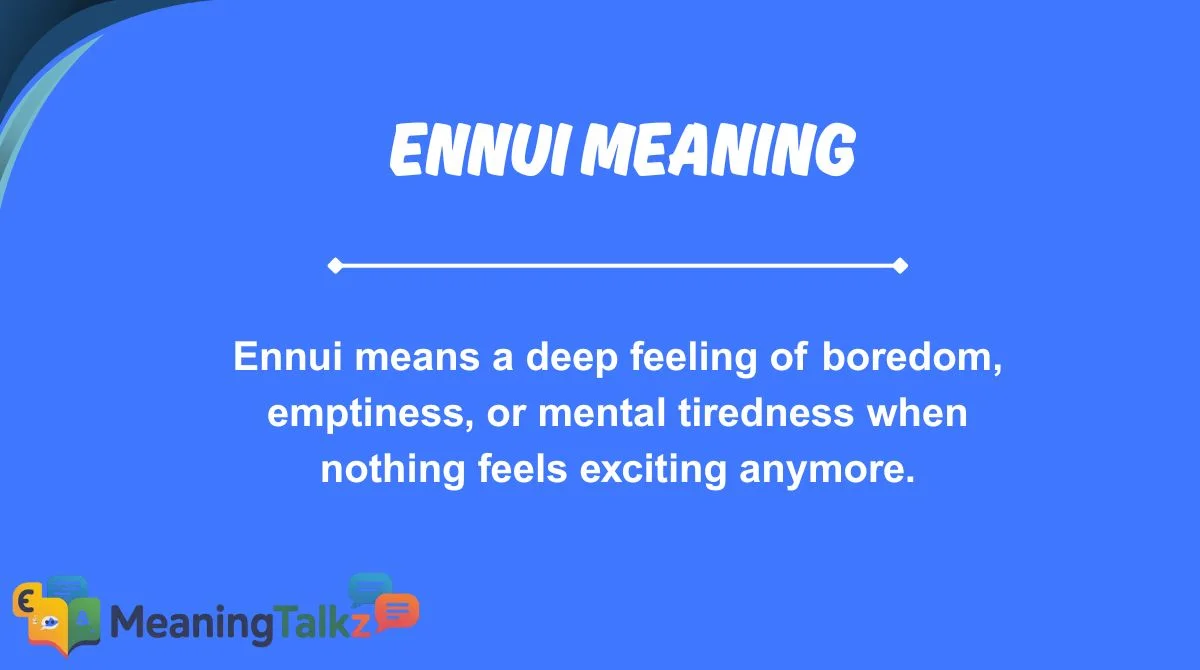
Ennui means a deep feeling of boredom, emptiness, or mental tiredness when nothing feels exciting anymore.
In texting, people use ennui to show they feel stuck or drained. It is stronger than normal boredom.
Common interpretations include:
- feeling emotionally bored
- feeling tired of daily routine
- losing excitement about things
- a quiet, heavy mood
It often appears when someone wants to describe a deeper kind of boredom.
What Does “Ennui” Mean From a Crush?
If someone you like says they are feeling ennui, they are usually describing a mood rather than sending a hidden romantic message. They may feel bored, restless, emotionally tired, or dissatisfied with their routine. For example, “I’m fighting weekend ennui” could simply mean they want something interesting to do. If they add something like “wish you were here” or “come save me from this boredom,” the message may become more playful or flirty. The word itself is not inherently romantic. Pay attention to the surrounding conversation, emojis, and what the person asks you to do next.
Is “Ennui” Slang or a Regular English Word?
Ennui is not originally slang. It is an established English noun borrowed from French and has been used for centuries to describe boredom, weariness, and dissatisfaction caused by a lack of activity or interest.
Today, people may use it casually in texts, captions, memes, and social media posts. That can make it look like internet slang, especially when someone writes something humorous such as “Waiting for my food has given me ennui.” But there is no hidden acronym behind the word. It simply describes a particular kind of deep or lingering boredom.
The Most Common Meanings of “ennui meaning”
The word ennui can describe different moods depending on context. Here are the most common ways people use it.
1. Deep Boredom
This is the most direct meaning.
It describes boredom that feels heavy and slow. Not just waiting in line or sitting in class. It feels like nothing is interesting.
Example:
“Sunday afternoon ennui is real.”
This means the person feels a dull, empty kind of boredom.
2. Emotional Burnout
Sometimes people use ennui when they feel mentally tired from life.
They may not be sad, but they feel drained.
Example:
“Work, sleep, repeat. Pure ennui.”
Here the word shows frustration with routine.
3. Loss of Excitement
Another meaning is when someone loses interest in things they once liked.
Example:
“I used to love gaming but lately it’s just ennui.”
The person is saying the fun feeling is gone.
4. Quiet Sad Mood
Sometimes ennui overlaps with sadness.
Not dramatic sadness. More like a slow emotional fog.
Example:
“Rainy day ennui hit me hard.”
It suggests a soft, gloomy mood.
How “ennui meaning” Is Used in Real Conversations
The word shows up in different online spaces. Each place uses it a little differently.
Friends & Casual Texting
Among friends, the word is often playful.
Example messages:
“Bro I woke up with extreme ennui today.”
“Nothing to watch. Just vibes and ennui.”
Friends usually understand it as dramatic boredom.
Sometimes people exaggerate the feeling for humor.
Instagram & Snapchat
On social media, ennui often appears in captions.
It gives posts a thoughtful or aesthetic tone.
Examples:
“Sunday coffee and quiet ennui.”
“Late night city ennui.”
People use it to describe calm, moody moments.
It fits well with photos of rain, empty streets, or quiet rooms.
Dating Apps
On dating apps, the word can show personality.
Example bios:
“Trying to cure my weekend ennui.”
“Looking for someone to break the ennui.”
Here it means they want excitement or new experiences.
It can sound smart or poetic, which some users like.
Gaming & Online Communities
In gaming spaces, ennui appears when players feel burned out.
Example:
“Game fatigue. Total ennui.”
Players use it when games stop feeling fun.
It can also describe waiting periods or slow updates.
Work or Professional Chat
This is the least common place for the word.
But some people use it jokingly with coworkers.
Example:
“Monday morning ennui already.”
In work chat it usually means mild boredom with tasks.
Still, it is safer to use carefully in professional settings.
Is “ennui meaning” Rude, Flirty, or Offensive?
The word itself is not rude or offensive.
But tone changes depending on context.
Neutral Tone
Most of the time, ennui is neutral.
It simply describes a mood.
Example:
“Feeling a bit of ennui today.”
This just explains how someone feels.
Slightly Dramatic Tone
Some people use it in a dramatic way.
Example:
“Existential ennui is killing me.”
This is usually playful exaggeration.
Flirty Tone
On dating apps, ennui can hint at wanting excitement.
Example:
“Help me escape my weekend ennui.”
It suggests the person wants fun company.
Negative Tone
Sometimes it signals frustration or burnout.
Example:
“Work has become pure ennui.”
Here it shows dissatisfaction.
But the word itself is still polite.
How to Respond When Someone Says “ennui meaning”
When someone says they feel ennui, your reply depends on the tone of the conversation.
Casual Replies
These work well with friends.
Examples:
“Same here honestly.”
“Yeah today feels slow.”
“I get that mood.”
Short replies show you understand.
Funny Replies
Humor can lighten the mood.
Examples:
“Time for snacks to cure the ennui.”
“Doctor recommends pizza.”
“Classic Monday ennui.”
Funny replies keep the conversation fun.
Neutral Replies
These work in mixed groups.
Examples:
“Maybe we need something new to do.”
“Sounds like a chill day.”
“Hope it passes soon.”
They acknowledge the feeling without making it heavy.
Professional Replies
If the word appears in work chat, keep it simple.
Examples:
“Let’s switch tasks for a bit.”
“Maybe a short break helps.”
“Fresh ideas might fix that.”
Professional replies focus on solutions.
Common Misunderstandings About “ennui meaning”
Many people misunderstand the word. Here are the most common mistakes.
Thinking It Means Depression
Ennui is not the same as depression.
Depression is a serious mental health condition.
Ennui usually describes a temporary mood.
Someone can feel ennui for a few hours or days.
Assuming It Means Laziness
Some think ennui means someone does not want to work.
That is not correct.
It describes emotional boredom, not lack of effort.
Even busy people feel ennui sometimes.
Confusing It With Simple Boredom
Normal boredom is light.
Ennui feels deeper.
It carries a sense of dullness with life or routine.
Misreading the Tone
In text messages tone is easy to misread.
Someone may say “ennui” as a joke.
Others may mean it seriously.
Always read the rest of the message to understand.
Similar Slang Terms You Should Know
Here are other words and slang terms related to the feeling of ennui.
Bored
The simplest way to say nothing feels interesting.
Burned out
Feeling mentally exhausted from work or stress.
Meh
A slang word showing lack of excitement.
Low energy
Feeling tired and unmotivated.
Stuck in a rut
Doing the same routine without change.
Brain fog
Feeling mentally slow or unfocused.
Over it
No longer interested in something.
Nothing hits
A modern phrase meaning nothing feels fun anymore.
Mentally checked out
Not emotionally involved in what is happening.
Blah mood
A dull emotional state.
These terms often appear in similar conversations online.
When You Should Avoid Using “ennui meaning”
Even though the word is safe, there are times when it may not fit.
Professional Settings
In formal business communication, simple language is better.
Instead of saying “ennui,” say:
“I feel a bit burned out.”
or
“I need a fresh approach.”
Clear words prevent confusion.
Cross-Cultural Chats
Not everyone knows the word.
Some people may think it is complicated or confusing.
In international conversations, simpler words work better.
Sensitive Situations
Avoid using ennui when someone shares serious problems.
For example:
If a friend talks about grief or loss, the word may feel dismissive.
Use more caring language instead.
Final Thoughts.
The word ennui describes a feeling many people experience but struggle to explain. It sits somewhere between boredom, mental fatigue, and emotional dullness.
That is why the term appears so often in modern conversations. It captures the moment when nothing feels exciting and routine starts to feel heavy.
In texting and online culture, people use the word in different ways. Sometimes it is serious. Sometimes it is playful. Often it is simply a stylish way to say, “I feel bored with life right now.”
Understanding the meaning helps you read conversations more clearly. It also helps you respond in a way that fits the mood.
The next time someone says they feel ennui, you will know exactly what they mean—and how to reply naturally.
FAQs
What is the simple meaning of ennui?
Ennui means a deep feeling of boredom or emotional tiredness when nothing feels exciting anymore.
Is ennui just another word for boredom?
Not exactly. Ennui is stronger than normal boredom. It suggests a deeper feeling of dullness or lack of interest in life.
Why do people use the word ennui in texting?
People use it because it describes a specific mood. It sounds expressive and captures emotional boredom better than simple words.
Is ennui a negative word?
Not always. It usually describes a dull mood, but it is not offensive or rude.
Can ennui mean sadness?
Sometimes it overlaps with sadness, but it usually focuses more on boredom and emotional fatigue.
Do young people use the word ennui online?
Yes. It appears in captions, posts, and messages, especially when people want to describe quiet, thoughtful moods.
How do you pronounce ennui?
It is pronounced like: “on-wee.”
At the provide me Conclusion paragraph.
Understanding the ennui meaning helps you recognize a mood many people experience but rarely describe well.
The word captures that slow, empty feeling when routine takes over and excitement fades. In modern texting and social media, it has become a stylish way to express deep boredom or emotional fatigue.
Once you understand the context, the word becomes easy to recognize and use naturally in conversation.