You’re scrolling through TikTok comments or a group chat and someone writes, “Bro is glazing hard.”
Now you pause. What does that even mean?
This exact moment is why thousands of people search “glaze meaning slang” every month. The word “glaze” used to be simple. It meant a shiny layer on food or pottery. But online, the meaning changed a lot.
Today, Gen Z and internet culture use “glaze” as slang, and it shows up everywhere — in memes, gaming chats, Instagram comments, and even casual texting.
Sometimes it’s playful. Sometimes it’s teasing. And sometimes it can feel a bit insulting depending on the tone.
If you don’t understand it, you might misread the message completely.
This guide breaks down exactly what “glaze” means in slang, how people use it in real conversations, when it sounds funny or rude, and how you should respond if someone says it to you.
By the end, you’ll know how to spot it instantly and reply like someone who actually understands internet culture.
What Does “glaze meaning slang” Mean in Text?
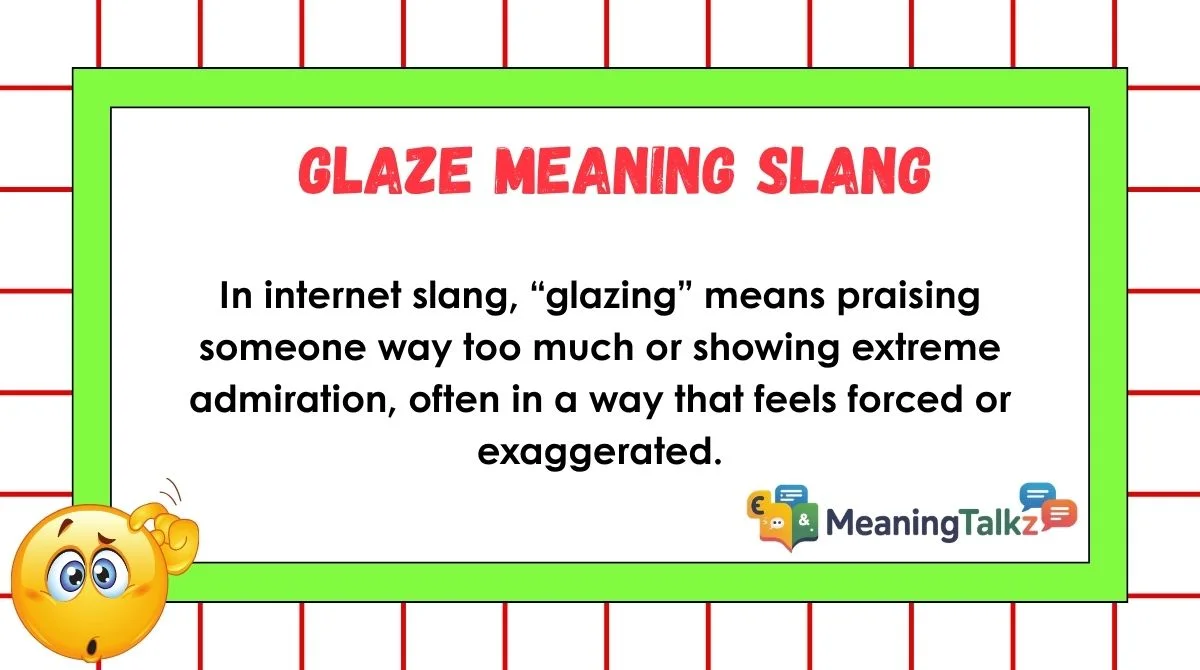
In internet slang, “glazing” means praising someone way too much or showing extreme admiration, often in a way that feels forced or exaggerated.
People usually use it to call out someone who is:
- Over-complimenting a person
- Acting like a superfan
- Defending someone no matter what
- Trying too hard to impress
Example:
“Bro keeps defending that streamer. He’s glazing.”
The Most Common Meanings of “glaze”
Online slang can shift depending on context. The word “glaze” has a few common meanings, but they all connect to the idea of overdoing praise or admiration.
1. Overpraising Someone
This is the most common meaning.
When someone says you are “glazing,” they mean you are praising someone way too much.
Example:
- “You said that was the best movie ever made? Stop glazing.”
When it’s used this way, it often feels like playful teasing.
2. Acting Like a Superfan
Sometimes glazing means someone is acting like a huge fan who supports a person no matter what.
Example:
- “Every time that influencer posts, you comment first. That’s glazing.”
Here, the word points out extreme loyalty.
3. Trying to Impress Someone
In some chats, glazing means someone is trying too hard to make another person like them.
Example:
- “He keeps agreeing with the boss in every meeting. That’s glazing.”
This use appears a lot in workplace jokes or online communities.
4. Defending Someone Too Much
People also say “glazing” when someone defends a celebrity, creator, or friend even when they are wrong.
Example:
- “You saw what he did and you’re still defending him. That’s glazing.”
In this case, the tone can feel a bit more negative.
How “glaze” Is Used in Real Conversations
Understanding slang is easier when you see how people actually use it. Here are common places where “glaze” appears in online conversations.
Friends & Casual Texting
Among friends, “glazing” is mostly used as friendly teasing.
Examples:
- “Bro you said his music is perfect. Stop glazing.”
- “You hype him up every time. That’s glazing.”
- “Relax. You glazing hard right now.”
Most of the time, nobody is truly offended.
It’s just playful calling out.
Instagram & Snapchat
On social media, “glazing” appears in comments and replies.
Examples:
- “These comments are pure glazing.”
- “Stop glazing the influencer.”
- “Why is everyone glazing him?”
Users often write this when they feel fans are being too supportive or dramatic.
Dating Apps
On dating apps, the slang appears in a different way.
Sometimes people say someone is glazing when they compliment too much too early.
Example:
- “You said I’m perfect after two messages. That’s glazing.”
It can make the other person feel like the compliments are not real.
Gaming & Online Communities
Gaming chats love this slang.
Players often accuse others of glazing when they defend a streamer or pro player.
Examples:
- “You defend that player every time. Stop glazing.”
- “Chat is glazing right now.”
- “That fanbase always glazing.”
Gaming culture spreads many slang terms, and this one is common in streams.
Work or Professional Chat
In professional chats, the word appears less often, but sometimes coworkers use it jokingly.
Example:
- “You’re glazing the boss again.”
But in serious work settings, using this slang can sound too casual or disrespectful.
So people usually avoid it.
Is “glaze” Rude, Flirty, or Offensive?
The tone of “glaze” depends heavily on context and relationship.
When It Feels Positive
Sometimes it’s just a joke.
Friends may say:
- “Stop glazing.”
This means:
“Relax, you’re praising them too much.”
No real insult is intended.
When It Feels Neutral
In social media comments, the tone is usually neutral observation.
Example:
- “Everyone glazing in the comments.”
Here the user is simply pointing out fan behavior.
When It Feels Negative
The word becomes negative when it suggests someone is fake, obsessed, or desperate.
Example:
- “You glazing him for attention.”
Now it sounds more critical.
Psychology Behind the Word
Why do people say “glazing”?
Because internet culture values authentic opinions.
When praise feels exaggerated, people call it out.
So “glazing” often means:
“You are not being real.”
How to Respond When Someone Says “glaze”
If someone says you’re glazing, don’t panic. Most replies can stay casual.
Casual Replies
- “Nah I’m just giving credit.”
- “It’s not glazing if it’s true.”
- “Let me hype my friend.”
These keep the tone relaxed.
Funny Replies
Humor works well with slang.
Examples:
- “Professional glazer.”
- “CEO of glazing.”
- “Let me cook.”
Funny replies keep the conversation light.
Neutral Replies
Sometimes you just want to move on.
Examples:
- “Alright fair.”
- “Maybe a little.”
- “Noted.”
Short replies avoid drama.
Professional Replies
If the word appears in a semi-professional chat, respond calmly.
Examples:
- “I’m just sharing my opinion.”
- “I appreciate their work.”
Avoid slang escalation.
Common Misunderstandings About “glaze”
Many people misunderstand this slang because the word already existed before internet culture.
Here are the most common mistakes.
Thinking It Means Literal Glazing
Some people think the comment refers to food or shiny surfaces.
But in slang, it has nothing to do with that.
Confusing It With Flirting
Glazing is not the same as flirting.
Flirting means romantic interest.
Glazing means excessive praise.
Assuming It’s Always an Insult
Not always.
Among friends, it can be friendly teasing.
Tone matters more than the word itself.
Thinking It’s New Everywhere
The slang spread quickly online, but not everyone knows it yet.
Older audiences may not understand it.
Similar Slang Terms You Should Know
Internet culture uses many words similar to “glazing.”
Here are some you may see online.
1. Simp
Someone who gives too much attention or praise to another person.
2. Meat riding
Another slang term meaning excessive praise or loyalty.
3. Fanboy / Fangirl
A person who strongly supports a celebrity or brand.
4. Dickriding
Very similar to glazing but often more aggressive slang.
5. Stan
A super dedicated fan.
6. Hype
Strong excitement or promotion.
7. Cap
Means something is not true.
8. No cap
Means someone is being honest.
9. Clout chasing
Trying to gain attention through others.
10. Try-hard
Someone who tries too hard to impress.
11. Gas up
Encouraging or praising someone strongly.
12. Riding the wave
Following trends to gain attention.
Understanding these helps you navigate modern internet language.
When You Should Avoid Using “glaze”
Even though slang is popular, it doesn’t fit every situation.
Here are times you should skip using it.
Professional Settings
Work emails or meetings are not the place for internet slang.
Calling someone a “glazer” could sound disrespectful.
Cross-Cultural Chats
Not everyone understands English internet slang.
Using the term may confuse people.
Clear language works better.
Sensitive Situations
If someone is giving genuine praise, calling it glazing can feel dismissive.
Example:
- Someone thanking a mentor
- Someone praising a team member
In these cases, respect matters more than jokes.
Final Thoughts.
Internet slang changes fast, and “glaze” is one of the newer terms that spread quickly across social media.
In simple terms, the slang means praising someone too much or acting like an over-the-top supporter.
Most of the time it’s used jokingly among friends, especially in gaming, social media comments, or casual chats.
But tone matters.
Sometimes the word is playful. Other times it can sound critical.
The best way to understand it is to look at the context of the conversation and the relationship between people talking.
Now that you know the meaning, you won’t feel confused the next time someone writes:
“Stop glazing.”
Instead, you’ll understand exactly what they mean — and you’ll know how to respond confidently.
FAQs
What does glazing mean in slang?
Glazing in slang means praising someone too much or showing excessive admiration, often in a way that feels exaggerated.
Is glazing the same as simping?
They are similar but not identical. Simping usually refers to excessive attention toward someone you like romantically, while glazing is general overpraise.
Is calling someone a glazer an insult?
It can be playful teasing among friends, but in some situations it may sound like criticism.
Where did the slang glaze come from?
The slang grew in online communities, especially gaming and streaming culture, where fans often defend creators strongly.
Do people use glaze on TikTok?
Yes. TikTok comments frequently use the term to call out fans who praise influencers too much.
Can glaze be used in a positive way?
Sometimes it’s used jokingly in a positive way among friends, but it usually points out exaggerated praise.
Should I use the word glaze in professional conversations?
No. It’s better to avoid slang like this in professional or formal communication.
At the provide me Conclusion paragraph.
The slang term “glaze” reflects how modern internet culture reacts to exaggerated praise. It’s a quick way for people to point out when admiration feels over the top or forced.
While the word is usually playful in casual chats, it can sound critical depending on tone and context.
Understanding how and when people use it helps you read online conversations more accurately and respond naturally.
As slang continues to evolve, staying aware of terms like “glaze” makes navigating social media and texting culture much easier.