Last updated on September 26th, 2026 at 05:57 am
You open a message and see someone reply with “bffr.”
No explanation. No emoji. Just four letters.
Now you’re stuck wondering:
Is it an insult? A joke? A sarcastic reply?
This exact confusion is why thousands of people search for bffr meaning in text every day. The slang shows up everywhere—TikTok comments, Instagram replies, group chats, gaming lobbies, and even dating apps.
The tricky part? The tone can change depending on how it’s used. Sometimes it’s playful between friends. Other times it’s a blunt way to call someone out.
If you don’t understand the context, it can easily sound rude or confusing.
This guide breaks everything down in simple terms. You’ll learn the real meaning of “bffr,” how people actually use it in conversations, when it sounds funny vs disrespectful, and how to reply without looking lost.
By the end, you’ll instantly understand what “bffr” means in text and how to use it like someone who actually belongs online.
What Does “bffr” Mean in Text?
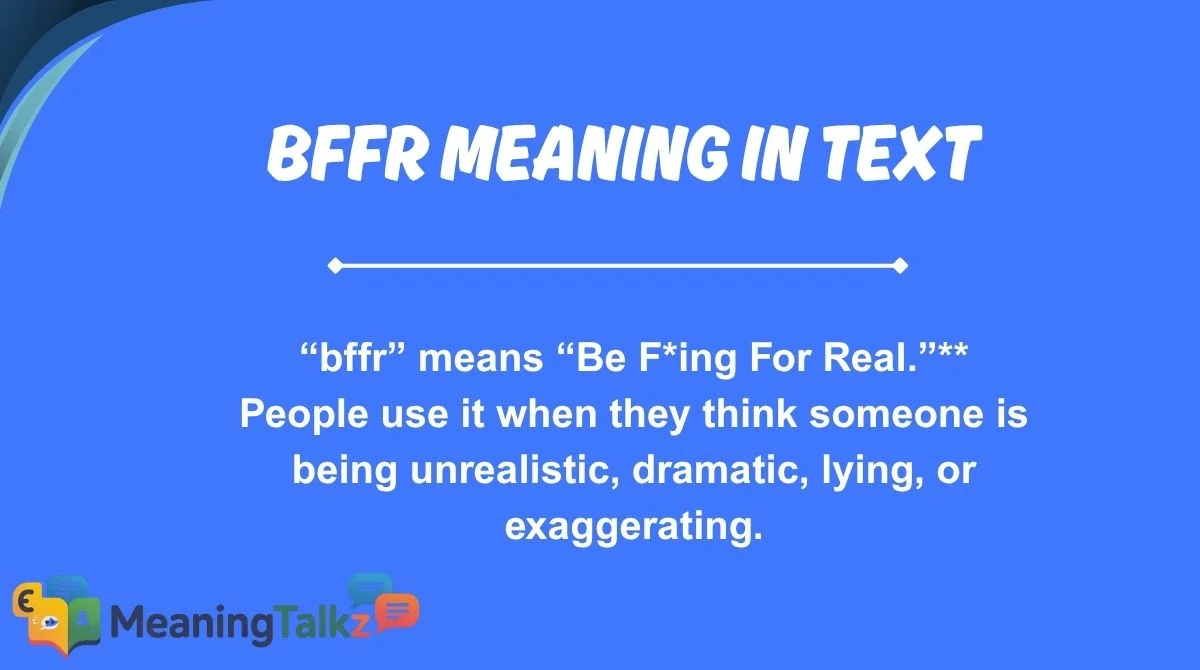
“bffr” means “Be F*ing For Real.”**
People use it when they think someone is being unrealistic, dramatic, lying, or exaggerating.
It’s basically a short way to say:
- “Be serious.”
- “Stop joking.”
- “That can’t be real.”
- “You’re not serious right now.”
The phrase is often playful between friends but can also sound sarcastic or dismissive depending on the situation.
How to Tell What Someone Means When They Say BFFR
Understanding the meaning of bffr is only the first step. The more important part is figuring out what the person actually means in a specific conversation. Since text messages do not include facial expressions, voice tone, or body language, the same four letters can feel completely different depending on the situation. Looking at the surrounding conversation can help you understand whether the person is joking, disagreeing, teasing, or genuinely annoyed.
The first thing to consider is what was said immediately before “bffr.” If someone made an obviously exaggerated statement, the expression is probably being used to show disbelief. For example, if a friend says, “I’m going to become fluent in a new language by next weekend,” and you receive “bffr,” the person is most likely jokingly challenging the claim. The response is not necessarily meant to start an argument.
The relationship between the two people also matters. If you regularly joke with someone, a message like “bffr 😂” will usually have a lighter meaning. Close friends often use internet slang to tease each other without intending genuine criticism. However, if the same message comes from someone you barely know, it may sound much more direct.
You should also pay attention to punctuation and additional words. A simple “bffr lol” often feels less serious than “BFFR.” A laughing emoji can also make the message seem playful, while a period or no additional context may make it feel more blunt. These details do not guarantee the speaker’s intention, but they can provide useful clues.
Another helpful clue is whether the person continues the conversation afterward. Someone who says “bffr 😂” and then explains their point is probably engaging in casual conversation. Someone who sends only “bffr” during an argument and stops responding may be expressing stronger disagreement or frustration.
The topic itself can provide important context. If you are talking about something silly, such as food, movies, fashion, gaming, or a celebrity opinion, bffr is more likely to be playful. If the discussion involves someone’s personal experience, serious problem, or sensitive subject, the same expression can feel much harsher.
It is also useful to consider whether the person normally uses slang. Some people use abbreviations such as fr, lol, ngl, idk, and bffr in almost every casual conversation. For them, the phrase may simply be part of their normal texting style. Others rarely use slang, so using bffr may carry more emphasis.
If you are genuinely unsure, there is nothing wrong with asking for clarification. A simple response such as “What do you mean?” or “Are you joking?” can prevent a misunderstanding. You do not need to immediately assume that the person is insulting you.
Ultimately, reading bffr correctly requires more than knowing its dictionary-style definition. The words around it, the relationship between the people, the topic being discussed, and the overall tone of the conversation all matter. Once you start looking at these clues together, it becomes much easier to understand what someone intends when they use this popular internet expression.
Examples of BFFR in Everyday Texting Situations
Seeing bffr in different conversations is one of the easiest ways to understand how flexible the expression can be. While its basic meaning remains the same, the intended tone can change significantly depending on the situation. Someone might use it to joke with a friend, challenge an exaggerated statement, react to unexpected news, or disagree with an opinion.
Imagine two friends talking about exercise. One friend says, “I’m going to start working out every day and become a professional athlete next month.” The other friend responds, “bffr 😂.” In this situation, the reply is most likely playful. The friend is pointing out that the goal sounds unrealistic while still keeping the conversation light.
Now consider a different situation involving shopping. Someone tells their friend, “I’m not going to buy anything else this month.” A few hours later, they send a picture of a new pair of shoes. Their friend might respond, “BFFR.” Here, the expression is being used as a humorous reminder of what the person said earlier. The meaning is close to “Seriously? You said you weren’t buying anything!”
BFFR can also appear in conversations about relationships. Someone might say, “They haven’t replied for three days, but I’m sure they’re just busy.” A friend could respond, “bffr.” Depending on the relationship, this might be an attempt to point out that the explanation does not seem convincing. In this context, the phrase can be more direct because the speaker is challenging someone’s interpretation of a situation.
In gaming conversations, the expression can be used when someone makes a bold claim. A player might say, “I carried the whole team that match.” Another player could answer, “bffr.” The response suggests that the second person disagrees with the claim. It may be friendly competition, or it may become argumentative depending on the rest of the conversation.
BFFR can also be used in response to opinions about entertainment. For example:
Person 1: “That was the worst movie ever made.”
Person 2: “bffr, it wasn’t that bad.”
Here, the second person is challenging an exaggerated opinion rather than necessarily starting an argument. Adding more words after bffr can make the speaker’s intended meaning clearer.
Another common situation involves unrealistic plans. Someone might text, “I’m going to study for twelve hours tonight and finish everything.” A friend might answer, “bffr 😭.” The expression communicates disbelief, but the emoji helps show that the response is humorous rather than hostile.
There are also situations where bffr can be used after someone makes an obvious statement. For example:
Person 1: “You really think I’m going to believe that?”
Person 2: “bffr.”
In this case, the expression reinforces the idea that the situation should be taken seriously.
These examples show why there is no single emotional meaning attached to bffr. The basic message is usually some form of “be serious” or “be realistic,” but the emotional tone comes from the surrounding conversation.
If the conversation is friendly, bffr can be funny. If the discussion is heated, it can sound dismissive. If the topic is sensitive, it may come across as insensitive. Looking at the complete exchange rather than focusing on the abbreviation alone is therefore the best way to understand it.
Once you become familiar with these everyday examples, recognizing bffr in texts, comments, group chats, and social media replies becomes much easier. Instead of wondering whether the person is being serious, you can look at the context and understand whether the phrase is being used as a joke, a reaction, or a direct challenge.
The Most Common Meanings of “bffr”
Even though the phrase has one core meaning, the tone changes based on the conversation. Here are the most common ways people use it.
1. Calling Out Something Unrealistic
This is the most common use. Someone says something that sounds impossible or exaggerated, and another person replies with bffr.
Example:
Friend:
“I could totally beat a pro gamer in one match.”
Reply:
“bffr.”
In this case it means: “Be serious, that’s not realistic.”
2. Reacting to Obvious Lies
Sometimes people use it when someone is clearly lying or stretching the truth.
Example:
Person:
“I finished the whole project in 5 minutes.”
Reply:
“bffr.”
Here it means: “That’s not believable.”
3. Expressing Shock or Disbelief
Another common use is reacting to something surprising or ridiculous.
Example:
Friend:
“Pizza with pineapple is the best food ever.”
Reply:
“bffr.”
In this situation it’s basically saying: “You cannot be serious.”
4. Friendly Teasing
Among close friends, it can be playful and joking.
Example:
Friend:
“I’m the funniest person you know.”
Reply:
“bffr 😂”
Here it’s more like friendly teasing rather than criticism.
How “bffr” Is Used in Real Conversations
Understanding slang is easier when you see it in real situations. Here’s how bffr appears across different online spaces.
Friends & Casual Texting
This is where the slang appears most often.
Friends use bffr to joke, tease, or challenge exaggerated claims.
Example:
Friend 1:
“I could run a marathon tomorrow.”
Friend 2:
“bffr.”
The tone is usually light and playful.
Instagram & Snapchat
On social media, bffr often appears in comment sections.
Example:
Post:
“Drinking coffee at 3 AM is healthy.”
Comment:
“bffr.”
In this context, people use it as a quick reaction when they disagree.
Dating Apps
On dating apps, the tone can be flirty or sarcastic.
Example:
Match:
“I’m basically a professional chef.”
Reply:
“bffr lol.”
Here it means:
“Are you serious?”
Sometimes it’s used jokingly to challenge someone’s claim.
Gaming & Online Communities
Gamers often use it during arguments or debates.
Example:
Player:
“I carried the entire team.”
Reply:
“bffr.”
This version is usually more blunt and can sound dismissive.
Work or Professional Chat
This is one place where bffr rarely belongs.
Using slang like this in work chats can sound rude or unprofessional.
Example (not recommended):
Coworker:
“The meeting will only take 10 minutes.”
Reply:
“bffr.”
That response might feel disrespectful.
Is “bffr” Rude, Flirty, or Offensive?
The answer depends on tone and relationship.
The phrase itself is not always rude, but it can sound harsh if used incorrectly.
When It Feels Playful
It sounds light when used between:
- Close friends
- Online communities
- Casual chats
Example:
“bffr you know you love that movie.”
Here it’s friendly teasing.
When It Feels Rude
It can feel disrespectful if:
- You barely know the person
- The topic is serious
- The conversation is professional
Example:
Someone sharing a serious opinion and receiving only “bffr” can feel dismissive.
When It Sounds Flirty
Sometimes people use it playfully in flirting.
Example:
“I’m the best date you’ll ever have.”
Reply:
“bffr 😏”
This creates playful tension rather than criticism.
How to Respond When Someone Says “bffr”
If someone sends bffr, your reply depends on the tone of the conversation.
Casual Replies
These keep the conversation relaxed.
Examples:
“Okay maybe you’re right.”
“Alright fair point.”
“Lol chill.”
Funny Replies
Humor works well if the conversation is playful.
Examples:
“Let me dream.”
“Reality is overrated.”
“Don’t ruin my fantasy.”
Neutral Replies
If you’re unsure of the tone, stay neutral.
Examples:
“Just saying what I think.”
“Maybe.”
“That’s fair.”
Professional Replies
If the conversation is formal, avoid slang and keep things calm.
Examples:
“I understand your point.”
“That’s a fair perspective.”
“Let’s discuss it further.”
Common Misunderstandings About “bffr”
Many people misread this slang the first time they see it.
Here are some common mistakes.
Thinking It Means “Best Friends For Real”
Some assume bffr is related to BFF (Best Friends Forever).
That’s incorrect.
The phrase actually stands for “Be F*ing For Real.”**
Assuming It’s Always Rude
The tone depends on the relationship.
Among friends, it’s often joking or playful.
But in serious conversations it may sound dismissive.
Confusing It With Similar Slang
People sometimes mix it up with:
- “fr” (for real)
- “ikr” (I know right)
Even though they appear similar, the meanings are different.
Misreading the Tone
Text messages don’t show facial expressions or voice tone.
So bffr can be misinterpreted as aggressive even when it’s meant as a joke.
Similar Slang Terms You Should Know
Internet slang evolves fast. If you understand bffr, you’ll probably see these too.
FR – means “for real.” Used to agree with something.
TBH – stands for “to be honest.”
IDK – short for “I don’t know.”
IMO – means “in my opinion.”
SMH – stands for “shaking my head,” used when something is disappointing.
NGL – means “not gonna lie.”
ICYMI – stands for “in case you missed it.”
GOAT – means “greatest of all time.”
W – slang for a win or success.
L – slang for a loss or failure.
Lowkey – used when something is secretly true.
Highkey – the opposite of lowkey, meaning very obvious.
When You Should Avoid Using “bffr”
Even though the slang is popular, there are times when it’s better not to use it.
Professional Settings
Work emails, client chats, and business messages should stay clear and respectful.
Slang like bffr can sound dismissive.
Cross-Cultural Conversations
Not everyone understands internet slang.
In global conversations, simple language avoids confusion.
Sensitive Situations
If someone is discussing:
- Personal struggles
- Serious opinions
- Emotional topics
Responding with bffr may seem insensitive.
Final Thoughts
Internet slang changes quickly, but some phrases explode in popularity almost overnight.
The phrase bffr meaning in text became popular because it delivers a strong reaction in just four letters.
At its core, it simply means “Be F*ing For Real.”** People use it when something sounds unrealistic, exaggerated, or hard to believe.
Among friends, it often feels playful and sarcastic. In more serious situations, it can sound blunt or dismissive.
Understanding the context is the key. Once you know the tone behind it, the phrase becomes easy to read and respond to.
Learning slang like this helps you navigate modern texting, social media conversations, and online communities without feeling confused.
FAQs
What does bffr mean in texting?
It means “Be F*ing For Real.”** People use it when they think someone is exaggerating, lying, or being unrealistic.
Is bffr rude?
It can be. Between friends it’s often playful, but in serious conversations it may sound dismissive or sarcastic.
What does bffr mean on TikTok?
On TikTok, it’s usually a reaction in comments when someone says something unbelievable or dramatic.
Is bffr the same as saying “be serious”?
Yes. It’s basically a slang way to say “be serious” or “you can’t be serious.”
Why do people say bffr online?
People use it because it’s short, expressive, and quickly shows disbelief or sarcasm.
Can bffr be used jokingly?
Yes. Among friends it’s often used as playful teasing rather than criticism.
Should you use bffr at work?
No. It’s informal slang and can sound disrespectful in professional communication.
Conclusion
The phrase bffr meaning in text might look confusing at first, but the meaning is simple once you understand it. It stands for “Be F*ing For Real”** and is used to call out something unrealistic, exaggerated, or unbelievable.
The tone depends heavily on context. With friends, it can be funny or sarcastic. In serious conversations, it may sound blunt or dismissive.
That’s why knowing when to use it—and when to avoid it—matters.
As internet slang continues evolving, phrases like bffr show how quickly communication adapts in the digital world.
Understanding them helps you read conversations correctly, respond confidently, and stay fluent in modern texting culture.