Last updated on October 7th, 2026 at 05:32 am
You open a message and see a short line at the bottom: “RSVP by Friday.”
Now you pause.
Do they want a reply? Do you have to say yes? What exactly are you supposed to do?
This small word shows up everywhere—wedding invites, party texts, Instagram events, work meetings, and even group chats. Many people see it often but still feel unsure about the real RSVP meaning and how to respond correctly.
That confusion is why thousands of people search for the term every month.
Some think it means “confirm attendance.” Others think it simply means “reply.” And sometimes people ignore it because they don’t understand what it asks.
In reality, RSVP is simple once you know the purpose behind it.
This guide explains the true RSVP meaning, how people use it in texting and social media, when it sounds polite or rude, and how you should reply in different situations.
By the end, you will never feel confused when you see RSVP again.
What Does “RSVP Meaning” Mean in Text?
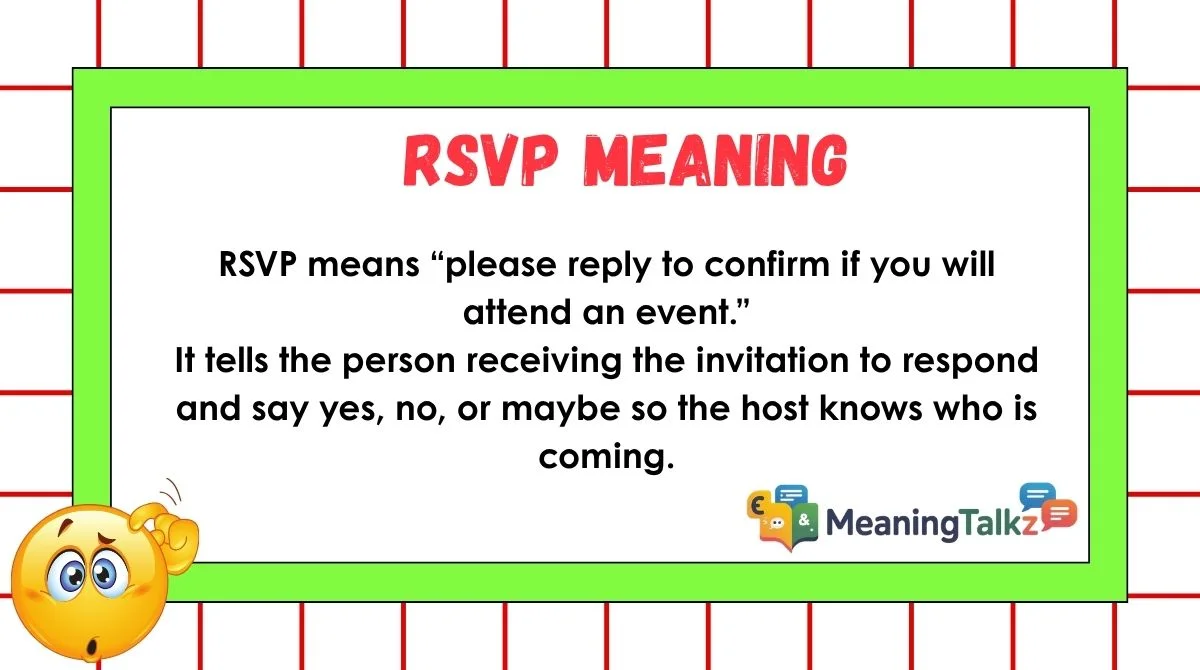
RSVP means “please reply to confirm if you will attend an event.”
It tells the person receiving the invitation to respond and say yes, no, or maybe so the host knows who is coming.
Common interpretations include:
- Confirm attendance
- Reply to the invitation
- Let the host know your decision
- Respond before a deadline
In short, RSVP is simply a polite way of asking for a response.
What Should You Do When You See “RSVP by” on an Invitation?
When you see “RSVP by” followed by a date, the message is giving you a deadline to respond. For example, “RSVP by October 15” means the host wants to know whether you will attend before October 15.
The first thing to do is check the event details. Look at the date, time, location, and any information about guests or food preferences. Then decide whether you can attend.
If you can attend, give a clear confirmation. You can say:
- “Yes, I’ll be there.”
- “I’d love to attend.”
- “Count me in.”
- “I confirm my attendance.”
If you cannot attend, it is still polite to respond instead of ignoring the invitation. A simple message such as “Thank you for inviting me, but I won’t be able to attend” is enough.
Sometimes an invitation includes a specific way to RSVP, such as replying by text, filling out an online form, or clicking a confirmation button. Follow those instructions whenever possible.
If you are unsure about your availability, do not wait until the deadline has passed. Let the host know that you are still checking your schedule. This gives them a better idea of what to expect.
In short, “RSVP by” means respond before the stated date. It does not automatically mean you have to say yes. It simply means the host needs your answer by that deadline.
Why Is RSVP Still Common in Digital Communication?
Although RSVP comes from traditional invitations, it remains common in modern digital communication because it provides a quick and familiar way to request an attendance confirmation.
People now use RSVP in text messages, email invitations, event websites, social media posts, and messaging apps. The format may be different, but the purpose remains the same: the organizer wants to know who plans to attend.
RSVP is especially useful when an event requires planning. A host may need to reserve tables, order food, prepare seating, print name badges, or limit the number of guests. Getting responses in advance makes those tasks much easier.
For example, a message might say, “Dinner party this Saturday. RSVP by Wednesday.” Instead of asking every person individually, the host can collect responses before making final arrangements.
Digital platforms have also made RSVP easier. Many event pages now include buttons such as Going, Interested, or Can’t Go. These options work in much the same way as a traditional RSVP.
However, people sometimes use clearer phrases instead, especially in casual conversations. You may see “Let me know if you’re coming” or “Please confirm attendance” rather than RSVP.
The important point is that RSVP has not disappeared. Its wording may look formal, but its purpose fits perfectly with modern communication: get a clear response so everyone knows what to expect.
Whether it appears in a wedding invitation, work email, group chat, or social media event, RSVP is still a simple and useful way to organize attendance.
The Most Common Meanings of “RSVP Meaning”
Even though RSVP always relates to replying, people use it in slightly different ways depending on the situation.
Confirming Attendance
This is the most common use.
When someone writes RSVP, they want to know if you will attend their event.
Example:
“Birthday dinner Saturday at 7 PM. RSVP by Thursday.”
Here, the host needs a clear answer so they can prepare food, seating, or reservations.
Your reply might be:
“Yes, I’ll be there!”
or
“Sorry, I can’t make it.”
Reply to an Invitation
Sometimes RSVP simply means “please respond.”
The host may not require a strict yes or no yet but wants acknowledgement.
Example:
“Team lunch next week. RSVP if you’re interested.”
In this case, replying helps organizers estimate numbers.
Event Planning Requirement
For weddings, corporate events, and large parties, RSVP is very important.
Event planners need to know:
- number of guests
- food portions
- seating arrangements
- venue space
Example:
“Wedding reception. RSVP before May 10.”
Ignoring this request can cause planning problems.
Deadline for Response
Often RSVP includes a date.
Example:
“RSVP by Monday.”
This means the host needs your answer before that deadline.
If you respond after the deadline, the host may already finalize plans.
How “RSVP Meaning” Is Used in Real Conversations
RSVP appears in many digital conversations today. The tone can change depending on the platform and relationship between people.
Friends & Casual Texting
Among friends, RSVP is often relaxed.
Example:
“Game night Friday. RSVP so I know how many snacks to buy.”
Friends might respond quickly with casual messages:
“I’m in.”
“Count me out.”
“I’ll try.”
Sometimes people skip the word RSVP and simply say:
“Let me know if you’re coming.”
But the meaning is the same.
Instagram & Snapchat
Social media events also use RSVP.
You might see posts like:
“House party this Saturday. RSVP in DMs.”
This means:
Send a direct message to confirm attendance.
Why hosts do this:
- control guest numbers
- avoid strangers showing up
- organize the event better
On Snapchat or Instagram stories, people sometimes add polls or message prompts for RSVPs.
Dating Apps
RSVP can appear in casual dating conversations too.
Example:
“Drinks Friday night? RSVP soon.”
Here it means:
“Let me know if you’re interested.”
The tone can feel slightly playful or direct.
It simply asks for a decision.
Gaming & Online Communities
Gaming groups often schedule events or raids.
Example:
“Clan tournament Saturday. RSVP in Discord.”
This helps organizers:
- create teams
- assign roles
- schedule match times
Players who RSVP confirm they will participate.
Work or Professional Chat
In professional settings, RSVP is very common.
Example:
“Quarterly meeting Thursday. Please RSVP.”
This ensures managers know who will attend.
Professional replies are usually short and polite:
“I will attend.”
“Unfortunately I am unavailable.”
“Thank you, I will join.”
Ignoring RSVP requests in work environments can appear unprofessional.
Is “RSVP Meaning” Rude, Flirty, or Offensive?
RSVP itself is neutral.
It is not rude, flirty, or offensive by default.
But tone depends on context.
When It Feels Polite
RSVP usually sounds polite when used in invitations.
Example:
“Dinner party Saturday. RSVP please.”
It shows the host is organized and respectful.
When It Feels Neutral
In professional settings, RSVP is standard language.
Example:
“Please RSVP by Tuesday.”
No emotional tone is intended.
When It Feels Slightly Pushy
Sometimes RSVP can feel demanding if used too directly.
Example:
“RSVP ASAP.”
This may sound like pressure.
But often the host simply needs a quick response.
When It Feels Friendly
Friends often use RSVP playfully.
Example:
“Pizza night tonight. RSVP or no slices for you.”
The tone is humorous.
So while RSVP itself is neutral, the surrounding message shapes how it feels.
How to Respond When Someone Says “RSVP Meaning”
Many people hesitate because they are unsure what reply is expected.
In most cases, a simple answer works.
Casual Replies
These work with friends or relaxed invitations.
Examples:
“I’m coming.”
“Count me in.”
“I can’t make it.”
“I’ll be there!”
Short responses are perfectly fine.
Funny Replies
Friends often respond with humor.
Examples:
“I RSVP yes for the food.”
“Only if there is pizza.”
“I’ll bring snacks and bad jokes.”
These replies keep things light while confirming attendance.
Neutral Replies
If you are unsure about attending, keep it simple.
Examples:
“I’ll check and let you know.”
“Maybe. I’ll confirm tomorrow.”
“I’m not sure yet.”
But remember: if there is an RSVP deadline, respond before it.
Professional Replies
For work events or formal invitations, be clear and polite.
Examples:
“Thank you for the invitation. I will attend.”
“Unfortunately I am unavailable.”
“I confirm my attendance.”
Professional messages should be short and respectful.
Common Misunderstandings About “RSVP Meaning”
Many people misunderstand RSVP because they assume the wrong meaning.
Here are the most common mistakes.
Thinking RSVP Means “You Must Attend”
RSVP does not mean you are required to attend.
It only asks for your response.
You can reply:
“Yes” or “No.”
Both answers are acceptable.
Ignoring RSVP Requests
Some people think RSVP is optional.
But hosts include it because they need accurate guest counts.
Ignoring the request can create planning issues.
Confusing RSVP With “Reply Soon”
RSVP means reply about attendance, not just reply to the message.
The host wants to know:
Are you coming or not?
Assuming It Is Only for Weddings
Many people associate RSVP with weddings.
But today it appears in:
- parties
- meetings
- online events
- game nights
- social gatherings
It is widely used everywhere.
Similar Slang Terms You Should Know
Here are other words and phrases related to RSVP that often appear in messages.
1. ETA
Estimated time of arrival.
2. FYI
For your information.
3. ASAP
As soon as possible.
4. TBD
To be decided.
5. TBA
To be announced.
6. LMK
Let me know.
7. BRB
Be right back.
8. IMO
In my opinion.
9. IDK
I don’t know.
10. TBH
To be honest.
11. NVM
Never mind.
12. DM
Direct message.
Knowing these terms helps you understand modern texting and online communication.
When You Should Avoid Using “RSVP Meaning”
Even though RSVP is common, there are situations where it may not be the best choice.
Professional Settings Without Formal Invitations
If you are sending a casual work message, RSVP may feel too formal.
Instead you could say:
“Please confirm if you can attend.”
This sounds clearer in some work chats.
Cross-Cultural Conversations
Not everyone knows the RSVP meaning.
In international conversations, some people may not recognize it.
Using clearer wording helps avoid confusion.
Example:
“Please reply and tell me if you can attend.”
Sensitive Situations
RSVP may feel inappropriate in emotional situations.
For example:
Memorial gatherings or serious discussions.
In those cases, softer wording works better.
Example:
“Please let us know if you plan to attend.”
Final Thoughts.
RSVP may look like a complicated or formal word, but its meaning is simple.
It asks for one thing: a reply confirming whether you will attend an event.
You will see RSVP in:
- party invitations
- weddings
- social media events
- work meetings
- group chats
Understanding RSVP helps you respond correctly and shows respect to the host organizing the event.
When someone asks you to RSVP, the best approach is simple:
Respond clearly, respond on time, and be honest about whether you can attend.
Once you know this, RSVP becomes one of the easiest parts of modern communication.
FAQs
What does RSVP mean in texting?
In texting, RSVP means the sender wants you to reply and confirm whether you will attend an event or invitation.
Does RSVP mean yes or no?
No. RSVP does not mean yes. It means you must reply with your decision, which can be yes or no.
Is RSVP required?
It is not legally required, but it is polite to respond because the host needs to plan the event.
What happens if you do not RSVP?
If you do not RSVP, the host may assume you are not attending or may not prepare space or food for you.
Why do people say RSVP instead of reply?
RSVP is traditional invitation language that specifically asks for a response about attending an event.
Is RSVP only used for weddings?
No. RSVP is used for many events including meetings, parties, social gatherings, and online events.
How do you politely RSVP no?
You can say: “Thank you for the invitation, but I cannot attend.” This keeps the response respectful and clear.
Conclusion
The RSVP meaning is simple but important in modern communication. It tells the person receiving an invitation to respond and confirm whether they will attend.
Whether the message comes from a friend, coworker, or event organizer, replying helps them plan properly.
By understanding RSVP and responding clearly, you avoid confusion, show respect, and make event planning easier for everyone.