Last updated on September 14th, 2026 at 05:03 am
You open a message. Someone replies with just three letters: SMH.
No emoji. No extra words. Just “smh.”
Now you pause.
Are they mad?
Are they joking?
Did you say something wrong?
This small slang term shows up everywhere today. You see it in group chats, comments, gaming servers, and short replies on apps like Instagram, Snapchat, and TikTok.
Because it is so short, many people search “what does smh mean 2026” to understand the real tone behind it. The letters look simple, but the feeling behind them can change depending on the conversation.
Sometimes it means someone is annoyed.
Sometimes it means they are laughing at something inconsiderate.
Sometimes it is just playful teasing.
The problem is context. Without knowing how people use it today, the message can feel confusing.
This guide explains exactly what SMH means in modern texting, how people use it online in 2026, and how you should reply when someone sends it to you.
What Does “smh” Mean in Text?
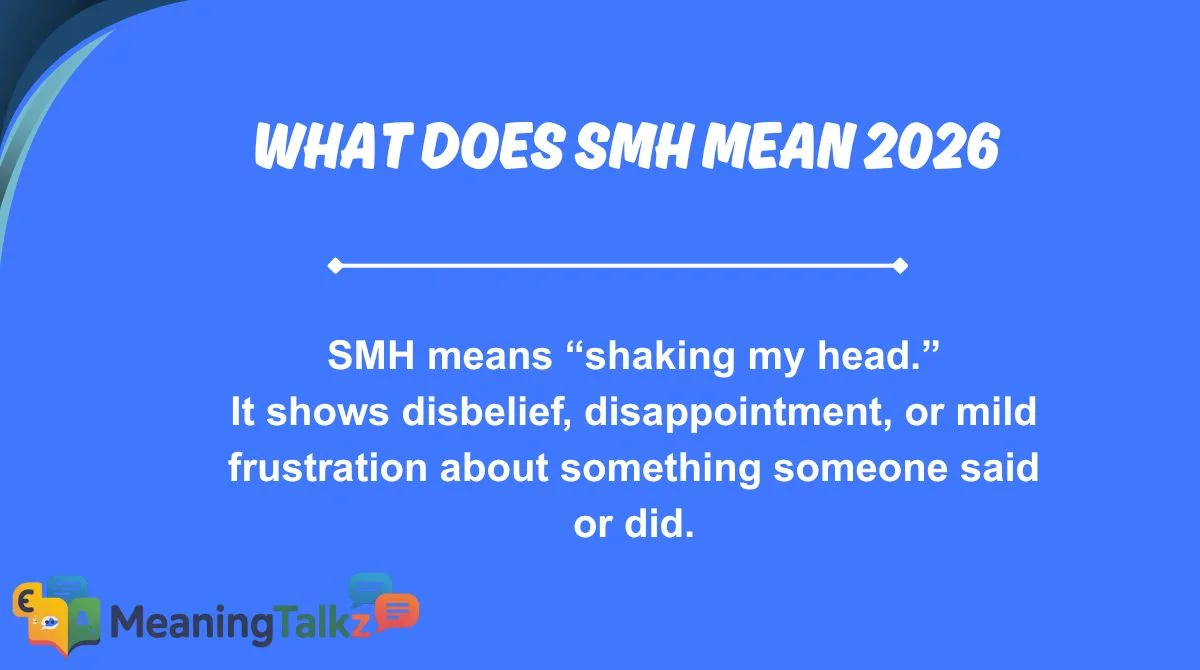
SMH means “shaking my head.”
It shows disbelief, disappointment, or mild frustration about something someone said or did.
People use it when something feels silly, annoying, or hard to believe.
Common interpretations include:
- Disappointment
- “I can’t believe this”
- Light teasing
- Reaction to something inconsiderate or funny
The meaning depends on the tone of the conversation.
SMH vs. SMDH: What’s the Difference?
SMH means “shaking my head,” while SMDH usually means “shaking my damn head.” The second version adds stronger emphasis, so it can express greater frustration, disbelief, or exasperation. For example, “You forgot your keys again smh” can sound like mild teasing, while “You forgot them again smdh” can sound more irritated. Neither abbreviation automatically means serious anger; the surrounding conversation still matters. SMH is generally the safer and milder choice, while SMDH is more emphatic and can sound harsher in an argument. Both remain recognizable forms of internet slang.
Can “SMH” Mean Something Other Than “Shaking My Head”?
In everyday texting, SMH overwhelmingly means “shaking my head.” However, dictionaries note a few less-common interpretations, including “so much hate” and “scratching my head.” These alternatives are unusual compared with the standard texting meaning, so context is important before assuming one of them. SMH can also appear as an unrelated abbreviation for the Sydney Morning Herald, particularly in Australian contexts. If you see SMH in a casual text, comment, or social-media reply, though, “shaking my head” is normally the intended meaning.
The Most Common Meanings of “smh”
Even though SMH literally means “shaking my head,” people use it in several ways in modern chats.
1. Disappointment
This is the most common meaning.
It shows someone feels let down by something.
Example:
Friend: “I forgot your birthday.”
Reply: “smh I can’t believe you.”
Here it means the person feels disappointed.
2. Mild Frustration
Sometimes SMH shows small frustration.
Not serious anger. Just annoyance.
Example:
“I told you the answer already smh.”
This means the speaker feels slightly annoyed.
3. Reaction to Something Silly
People often use SMH when something feels ridiculous.
Example:
“He wore socks with sandals again smh.”
This shows playful judgment.
4. Playful Teasing
In friendly chats, SMH can be teasing.
Example:
“You lost again? smh.”
It sounds joking, not angry.
Tone matters a lot here.
5. Disbelief
Sometimes people use SMH when something sounds impossible.
Example:
“You ate the whole pizza alone?”
Reply: “smh that’s confused.”
This means they are surprised.
How “smh” Is Used in Real Conversations
The meaning of SMH changes depending on where people use it.
Different online spaces create different tones.
Friends & Casual Texting
In everyday texting, SMH is usually playful.
Friends use it to tease each other.
Example messages:
“Bro you forgot your wallet again smh.”
“smh you always pick the worst movie.”
It sounds light and friendly.
Most people use it this way.
Instagram & Snapchat
On social media like Instagram and Snapchat, SMH appears in comments or reactions.
People often use it when reacting to funny or awkward posts.
Example:
Comment under a video:
“smh why did you jump into the pool with your phone.”
Here it acts like a reaction meme.
Short and expressive.
Dating Apps
On dating apps, tone matters more.
SMH can sound teasing or slightly sarcastic.
Example:
“You still think pineapple belongs on pizza smh.”
This is playful flirting.
But if used too much, it can feel dismissive.
Gaming & Online Communities
Gamers often use SMH during frustrating moments.
Especially in chat servers like Discord.
Example:
“Team didn’t defend again smh.”
This means the player feels annoyed.
It expresses quick frustration during gameplay.
Work or Professional Chat
SMH appears less in work chats.
But younger teams sometimes use it in casual spaces.
Example:
“Meeting got moved again smh.”
In professional spaces, it can feel slightly negative.
So people use it carefully.
Is “smh” Rude, Flirty, or Offensive?
SMH itself is not rude.
But the tone behind it can change the meaning.
Here is how people usually interpret it.
When It Feels Neutral
SMH feels neutral when reacting to something silly.
Example:
“You forgot the keys again smh.”
This sounds casual.
When It Feels Playful
Among friends, it can feel like joking criticism.
Example:
“You ordered dessert again smh.”
The tone feels friendly.
When It Feels Rude
If used in arguments, SMH can sound dismissive.
Example:
“You still think that? smh.”
Here it may sound like someone is judging the other person.
When It Feels Flirty
Some people use SMH playfully in flirting.
Example:
“You’re late again smh.”
This feels teasing rather than serious.
How to Respond When Someone Says “smh”
If someone sends SMH, the best reply depends on the situation.
Here are a few ways to respond.
Casual Replies
These work in everyday chats.
- “Okay fair.”
- “You’re not wrong.”
- “I know I know.”
They keep the conversation relaxed.
Funny Replies
Humor works well when SMH is playful.
Examples:
- “Let me be dramatic.”
- “I regret nothing.”
- “I stand by my bad choices.”
These responses keep the tone light.
Neutral Replies
When the tone feels unclear, neutral replies help.
Examples:
- “What did I do now?”
- “Explain please.”
- “Wait what happened?”
These responses avoid conflict.
Professional Replies
In work chats, keep replies simple.
Examples:
- “Noted.”
- “I understand.”
- “Thanks for pointing that out.”
Avoid sarcasm in professional settings.
Common Misunderstandings About “smh”
Many people misunderstand this slang.
Here are the most common mistakes.
Thinking It Means Anger
SMH usually shows mild frustration.
Not serious anger.
If someone is truly angry, they usually say more.
Assuming It Is Always Negative
Sometimes SMH appears in jokes.
Example:
“You bought another pair of shoes smh.”
It may be teasing, not criticism.
Confusing It With Eye-Rolling
People sometimes treat SMH like an insult.
But most of the time it is lighter than that.
It is closer to disbelief.
Misreading the Tone
Tone depends on:
- Relationship
- Conversation topic
- Platform
Always read the full message.
Similar Slang Terms You Should Know
If you understand SMH, these slang terms will also appear in modern chats.
LOL
Means “laughing out loud.” Used for humor.
LMAO
Stronger version of laughing.
BRB
Means “be right back.”
TBH
Means “to be honest.”
IDK
Means “I don’t know.”
IMO
Means “in my opinion.”
FR
Means “for real.”
ICYMI
Means “in case you missed it.”
NGL
Means “not gonna lie.”
FOMO
Fear of missing out.
GOAT
Greatest of all time.
BTW
Means “by the way.”
Knowing these helps you understand online conversations faster.
When You Should Avoid Using “smh”
Even though SMH is common online, there are times when you should avoid it.
Professional Settings
Emails and formal messages should stay clear.
Using slang like SMH may appear unprofessional.
Example to avoid:
“Report is late smh.”
Better option:
“The report is delayed.”
Cross-Cultural Chats
Not everyone knows internet slang.
In global teams, SMH can confuse people.
Clear language works better.
Sensitive Situations
If someone shares serious news, avoid SMH.
Example situations:
- Personal problems
- Health issues
- Emotional conversations
In those moments, empathy matters more than slang.
Final Thoughts.
SMH may look like just three letters, but it carries a lot of meaning in modern texting.
At its core, SMH simply means “shaking my head.” People use it to show disbelief, disappointment, or playful frustration.
Most of the time it is not rude. It is a quick reaction to something surprising or silly.
Still, tone and context matter. The same message can feel friendly in a group chat but dismissive in a serious conversation.
Understanding slang like SMH helps you read digital conversations better. It also helps you avoid misunderstandings in texts, comments, and online communities.
Once you know the tone behind it, this small expression becomes easy to understand.
FAQs
What does SMH mean in texting?
SMH means “shaking my head.” It shows disbelief, disappointment, or mild frustration about something someone said or did.
Is SMH rude in messages?
Not usually. It is often playful or casual. But in serious conversations it may sound dismissive.
What does SMH mean from a girl or guy?
The meaning stays the same. It usually shows disbelief, teasing, or light frustration depending on the conversation.
Is SMH negative slang?
It can be slightly negative, but most of the time it is mild and not aggressive.
Why do people comment SMH online?
People use it to react to something surprising, silly, or disappointing in posts and videos.
Is SMH still popular in 2026?
Yes. SMH remains widely used in texting, comments, and online chats.
What should I reply to SMH?
You can respond casually like:
- “Okay fair”
- “I know”
- “What did I do now?”
Your reply should match the tone of the conversation.
Conclusion
The phrase SMH continues to be one of the simplest and most recognizable pieces of internet slang. In 2026, it still works as a fast reaction to moments that feel surprising, annoying, or just plain silly.
Understanding what does smh mean 2026 helps you read messages more accurately and respond in the right tone. Whether you see it in group chats, social media comments, or gaming conversations, it usually signals disbelief or playful frustration rather than serious anger.
The key is context. Pay attention to the relationship, the platform, and the conversation around it. Once you do, SMH becomes an easy part of everyday digital language.