You open a message from a friend and see just three letters: “OML.”
No explanation. No emoji. Just that.
Now you’re stuck wondering:
- Is it a reaction?
- Is it sarcasm?
- Are they shocked… or annoyed?
This small slang term shows up everywhere — texting, Instagram comments, Snapchat chats, gaming chats, and even group messages.
Because of that, thousands of people search “oml meaning in text” every day just to understand what someone meant.
Short slang like this moves fast online. One tiny phrase can show surprise, drama, excitement, or frustration depending on the situation.
In this guide, you’ll learn the real meaning of OML, how people actually use it in modern texting, when it sounds funny, when it sounds dramatic, and when you should avoid using it.
By the end, you’ll know exactly what someone means when they type “OML” — and how to reply without sounding confused.
What Does “oml meaning in text” Mean in Text?
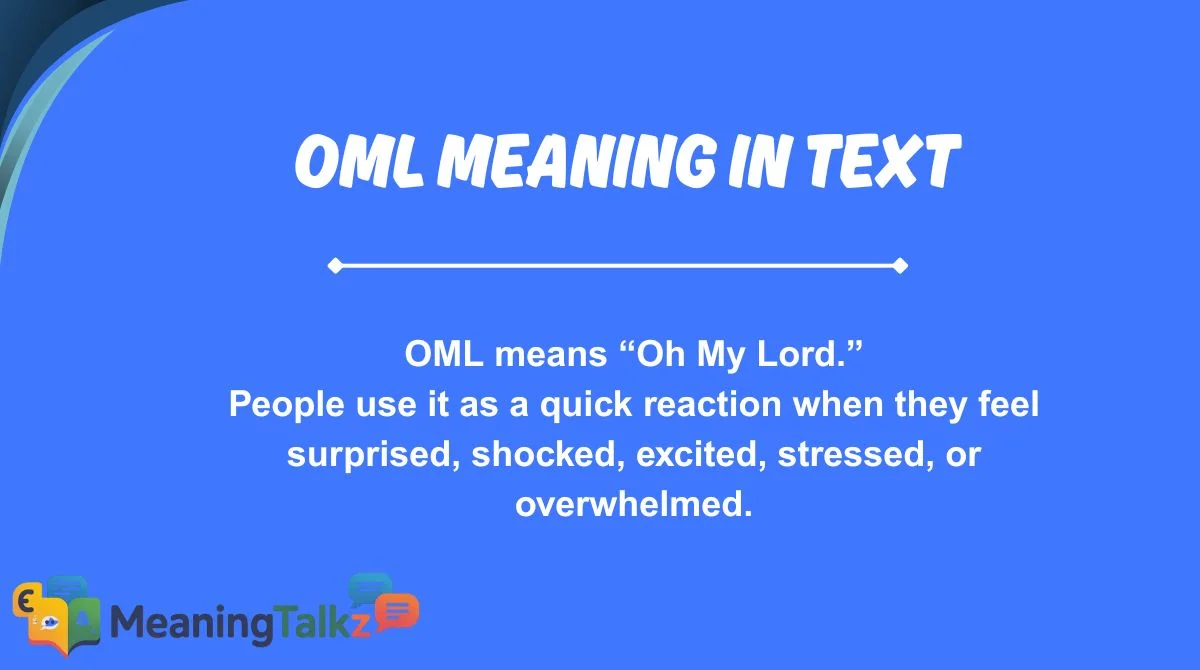
OML means “Oh My Lord.”
People use it as a quick reaction when they feel surprised, shocked, excited, stressed, or overwhelmed.
In texting, OML works like a stronger version of “wow” or “oh my gosh.”
Some people also use it to show:
- disbelief
- dramatic reactions
- funny frustration
- excitement about something unexpected
The exact tone depends on the message around it.
The Most Common Meanings of “oml”
Even though the basic meaning stays the same, OML can express different emotions depending on the situation.
1. Shock or Surprise
This is the most common meaning.
People type OML when something unexpected happens.
Example:
Friend:
“I just saw our teacher at the mall.”
Reply:
“OML really??”
Here it simply means “Wow, that’s surprising.”
2. Dramatic Reaction
Gen Z texting loves drama for fun.
OML often shows an exaggerated reaction.
Example:
“OML that movie ending destroyed me.”
This means the person feels emotionally overwhelmed or shocked.
3. Excitement
Sometimes OML shows excitement about good news.
Example:
“OML I got the job!”
Here it means happy shock or excitement.
4. Funny Frustration
People also use OML when something small becomes annoying.
Example:
“OML my WiFi stopped again.”
This tone is light frustration, not serious anger.
5. Disbelief
If something sounds unbelievable, OML can show doubt.
Example:
“You finished that game in one hour?”
“OML no way.”
It expresses surprise mixed with disbelief.
How “oml” Is Used in Real Conversations
The meaning of OML becomes clearer when you see how people use it in different places online.
Friends & Casual Texting
Friends use OML all the time because it feels quick and dramatic.
Examples:
“OML you won’t believe what happened today.”
“OML that joke was terrible.”
“OML I almost fell in front of everyone.”
Among friends, it usually means shock, laughter, or storytelling drama.
Instagram & Snapchat
On social media, OML often appears in comments or reactions.
Examples:
“OML this outfit is amazing.”
“OML your dog is so cute.”
“OML that sunset photo.”
Here the tone is usually excitement or admiration.
Short reactions work best on social apps, which is why slang like OML spreads so fast.
Dating Apps
On dating apps, OML can sound playful or flirtatious.
Example:
“You love pizza and dogs?”
“OML marry me already.”
It adds light humor and exaggeration.
However, tone still matters. If the chat is serious, slang might feel awkward.
Gaming & Online Communities
Gamers often use OML during intense moments.
Example:
“OML that boss fight was nonsensical.”
“OML our team almost lost.”
In gaming chats, it usually means shock or excitement during gameplay.
Fast reactions are common in these spaces.
Work or Professional Chat
OML rarely appears in professional conversations.
If it does, it’s usually in informal team chats.
Example:
“OML that meeting lasted forever.”
Even then, it depends on the workplace culture.
Many professionals prefer more formal language.
Is “oml” Rude, Flirty, or Offensive?
Most of the time, OML is not rude or offensive.
But tone always depends on context.
When It Feels Positive
OML sounds friendly when used for:
- excitement
- compliments
- funny reactions
- shared surprises
Example:
“OML your presentation was amazing.”
This feels supportive.
When It Sounds Negative
OML can feel slightly negative if it appears with criticism.
Example:
“OML that was painful to watch.”
Here the reaction feels judgmental or sarcastic.
When It Sounds Dramatic
Gen Z often uses OML for dramatic storytelling.
Example:
“OML I thought I lost my phone.”
The drama is usually playful, not serious.
When It Could Be Misunderstood
Some people confuse OML with religious expressions because it means Oh My Lord.
However, in texting it is usually just slang, not religious.
How to Respond When Someone Says “oml”
Your reply should match the tone of the message.
Here are simple response styles.
Casual Replies
“Right?? I couldn’t believe it either.”
“I know, it was mistaken.”
“Same here.”
Funny Replies
“Calm down it’s not that serious.”
“Take a deep breath.”
“OML squared.”
Neutral Replies
“Yeah that surprised me too.”
“Pretty wild situation.”
“I didn’t expect that either.”
Professional Replies
If someone uses slang in a work chat, keep your reply simple.
Example:
“Yes, that update came unexpectedly.”
This keeps the tone professional.
Common Misunderstandings About “oml”
Many people misread slang because tone is hard to see in text.
Here are the most common mistakes.
Thinking It Means Anger
OML usually shows surprise, not anger.
If someone is angry, they normally write a longer message.
Confusing It With OMG
OML and OMG look similar.
But they are slightly different.
OMG means Oh My God.
OML means Oh My Lord.
In texting, people often use them in the same way.
Assuming It’s Always Dramatic
Sometimes OML is just a quick reaction, not real drama.
Example:
“OML that pizza was good.”
It simply means wow.
Misreading Sarcasm
Without tone of voice, sarcasm can be tricky.
Example:
“OML great job.”
Depending on context, it might be genuine or sarcastic.
Similar Slang Terms You Should Know
Online slang changes quickly. Here are related expressions people often use.
OMG
Short for “Oh My God.” A classic reaction phrase.
SMH
Means “shaking my head,” used for disappointment.
LOL
Means “laugh out loud,” used for humor.
LMAO
Stronger version of LOL, meaning something is extremely funny.
BRUH
Used when something feels ridiculous or unbelievable.
FR
Short for “for real,” used to show agreement.
TBH
Means “to be honest,” often used before opinions.
IKR
Means “I know, right?” used when agreeing strongly.
WTH
Means “what the heck,” showing confusion or shock.
NO WAY
A longer reaction showing disbelief.
YIKES
Shows awkward shock.
SHEESH
Used when something is impressive or intense.
Learning these helps you understand modern texting culture faster.
When You Should Avoid Using “oml”
Even though slang is popular, there are situations where OML is not a good choice.
Professional Settings
In emails or formal work chats, slang may look unprofessional.
Better options:
- “That is surprising.”
- “That is unexpected.”
Cross-Cultural Conversations
Some people may not know texting slang.
Using simple language avoids confusion.
Example:
Instead of OML, write “Wow, that surprised me.”
Sensitive Situations
Serious topics require respectful language.
Avoid slang when discussing:
- illness
- serious news
- emotional problems
Slang can make the message feel insensitive.
Academic Writing
School papers or reports should not include internet slang.
Use clear formal language instead.
Final Thoughts
The oml meaning in text is simple once you see how people use it.
OML stands for “Oh My Lord.”
It works as a quick reaction to show:
- surprise
- excitement
- disbelief
- dramatic storytelling
- light frustration
In everyday texting, it’s basically a modern version of “wow.”
Friends, social media users, and online communities use it constantly because it’s short and expressive.
But remember: slang depends heavily on context.
Using OML with friends feels natural. Using it in professional conversations may feel awkward.
Understanding these small texting phrases helps you read messages correctly and communicate more confidently online.
FAQs
What does OML mean in texting?
OML means “Oh My Lord.” People use it to show surprise, excitement, shock, or dramatic reactions in messages.
Is OML the same as OMG?
They are similar but slightly different.
OMG means “Oh My God,” while OML means “Oh My Lord.” Both are used as reaction expressions.
Is OML rude?
No. OML is usually friendly and casual. It only sounds rude if used with criticism or sarcasm.
Do people still use OML in 2026?
Yes. OML remains common in texting, social media comments, gaming chats, and casual online conversations.
Can OML be used in professional messages?
It’s better to avoid it in professional settings. Formal messages should use clear language instead of slang.
Why do people type OML instead of full words?
Short slang saves time and adds emotion to quick conversations, especially on mobile phones.
Is OML used by Gen Z?
Yes. Gen Z often uses OML as a dramatic or humorous reaction in chats and social media messages.
Conclusion
Understanding the oml meaning in text helps you keep up with modern online conversations. While it simply stands for “Oh My Lord,” its real purpose is to show emotion quickly — whether that’s shock, excitement, disbelief, or playful drama.
Like many internet slang terms, OML works best in casual conversations with friends, social media interactions, and relaxed online communities.
Knowing when to use it — and when to choose more formal language — makes your communication clearer and more natural.
The next time someone texts “OML,” you won’t need to guess what they mean. You’ll understand the reaction instantly and know exactly how to reply.