You open a message and see this:
“ima call you later.”
You pause for a second.
Did they mean I’m calling now?
Are they leaving?
Or did they just type something wrong?
This small slang word confuses a lot of people. It shows up in texts, Snapchat messages, gaming chats, and even Instagram comments.
Many people search for ima meaning in text because they see it often but are not fully sure what the sender really means.
The truth is simple: “ima” is casual internet slang. But the tone and meaning can change depending on the message around it.
In modern texting culture, especially among Gen Z and online communities, speed matters. People shorten words to type faster and keep conversations flowing. That is where “ima” comes in.
In this guide, you will learn the exact meaning of “ima”, how people use it in real conversations, when it sounds friendly or rude, and how you should reply when someone sends it to you.
By the end, you will never feel confused about this slang again.
What Does “ima” Mean in Text?
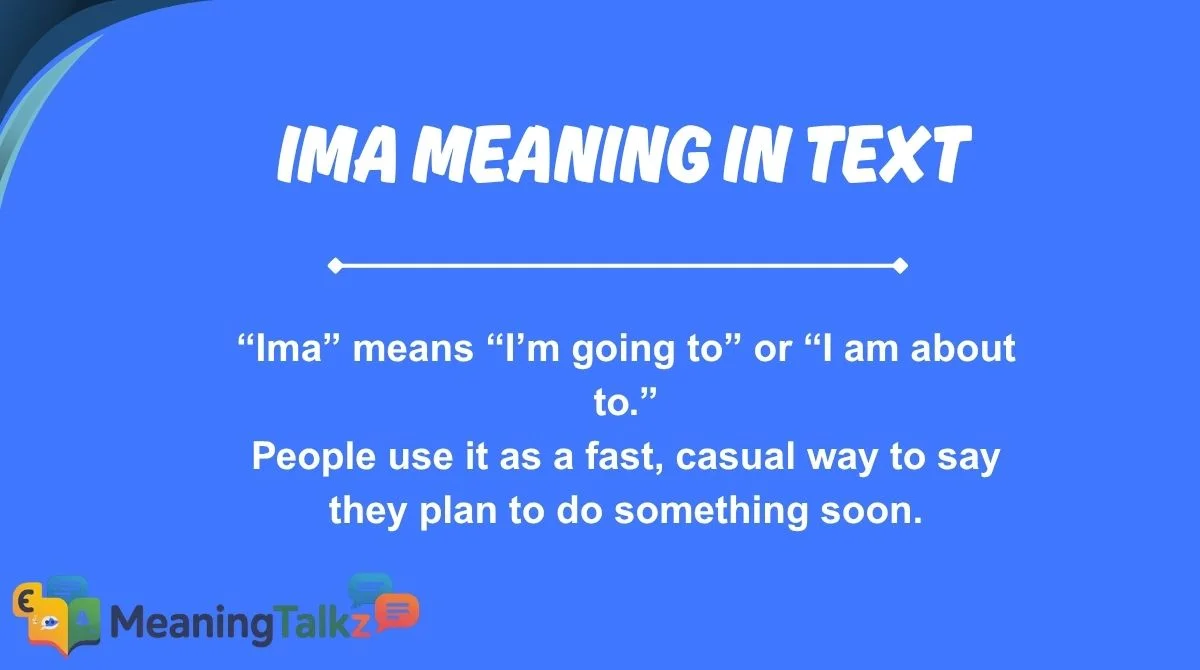
“Ima” means “I’m going to” or “I am about to.”
People use it as a fast, casual way to say they plan to do something soon.
Common interpretations include:
- I’m going to
- I’m about to
- Let me go do this
- I will do it now
Example:
“ima grab food real quick.”
Meaning:
“I’m going to grab food quickly.”
It is mostly used in casual texting and online chats, not in formal writing.
The Most Common Meanings of “ima”
Even though the main meaning stays the same, people use “ima” in a few slightly different ways depending on the situation.
1. “I’m Going To”
This is the most common meaning.
It simply shows that someone plans to do something next.
Example:
“ima watch that movie tonight.”
Meaning:
“I’m going to watch that movie tonight.”
This use appears often in:
- casual texting
- social media messages
- gaming chats
2. “I’m About To”
Sometimes “ima” means the action will happen very soon.
Example:
“ima leave in 5 minutes.”
Meaning:
“I’m about to leave.”
It signals immediate action.
3. “Let Me Go Do This”
In conversations, “ima” can also mean someone needs a moment to go do something.
Example:
“ima finish this homework then join.”
Meaning:
“I will finish my homework first, then I will join.”
This version shows a short delay.
4. A Casual Way to Start a Statement
Sometimes people use “ima” just to start a relaxed message.
Example:
“ima be honest with you.”
Meaning:
“I’m going to be honest with you.”
It adds a natural conversational tone.
How “ima” Is Used in Real Conversations
To understand the ima meaning in text, it helps to see where people use it most.
Different platforms use it slightly differently.
Friends & Casual Texting
This is where “ima” appears the most.
Friends use it because it is fast and relaxed.
Examples:
“ima call you later.”
“ima go sleep now.”
“ima send the link.”
In these messages, it simply means the person plans to do something soon.
Instagram & Snapchat
On social media, slang spreads quickly.
You might see captions or replies like:
“ima post the pics tomorrow.”
“ima delete this later.”
“ima try that trend.”
Here, the word helps keep the tone light and conversational.
It feels like someone talking out loud through text.
Dating Apps
On dating apps, people use “ima” to keep messages casual.
Examples:
“ima be honest, you seem cool.”
“ima grab coffee after work.”
“ima text you later tonight.”
In this context, it can feel friendly and relaxed, which helps conversations flow.
But tone still matters.
Gaming & Online Communities
Gamers often type very fast, so short slang is common.
Examples:
“ima join the next match.”
“ima restart the game.”
“ima go AFK for a minute.”
In gaming chats, the word simply signals an upcoming action.
Work or Professional Chat
In professional messages, “ima” is rare and usually not recommended.
Example someone might send:
“ima send the report soon.”
But a better version would be:
“I will send the report shortly.”
Professional communication usually avoids slang.
Is “ima” Rude, Flirty, or Offensive?
Most of the time, “ima” is neutral and friendly.
It is not rude by default.
However, tone depends on the context of the message.
When It Feels Friendly
“ima text you later.”
“ima watch that tonight.”
“ima help you with that.”
These sound casual and positive.
When It Can Sound Dismissive
If the message is very short, it may feel slightly cold.
Example:
“ima busy.”
This might feel like the person is brushing you off quickly.
When It Feels Playful or Flirty
Sometimes people use it in playful messages.
Example:
“ima steal your hoodie.”
“ima take you out for pizza.”
In this case, it feels light and teasing.
When It Could Feel Lazy
In serious conversations, slang like “ima” might feel careless.
Example:
“ima deal with it later.”
If the topic is important, the slang may make the message sound less serious.
How to Respond When Someone Says “ima”
Your reply depends on the tone of the conversation.
Here are some easy response ideas.
Casual Replies
“ok sounds good”
“cool”
“alright”
“no problem”
These work in most situations.
Funny Replies
If you want to keep the chat playful:
“ima waiting then”
“ima expecting snacks too”
“ima judging your choices”
Humor makes the conversation feel natural.
Neutral Replies
For normal conversations:
“sure”
“take your time”
“let me know”
These replies are simple and safe.
Professional Replies
If the message appears in work chat, respond clearly.
Example:
“Thanks, I’ll look out for it.”
“Please send it when ready.”
This keeps the conversation professional.
Common Misunderstandings About “ima”
Because slang spreads quickly online, people sometimes misunderstand it.
Here are the most common mistakes.
Thinking It Means “Immediately”
“Ima” does not always mean right now.
Example:
“ima watch that tomorrow.”
It simply means planning to do something.
Confusing It With Typos
Some people think “ima” is just a spelling mistake.
It is actually intentional slang used in texting culture.
Thinking It Is Rude
The word itself is not rude.
Tone depends on:
- the sentence
- the situation
- the relationship between people
Mixing It With Similar Slang
People sometimes confuse “ima” with other short forms like:
- im
- imma
- ima
These can look similar but are used slightly differently.
Similar Slang Terms You Should Know
Online slang keeps growing. If you understand “ima,” these related terms will also help.
Imma
Another way of saying “I’m going to.”
BRB
Be right back.
IDK
I don’t know.
TBH
To be honest.
FYI
For your information.
IMO
In my opinion.
SMH
Shaking my head (disappointment).
BTW
By the way.
FR
For real.
NVM
Never mind.
AFK
Away from keyboard.
LMK
Let me know.
Learning these helps you understand modern texting faster.
When You Should Avoid Using “ima”
Even though “ima” is common online, there are times when it is better to avoid it.
Professional Settings
In work emails or business messages, slang may look unprofessional.
Instead of:
“ima send the file.”
Write:
“I will send the file shortly.”
Cross-Cultural Conversations
Not everyone understands internet slang.
Using “ima” with someone from a different language background may cause confusion.
Clear language works better.
Formal Writing
You should not use slang in:
- essays
- reports
- academic writing
- professional documents
Formal writing requires complete words.
Sensitive Situations
If the conversation is serious, slang may seem careless.
Example topics:
- conflict
- emotional discussions
- serious plans
Using clear sentences shows respect and attention.
Final Thoughts.
Understanding the ima meaning in text is actually very simple once you see how people use it.
“Ima” is just a short, casual way to say “I’m going to” or “I’m about to.”
It appears everywhere in modern texting, especially among younger users and online communities where speed and simplicity matter.
Most of the time, it carries no negative tone. It simply signals that someone plans to do something soon.
Still, context matters. The same word can feel friendly, playful, or slightly dismissive depending on the conversation.
When texting friends, social media followers, or gaming teammates, “ima” fits naturally. But in professional or formal settings, full phrases like “I will” or “I am going to” sound clearer and more appropriate.
Once you understand this small piece of internet slang, reading modern messages becomes much easier. Instead of feeling confused, you will instantly know what the sender means.
FAQs
What does ima mean in text messages?
“Ima” means “I’m going to” or “I am about to.” People use it in casual texting to show they plan to do something soon.
Is ima the same as imma?
Yes, they are very similar. Both “ima” and “imma” mean “I’m going to.” The difference is only spelling style.
Is ima proper English?
No. “Ima” is internet slang, not standard English. It should only be used in casual conversations.
Why do people type ima instead of I’m going to?
People shorten phrases in texting to type faster and keep conversations quick.
Is ima used by Gen Z?
Yes. It is very common among Gen Z and online communities, especially on social media and gaming platforms.
Can ima sound rude?
Not usually. However, in short or serious messages, it might sound dismissive or lazy depending on context.
Should you use ima in work emails?
No. Work communication should use clear and professional language, such as “I will” or “I am going to.”
Conclusion
The ima meaning in text is simple but widely used in modern digital conversations. It stands for “I’m going to” or “I’m about to,” helping people express quick intentions in casual messages.
You will see it across texting, social media, gaming chats, and everyday online conversations. While it works well among friends and informal discussions, it is best avoided in professional communication.
Understanding slang like “ima” helps you read messages faster, respond naturally, and stay connected with modern online language.
As texting culture continues to evolve, knowing these small expressions makes digital conversations clearer and smoother.