Last updated on September 9th, 2026 at 06:18 am
You open a chat and see someone reply, “idc.” You pause for a second. Is it rude? Is it casual? Or does it mean they are angry? Many people get confused because short text slang changes how messages feel.
One small word can change the whole mood of a conversation.
This is why people search for idc meaning in text every day.
It shows up in chats, social media comments, gaming chats, and even dating apps. But the meaning can shift depending on tone and situation.
In this guide, you will get a clear, simple explanation of what “idc” really means, how people use it, and how you should respond when you see it. No confusion.
No guesswork. Just clear understanding in easy English.
What Does “idc” Mean in Text?
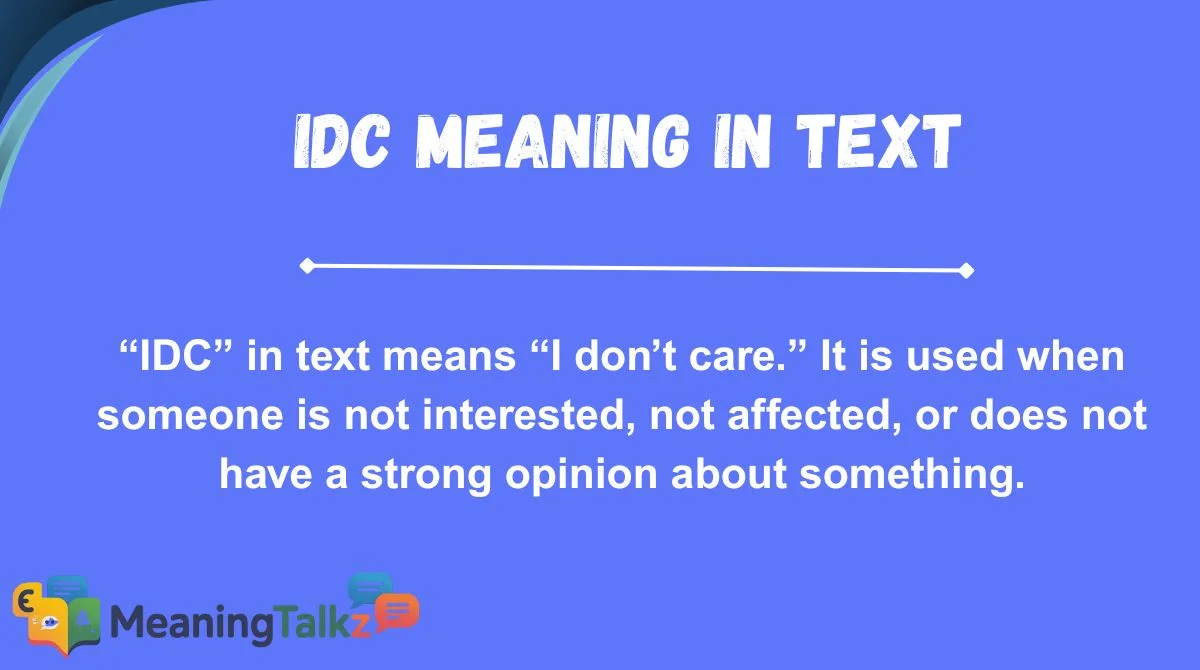
“IDC” in text means “I don’t care.” It is used when someone is not interested, not affected, or does not have a strong opinion about something.
In simple words, it shows a relaxed, uninterested, or sometimes annoyed attitude.
Common interpretations include:
- I don’t care (most common meaning)
- I don’t care anymore (emotional tiredness)
- I dare care (sarcasm in rare cases)
- Indifference in a situation
The meaning depends on how and where it is used.
What Does “IDC” Mean From a Crush?
When a crush texts “idc,” the meaning depends heavily on what you were discussing. It can genuinely mean they have no preference, but in an emotional or romantic conversation, it may sound like indifference or frustration. For example, “Where should we eat? idc” is probably neutral, while “Do you even like me?” followed by “idc” sounds much colder. Sometimes people also use “idc” playfully to hide that they actually care, especially when paired with teasing or emojis. Look at the rest of the conversation before assuming your crush is rejecting you. One short abbreviation is not enough to determine someone’s feelings.
IDC vs. IDGAF: What’s the Difference?
Both IDC and IDGAF communicate indifference, but their intensity is different. IDC means “I don’t care” and can be completely casual, such as “idc, you choose.” IDGAF means “I don’t give a f*”** and is much stronger and more emphatic. It can sound defiant, dismissive, or intentionally blunt. Dictionary.com defines IDGAF as an abbreviation expressing that someone does not care at all. Because of the stronger profanity, IDGAF is more likely to sound aggressive or inappropriate in formal conversations. If you simply want to show that either option is fine, IDC is usually the softer choice.
The Most Common Meanings of “idc” in Text
Even though “idc” mainly means “I don’t care,” the feeling behind it can change.
1. True Indifference
This is when someone genuinely has no opinion.
Example:
A: “Pizza or burger?”
B: “idc”
Meaning: Both are fine.
2. Emotional Tiredness
Sometimes people use “idc” when they are tired of arguing.
Example:
A: “Why didn’t you reply?”
B: “idc”
Meaning: They may actually feel hurt but don’t want to talk.
3. Passive Aggressive Mood
This is a common Gen Z use. It can feel cold or slightly rude.
Example:
A: “You should come with us.”
B: “idc.”
Meaning: They are upset but not explaining it.
4. Fake Indifference (Sarcasm)
Sometimes people say “idc” but actually care a lot.
Example:
A: “She likes your post.”
B: “idc 😒”
Meaning: They clearly care but won’t admit it.
How “idc” Is Used in Real Conversations
Friends & Casual Texting
Among friends, “idc” is very common. It is used for small choices or jokes.
Example:
“Where do we eat?”
“idc, you choose.”
It usually means trust or flexibility, not anger.
Instagram & Snapchat
On social media, “idc” is often used in comments or replies to show attitude.
Example:
“People will judge anyway, idc.”
Here it shows confidence or emotional distance.
Dating Apps
On dating apps, “idc” can be tricky. It may sound uninterested.
Example:
“What are you looking for?”
“idc honestly.”
This can make the other person think you are not serious.
Gaming & Online Communities
In gaming chats, “idc” is often fast and direct.
Example:
“Pick the map.”
“idc, start the game.”
It shows speed, not emotion.
Work or Professional Chat
In work chats, “idc” is NOT recommended. It can sound rude or careless.
Better version:
“Either option works for me.”
Is “idc” Rude, Flirty, or Offensive?
“IDC” is not always rude, but it depends on tone.
When it feels neutral:
- Casual planning
- Friendly chats
- Small decisions
When it feels rude:
- Arguments
- Short replies with no explanation
- Serious discussions
When it feels flirty:
- Light teasing between people
- Playful disagreement
Example:
A: “You miss me?”
B: “idc 😏”
Here it becomes playful, not serious.
Psychologically, “idc” works like emotional distance. It can protect feelings or hide frustration.
How to Respond When Someone Says “idc”
Your reply depends on the situation.
Casual Replies
- “Alright, I’ll choose then.”
- “Cool, no problem.”
- “Okay, let’s move on.”
Funny Replies
- “Wow, that was powerful idc energy.”
- “Strong opinion: idc 😂”
- “Noted, emotion deleted.”
Neutral Replies
- “Got it.”
- “Okay.”
- “Makes sense.”
Professional Replies
- “Understood, I will decide.”
- “I’ll proceed with the option I think is best.”
- “Noted, moving forward.”
Common Misunderstandings About “idc”
Many people misunderstand this slang.
1. Thinking it always means anger
Not true. Sometimes it is just laziness or neutrality.
2. Confusing it with “IDC = I do care”
Some beginners think it is positive. It is not.
3. Mixing tone with meaning
Same word, different mood:
- Calm: neutral
- Sharp: rude
- Playful: teasing
4. Overreacting to short replies
In Gen Z texting, short words are normal. Not everything is emotional.
Similar Slang Terms You Should Know
- idgaf – I don’t give a f***
- ngl – not gonna lie
- tbh – to be honest
- brb – be right back
- fr – for real
- smh – shaking my head
- imo – in my opinion
- icba – I can’t be asked
- whatever – no interest
- meh – no strong feeling
- lowkey – secretly
- highkey – openly
These terms often appear with “idc” in chats.
When You Should Avoid Using “idc”
Even though it is popular, “idc” is not always safe to use.
Professional Settings
It can sound careless or unprofessional.
Cross-cultural Chats
Not everyone understands slang. It may confuse people.
Sensitive Situations
Avoid it when:
- Someone is upset
- Serious decisions are being made
- Emotional topics are discussed
Better to use full sentences in these cases.
Final Thoughts
“IDC” is a small slang word, but it carries strong meaning in text conversations. Most of the time it simply means “I don’t care,” but the real message depends on tone, timing, and relationship between people.
In Gen Z texting culture, it can show chill behavior, boredom, sarcasm, or emotional distance. Understanding it helps you avoid confusion and respond better in chats.
The key is simple: don’t just read the word—read the situation behind it.
FAQs
What does idc mean in texting?
It means “I don’t care,” showing no strong opinion or interest.
Is idc rude in chat?
It can be rude if used in arguments or short replies, but not always.
What does idc mean in Gen Z slang?
It is used for indifference, sarcasm, or casual attitude.
Is idc passive aggressive?
Yes, sometimes it shows hidden frustration or emotional distance.
Can idc be used in dating chats?
Yes, but it may seem uninterested if used too often.
What is the full form of idc?
I Don’t Care.
How should I reply to idc?
You can reply casually like “okay” or decide the choice yourself.
Conclusion
IDC is one of the most common short forms in modern texting. It looks simple, but it can carry different emotions depending on the situation.
Learning its meaning helps you understand conversations better and respond in the right way.
Whether it is casual chat, social media, or gaming, knowing when someone truly “doesn’t care” or just sounds like it makes communication smoother and clearer.