You open a message and see someone type “habibi.”
Maybe it was in a text, a TikTok comment, a gaming chat, or even on a dating app.
Now you’re wondering:
Is it flirting?
Is it friendly?
Is it rude?
This confusion is exactly why so many people search for habibi meaning online.
The word shows up everywhere on social media. Friends use it. Influencers say it in videos. Gamers drop it in chat. Sometimes people use it as a joke. Other times it sounds sweet or romantic.
But the meaning can change depending on the person, the tone, and the situation.
In this guide, you’ll learn the real habibi meaning, how people use it in texting, and what it actually sounds like in modern online conversations.
By the end, you’ll know when it’s friendly, when it’s flirty, and how to reply without sounding awkward.
What Does “habibi meaning” Mean in Text?
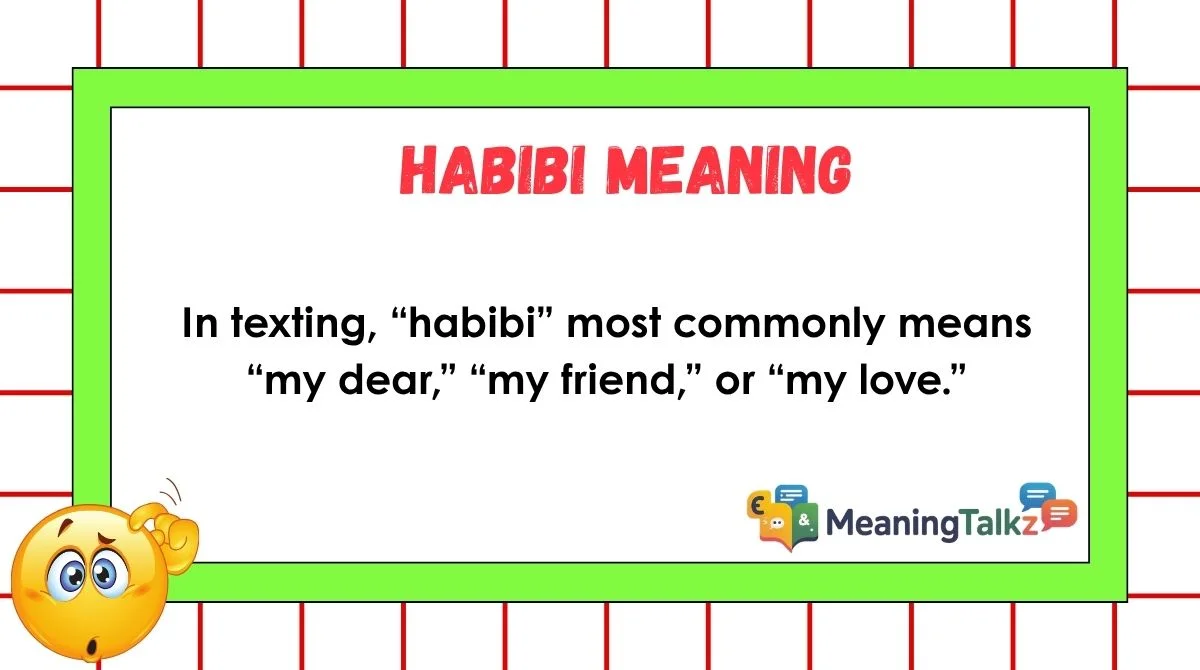
In texting, “habibi” most commonly means “my dear,” “my friend,” or “my love.”
People use it as a friendly or affectionate nickname. Depending on tone and context, it can mean:
- A close friend
- Someone you like
- A playful greeting
- A joking way to address someone
In most chats today, it simply means “bro,” “buddy,” or “dear.”
The Most Common Meanings of “habibi”
The word may look simple, but online it can carry different tones. Here are the most common ways people use it.
1. Friendly Nickname
Many people use habibi as a casual nickname for friends.
It works like saying:
- bro
- buddy
- my guy
- my friend
Example texts:
“Relax habibi, we’ll fix it.”
“Good game habibi.”
“Come on habibi let’s go.”
In this case, it’s purely friendly.
2. Romantic or Flirty
Sometimes the word becomes romantic.
Couples or people flirting may use it the same way they use:
- babe
- baby
- love
- sweetheart
Example texts:
“Goodnight habibi.”
“Miss you habibi.”
“Come here habibi.”
Tone matters here. If the conversation is already flirty, the word feels romantic.
3. Playful Internet Slang
On social media, people often say habibi in a joking way.
It’s common in memes and TikTok videos.
Example:
“Habibi come to Dubai.”
“Relax habibi.”
“Trust me habibi.”
Here the word is more internet humor than a serious nickname.
4. A Way to Get Attention
Some people say habibi just to sound friendly or grab attention.
Example:
“Habibi listen.”
“Habibi wait.”
“Habibi check this.”
In this case it acts like saying:
“Hey friend.”
5. Sarcastic Tone
Like many slang words, tone can flip the meaning.
Sometimes people say it sarcastically.
Example:
“Sure habibi, whatever you say.”
“Nice try habibi.”
The word is still friendly sounding, but the tone shows sarcasm.
How “habibi” Is Used in Real Conversations
The habibi meaning shifts depending on where people use it. Different platforms create different vibes.
Friends & Casual Texting
Among friends, habibi usually means buddy or bro.
Example conversation:
Friend 1: “You coming tonight?”
Friend 2: “Of course habibi.”
Another example:
“Don’t worry habibi I got you.”
Here it shows trust and friendship.
Instagram & Snapchat
On social media, people often use it in comments.
Examples:
“Looking good habibi.”
“Let’s go habibi.”
“Legend habibi.”
Influencers also use it to connect with followers.
Example caption:
“Stay strong habibi.”
This creates a friendly online persona.
Dating Apps
On dating apps, the meaning can feel more romantic or flirty.
Examples:
“Good morning habibi.”
“You look amazing habibi.”
“So when are we meeting habibi?”
Here the word can feel more like:
- babe
- sweetheart
But context still matters.
Gaming & Online Communities
Gamers love using habibi in voice chat and text chat.
Examples:
“Nice shot habibi.”
“Carry us habibi.”
“Let’s push habibi.”
It often becomes a fun team nickname.
It’s rarely romantic in gaming spaces.
Work or Professional Chat
In professional chats, the word is less common.
Some close coworkers may joke with it.
Example:
“Good work habibi.”
But generally, it’s safer to avoid it in formal work messages.
Is “habibi” Rude, Flirty, or Offensive?
The word itself is not rude.
But tone and situation can change how it feels.
When It Feels Positive
The word usually feels positive when:
- friends use it
- couples use it
- people joke casually
- the conversation is relaxed
Example:
“Thank you habibi.”
This feels warm and friendly.
When It Feels Flirty
It can sound flirty when:
- used with compliments
- used in romantic chats
- paired with heart emojis
- sent in late night messages
Example:
“Miss you habibi.”
That clearly sounds romantic.
When It Feels Annoying
Sometimes the word feels annoying if:
- someone repeats it too much
- the tone feels fake
- strangers overuse it
Example:
“Listen habibi I told you.”
Tone can make it sound pushy.
When It Could Feel Offensive
Very rarely, someone may feel uncomfortable if:
- the word feels mocking
- the tone is sarcastic
- it’s used during an argument
Example:
“Relax habibi you don’t know anything.”
Tone matters more than the word itself.
How to Respond When Someone Says “habibi”
If someone calls you habibi, you don’t need a complicated reply. Just match the tone.
Casual Replies
Simple friendly replies work best.
Examples:
“Thanks habibi.”
“You too habibi.”
“Appreciate it habibi.”
These keep the conversation smooth.
Funny Replies
Some people respond with humor.
Examples:
“Calm down habibi.”
“Okay boss habibi.”
“Relax habibi I know.”
Funny replies work well among friends.
Neutral Replies
If you’re unsure about the tone, stay neutral.
Examples:
“Got it.”
“Thanks.”
“Alright.”
No need to repeat the nickname.
Professional Replies
In work or formal chats, avoid repeating the word.
Example replies:
“Thank you.”
“I understand.”
“Appreciate the message.”
This keeps communication professional.
Common Misunderstandings About “habibi”
Many people misunderstand the habibi meaning online.
Here are the biggest myths.
Thinking It Always Means “Love”
Some people think habibi only means romantic love.
That’s not true.
Most of the time it simply means friend or buddy.
Thinking It’s Only for Couples
The word is used by:
- friends
- teammates
- family members
- internet creators
Romantic use is only one version.
Confusing Tone
Tone is the biggest source of confusion.
Example:
“Relax habibi.”
This could mean:
- friendly
- sarcastic
- teasing
Context decides the tone.
Assuming It’s Always Cultural
Many internet users say habibi even if they have no cultural connection to the word.
Online slang spreads fast.
So the word now exists in global internet culture.
Similar Slang Terms You Should Know
If you see habibi online, you may also see similar slang words.
Here are some related terms.
Bro – A common way to address a friend.
Fam – Short for family, used for close friends.
My guy – Friendly nickname for a buddy.
Bestie – A playful term for a best friend.
Babe – Romantic nickname used in relationships.
Buddy – Casual and friendly way to address someone.
Boss – Sometimes used as respect or joking praise.
King – Used online to hype someone up.
Legend – Compliment for someone impressive.
Homie – Slang for a close friend.
Mate – Friendly term common in casual conversation.
Each word carries a slightly different tone, but they serve similar roles.
When You Should Avoid Using “habibi”
Even though the word is friendly, there are situations where using it may not be smart.
Professional Settings
In work emails or formal chats, it may sound unprofessional.
Example to avoid:
“Good morning habibi, please review the report.”
Instead say:
“Good morning.”
Cross-Cultural Conversations
Some people may not know the slang meaning.
They might feel confused.
Using clearer language helps.
Sensitive Situations
During serious conversations, slang can feel disrespectful.
Example situations:
- conflict discussions
- serious work meetings
- formal messages
In these cases, neutral language works better.
Final Thoughts.
The habibi meaning is simple once you understand how people use it online.
Most of the time, the word means my friend, my dear, or buddy. It’s a friendly nickname that appears in texting, social media, gaming chats, and casual conversations.
Sometimes it becomes flirty, especially in romantic messages. Other times it’s playful internet slang used for jokes or memes.
The key thing to remember is context. The same word can feel friendly, funny, or romantic depending on the situation.
If someone calls you habibi, it usually means they are being friendly or playful. You can reply casually, joke back, or keep things neutral.
Once you understand the tone, the word becomes easy to read.
And now when you see it in messages, comments, or chats, you’ll instantly know what it means.
FAQs
What is the real habibi meaning in texting?
In texting, habibi usually means “my friend,” “buddy,” or “my dear.” It’s a friendly nickname used in casual conversations.
Is habibi a romantic word?
It can be romantic in some contexts. Couples may use it like “babe” or “love,” but friends also use it casually.
Can girls say habibi too?
Yes. Anyone can use the word in casual conversations, especially online.
Is habibi offensive to say?
No. The word itself is not offensive. Problems only happen if it is used with sarcasm or disrespectful tone.
Why do people say habibi online?
People use it because it sounds friendly, playful, and trendy on social media, gaming chats, and texting.
Does habibi mean bro?
Sometimes yes. Among friends, it often works the same way as saying bro, buddy, or my guy.
Should I reply with habibi if someone calls me that?
You can if the conversation is casual. If the chat is professional or formal, it’s better to reply normally.
Conclusion
Understanding the habibi meaning helps you read modern online conversations with confidence.
The word has become a popular internet nickname that usually means friend, dear, or buddy. Sometimes it feels flirty, sometimes playful, but most of the time it’s simply friendly slang.
By paying attention to tone, platform, and relationship, you can easily understand what someone means when they say habibi—and respond naturally without confusion.