You open a text, scroll through TikTok comments, or check a gaming chat and suddenly someone types “GTFO.” Now you’re stuck wondering if they are joking, angry, rude, or just being dramatic.
That confusion is exactly why so many people search for “gtfo meaning in text.” Online slang changes fast, and abbreviations can sound very different depending on the situation. One person may use GTFO as a funny reaction, while another may use it in a rude or aggressive way.
The good news is that GTFO is actually easy to understand once you know the tone behind it.
In most cases, it is used casually between friends, especially in memes, gaming chats, social media comments, and fast texting conversations.
This guide explains the full GTFO meaning in text, where people use it, how to respond to it, when it sounds offensive, and when you should avoid using it completely.
By the end, you’ll know exactly what someone means when they send “GTFO.”
What Does “GTFO Meaning in Text” Mean?
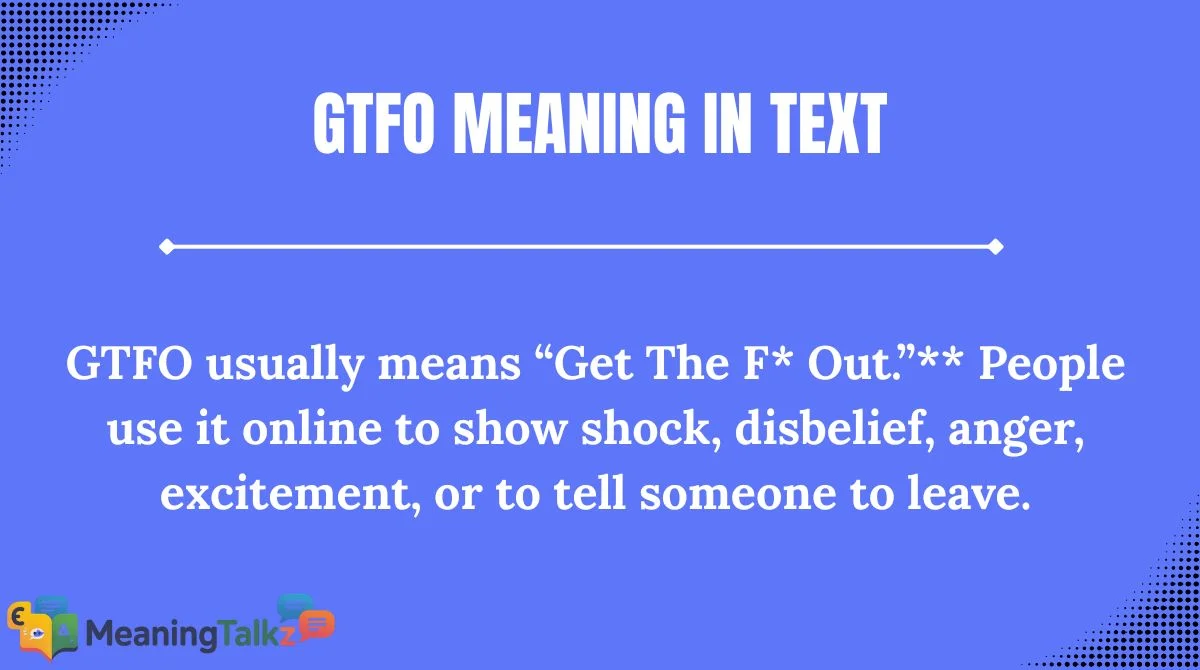
GTFO usually means “Get The F* Out.”** People use it online to show shock, disbelief, anger, excitement, or to tell someone to leave.
Depending on the situation, GTFO can mean:
- “You must be joking”
- “Leave right now”
- “No way, that’s inexplicable”
- “Stop lying”
- “I can’t believe it”
The tone changes based on the conversation, relationship, and platform.
The Most Common Meanings of “GTFO”
1. “Get Out of Here” as Shock or Surprise
This is the most common modern use online.
People say GTFO when they hear something surprising or unbelievable.
Example:
- “You met your favorite singer?”
- “GTFO, seriously?”
Here, the person is shocked, not angry.
2. Telling Someone to Leave
Sometimes GTFO is used literally to tell someone to go away.
This version sounds much more aggressive.
Example:
- “GTFO my room.”
- “If you hate the game, then GTFO.”
This tone can feel rude or hostile.
3. Calling Something Fake or Hard to Believe
People also use GTFO when they think someone is lying or exaggerating.
Example:
- “I won $10,000 from a giveaway.”
- “GTFO. No you didn’t.”
This use is common in meme culture and friend groups.
4. Funny or Playful Reaction
Among close friends, GTFO can be playful.
It may simply mean:
- “That’s wild”
- “You’re kidding”
- “That’s hilarious”
Example:
- “He texted his ex by accident.”
- “GTFO that’s embarrassing.”
5. Gaming Trash Talk
In online games, GTFO is often used during arguments or competition.
Example:
- “GTFO camper.”
- “Bro got destroyed, GTFO.”
Gaming chats usually use harsher language, so GTFO appears often there.
How “GTFO” Is Used in Real Conversations
Friends & Casual Texting
Friends usually use GTFO jokingly.
It works as a reaction instead of a serious insult.
Examples:
- “I got free concert tickets.”
- “GTFO, that’s amazing.”
Or:
- “You ate the whole pizza?”
- “GTFO.”
In these cases, tone matters more than the words themselves.
Instagram & Snapchat
On social media, GTFO often appears in:
- Comment sections
- Story replies
- Meme reactions
- Viral posts
People use it to react fast without typing full sentences.
Examples:
- “GTFO this filter is scary.”
- “GTFO I thought this was real.”
On Snapchat, it may appear in casual joking conversations between friends.
Dating Apps
GTFO on dating apps can mean different things depending on tone.
It may show flirtation, surprise, or annoyance.
Flirty Example:
- “You actually remembered my birthday?”
- “GTFO that’s cute.”
Negative Example:
- “You ghosted me for 2 weeks.”
- “GTFO.”
Because tone is hard to read through text, GTFO can easily cause confusion in dating chats.
Gaming & Online Communities
Gaming culture uses GTFO heavily.
You’ll see it in:
- Multiplayer matches
- Twitch chats
- Discord servers
- Reddit discussions
Gamers often use it jokingly after funny mistakes or intense moments.
Examples:
- “That sniper shot was outrageous.”
- “GTFO bro.”
Or:
- “You stole my loot.”
- “GTFO.”
Gaming spaces usually accept rougher slang than normal conversations.
Work or Professional Chat
GTFO is rarely appropriate in work communication.
Even if meant as a joke, it can look:
- Unprofessional
- Aggressive
- Immature
Using GTFO in Slack, Teams, or work emails is risky unless you know the culture very well.
Bad Example:
- “GTFO with these deadlines.”
This can easily offend coworkers.
Is “GTFO” Rude, Flirty, or Offensive?
GTFO can be all three depending on context.
That’s why tone matters so much online.
When GTFO Feels Funny
Among friends, GTFO often sounds playful.
People use it like:
- “No way”
- “You’re joking”
- “That’s inexplicable”
In these situations, nobody feels attacked.
When GTFO Feels Rude
GTFO becomes rude when:
- Used during arguments
- Written in ALL CAPS
- Combined with insults
- Sent to strangers
Example:
- “GTFO idiot.”
That clearly sounds hostile.
When GTFO Feels Flirty
Some people use GTFO during playful teasing.
Example:
- “You remembered my coffee order?”
- “GTFO, marry me.”
Here it sounds cute and dramatic, not offensive.
Why Tone Gets Confusing in Text
Text messages remove:
- Facial expressions
- Voice tone
- Body language
That’s why GTFO may look harsher than intended.
A joke between close friends may sound offensive to someone else.
How to Respond When Someone Says “GTFO”
Casual Replies
If the tone feels friendly:
- “I know right?”
- “inexplicable, isn’t it?”
- “I’m serious.”
- “Yup, it really happened.”
Funny Replies
Funny responses work well with playful conversations.
Examples:
- “I’m not leaving.”
- “Too late.”
- “Believe it.”
- “I said the same thing.”
Neutral Replies
If you are unsure about tone:
- “Wait, what do you mean?”
- “Seriously though.”
- “I’m telling the truth.”
Neutral replies avoid drama.
Professional Replies
In professional spaces, avoid matching the slang.
Instead say:
- “Let’s keep things respectful.”
- “I understand your frustration.”
- “Can we discuss this calmly?”
Professional replies reduce conflict.
Common Misunderstandings About “GTFO”
Thinking It Always Means Anger
Many people assume GTFO is always aggressive.
That is no longer true online.
Today, younger users often use it jokingly.
Confusing It With “Leave Me Alone”
Sometimes GTFO simply means shock, not rejection.
Example:
- “GTFO you met Drake?”
This does not mean the person wants someone gone.
Misreading Sarcasm
Sarcasm is common online.
A playful GTFO may look serious if you do not know the person well.
Cultural Differences
Some cultures see profanity as highly offensive.
Others treat slang casually.
GTFO may sound normal in one group but disrespectful in another.
Assuming Everyone Understands It
Older users or non-English speakers may not know GTFO slang.
Using it with unfamiliar audiences can create confusion.
Similar Slang Terms You Should Know
OMG
Means “Oh My God.” Used for surprise or excitement.
WTF
Means “What The F***.” Shows shock, confusion, or anger.
STFU
Means “Shut The F*** Up.” Usually rude or aggressive.
FR
Means “For Real.” Used to agree or confirm something.
NGL
Means “Not Gonna Lie.” Used before honest opinions.
BRB
Means “Be Right Back.” Common in texting and gaming.
IDC
Means “I Don’t Care.” Often sounds cold or dismissive.
IMO
Means “In My Opinion.” Used to share personal views.
SMH
Means “Shaking My Head.” Shows disappointment or disbelief.
LMFAO
Means laughing very hard at something funny.
TBH
Means “To Be Honest.” Used before truthful comments.
GOAT
Means “Greatest Of All Time.” Used for top-level talent.
When You Should Avoid Using “GTFO”
Professional Settings
Avoid GTFO in:
- Work chats
- Emails
- Client meetings
- School communication
It can hurt your image quickly.
Talking to New People
If you do not know someone well, GTFO may sound offensive.
Safer wording avoids misunderstandings.
Sensitive Conversations
Never use GTFO during:
- Serious arguments
- Emotional talks
- Mental health discussions
- Family conflicts
It may feel disrespectful or hurtful.
Cross-Cultural Communication
Some people are uncomfortable with profanity-based slang.
GTFO may seem far harsher to international audiences.
Public Brand Accounts
Businesses and creators should use caution.
Even joking profanity can damage trust with some audiences.
Final Thoughts.
The meaning of GTFO in text depends almost completely on tone and context. While the phrase literally means “Get The F*** Out,” most modern users online now use it as a reaction to surprise, excitement, disbelief, or humor.
Among friends, GTFO is often playful and harmless. In arguments or professional settings, however, it can sound rude, aggressive, or disrespectful. That is why understanding the relationship, platform, and conversation style matters so much.
If someone sends you GTFO, do not panic immediately. Look at the full conversation before deciding whether it is funny, flirty, sarcastic, or offensive.
Understanding internet slang like GTFO helps you text smarter, avoid awkward misunderstandings, and keep up with modern online culture in 2026.
FAQs
What does GTFO stand for in texting?
GTFO usually stands for “Get The F*** Out.” It can show shock, disbelief, anger, or humor.
Is GTFO always rude?
No. Friends often use GTFO jokingly or playfully online.
What does GTFO mean on Snapchat?
On Snapchat, GTFO usually means surprise or disbelief during casual conversations.
Can GTFO be flirty?
Yes. Some people use GTFO playfully while teasing or flirting.
Should I use GTFO at work?
Usually no. It can sound unprofessional or offensive in workplace communication.
What is the difference between GTFO and STFU?
GTFO usually means “go away” or “no way,” while STFU means “shut up.” STFU is generally harsher.
Why do gamers say GTFO so much?
Gaming culture often uses fast slang, jokes, and trash talk, making GTFO very common in chats and streams.
Conclusion
GTFO is one of the most common internet slang terms used in texting, gaming, social media, and online chats today.
While its literal meaning sounds harsh, most people now use it casually to react to shocking, funny, or unbelievable situations. The key is understanding tone, context, and who is saying it.
Used with friends, it may feel funny or playful. Used in professional or serious conversations, it can sound rude and offensive.
Knowing how GTFO works in modern digital culture helps you avoid misunderstandings and communicate more naturally online.