Last updated on September 12th, 2026 at 04:26 am
You open a message and see just four letters: DWBI.
No punctuation. No explanation. Just “dwbi.”
Now you pause. Is it an insult? A joke? Some secret Gen Z code?
This exact moment is why thousands of people search “dwbi meaning in text” every month. Modern texting moves fast. New slang appears on TikTok, Snapchat, gaming chats, and Discord almost overnight. If you miss one trend, a message can feel confusing.
DWBI is one of those short slang terms that can look random at first. But once you know what it means, you’ll notice it everywhere in casual conversations online.
This guide breaks down exactly what DWBI means in text, how people use it in real messages, and how you should respond when someone sends it to you. You’ll also learn when using DWBI is fine—and when it might be better to avoid it.
By the end, you’ll understand the tone, context, and real meaning behind DWBI so you never feel confused again.
What Does “dwbi meaning in text” Mean in Text?
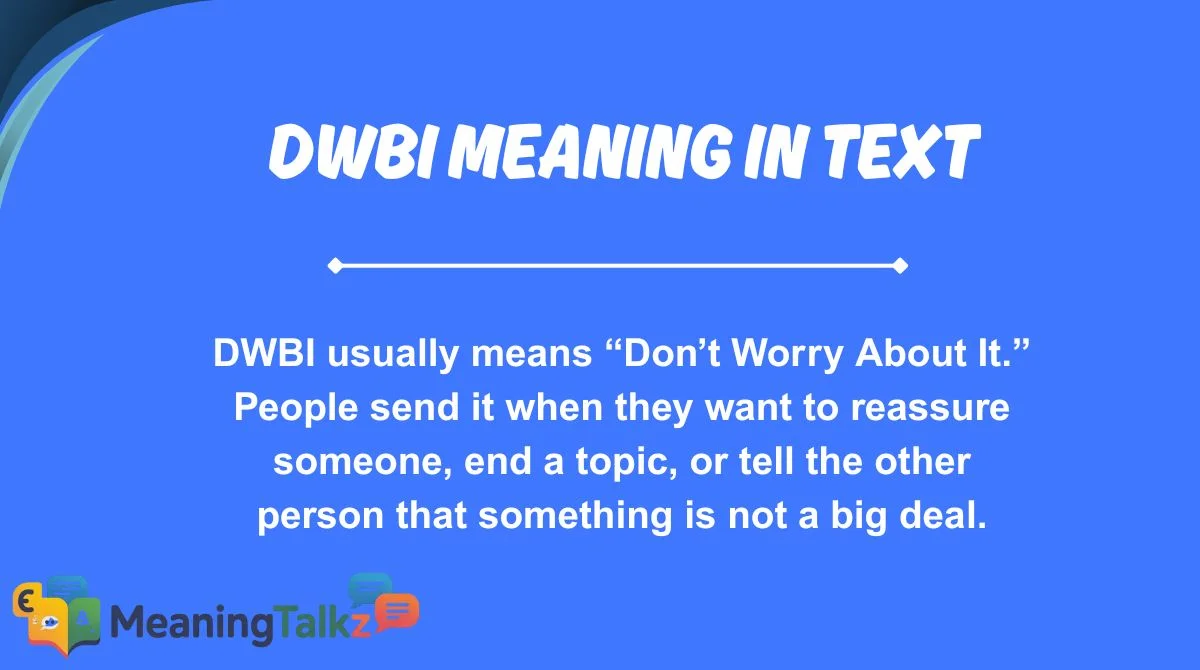
DWBI usually means “Don’t Worry About It.”
People send it when they want to reassure someone, end a topic, or tell the other person that something is not a big deal.
Common interpretations include:
- Don’t worry about it
- It’s not a problem
- Forget about it
- No need to stress
The meaning depends on the tone of the conversation, but in most cases it is meant to calm the other person.
DWBI vs. DW: What’s the Difference?
DWBI and DW are closely related, but they are not exactly the same. DW usually means “Don’t Worry,” while DWBI means “Don’t Worry About It” or the more casual “Don’t Worry ’Bout It.” Both can reassure someone, but DWBI can sound more complete when responding to a specific mistake, question, or concern.
For example, “Sorry I forgot to call” → “DW” simply means there is no need to worry. “DWBI” can carry the slightly stronger message that the particular issue should be left alone. However, a bare “DWBI” can also sound dismissive if someone is asking about a serious issue. The surrounding conversation determines the tone.
What Does “DWBI” Mean From a Crush?
If your crush sends “DWBI,” it usually means they are reassuring you or telling you not to feel bad about something. For example, if you apologize for replying late and they answer “dwbi 😊,” they are probably saying that everything is fine. The abbreviation itself is not inherently romantic or flirty.
The tone can change, though. “DWBI, you’re good” feels warm and supportive, while a bare “DWBI” after a serious question might feel distant or like they want to end the topic. If your crush adds emojis, continues the conversation, asks questions, or uses affectionate language, those surrounding signals are more meaningful than DWBI itself.
The Most Common Meanings of “dwbi”
Even though DWBI often means “don’t worry about it,” the tone can shift depending on the situation. Let’s look at the most common ways people use it.
1. “Don’t Worry About It”
This is the most direct meaning.
Someone uses DWBI when they want to reassure you that everything is fine.
Example:
Friend:
“Sorry I replied late.”
Reply:
“DWBI.”
Meaning: It’s okay. No problem.
This version is friendly and relaxed.
2. “It’s Not a Big Deal”
Sometimes DWBI means the situation isn’t important.
Example:
“You forgot to bring snacks.”
Reply:
“DWBI. We can grab some later.”
Here the sender is saying the mistake does not matter.
3. “Forget It”
In some conversations, DWBI signals that the topic is finished.
Example:
“Can you send that file again?”
Reply:
“DWBI, I already figured it out.”
This version closes the conversation.
4. Slightly Passive Tone
Sometimes DWBI can feel a little cold.
Example:
“I didn’t mean to upset you.”
Reply:
“DWBI.”
This may sound like the person does not want to talk more about it.
Context matters a lot here.
How “dwbi” Is Used in Real Conversations
To really understand dwbi meaning in text, it helps to see where it appears most often online.
Different platforms use slang differently.
Friends & Casual Texting
Among friends, DWBI is usually positive.
People use it to show that something small does not matter.
Example:
Friend 1:
“I accidentally ate the last cookie.”
Friend 2:
“DWBI lol.”
Here the tone is playful and relaxed.
Instagram & Snapchat
On social apps, DWBI often appears in quick replies.
Example messages:
“DWBI it’s all good.”
“DWBI I got it already.”
“DWBI we’ll fix it later.”
Because social media chats move fast, short phrases like DWBI save time.
Dating Apps
In dating chats, DWBI is often used to keep the mood calm.
Example:
“I’m sorry if that sounded weird.”
Reply:
“DWBI, you’re good.”
It helps remove awkward tension.
But sometimes the tone can feel distant if the person replies only with DWBI and nothing else.
Gaming & Online Communities
Gamers use short phrases constantly during matches.
DWBI may appear when someone makes a mistake.
Example:
Player:
“Sorry I missed the shot.”
Teammate:
“DWBI, we still win this.”
This shows support instead of blame.
Work or Professional Chat
DWBI is less common in professional messages.
But it still appears in casual workplace chats.
Example:
“Sorry for the late email.”
Reply:
“DWBI. Thanks for sending it.”
However, in formal workplaces, people usually write the full phrase instead.
Is “dwbi” Rude, Flirty, or Offensive?
The meaning of DWBI depends heavily on tone and context.
Most of the time it is neutral or friendly.
But it can feel different depending on how it is used.
When DWBI Feels Positive
DWBI sounds kind when it reassures someone.
Example:
“Sorry I messed that up.”
Reply:
“DWBI, it happens.”
This version shows understanding.
When DWBI Feels Neutral
Sometimes it is simply a short response.
Example:
“Thanks for helping earlier.”
Reply:
“DWBI.”
Here it just means “no problem.”
When DWBI Feels Cold
If someone is upset, DWBI may feel dismissive.
Example:
“I feel like I annoyed you.”
Reply:
“DWBI.”
This might sound like the person does not want to discuss feelings.
Is It Flirty?
Not usually.
DWBI is more about reassurance than flirting.
However, tone can change depending on the rest of the conversation.
Is It Offensive?
No. DWBI is not considered offensive slang.
But using it during serious conversations may feel insensitive.
How to Respond When Someone Says “dwbi”
If someone sends you DWBI, the best reply depends on the situation.
Here are different ways to answer.
Casual Replies
- “Okay cool.”
- “Got it.”
- “Thanks.”
These keep the conversation relaxed.
Funny Replies
Humor works well with friends.
Examples:
- “Too late, I already worried.”
- “I worry professionally.”
- “Worrying is my hobby.”
These keep the mood playful.
Neutral Replies
Sometimes a simple response is best.
Examples:
- “Alright.”
- “Sounds good.”
- “Noted.”
These responses work in most situations.
Professional Replies
In work chats, stay polite.
Examples:
- “Thanks for letting me know.”
- “Appreciate it.”
- “Understood.”
This keeps communication respectful.
Common Misunderstandings About “dwbi”
Because texting slang is short, people often misunderstand it.
Here are the most common mistakes.
Thinking It Is an Insult
Some readers assume DWBI is rude.
But the phrase usually means the opposite—it reassures someone.
Confusing It With Other Abbreviations
DWBI can look similar to other slang like:
- IDK
- IDC
- TBH
But the meaning is completely different.
DWBI focuses on removing worry, not expressing opinion.
Misreading the Tone
Tone is hard to read in text.
A short message like “DWBI” might feel dismissive even if the sender meant it kindly.
Adding extra words can make tone clearer.
Example:
“DWBI, it’s fine.”
Assuming Everyone Knows It
DWBI is still less common than classic abbreviations like LOL.
Some people may not recognize it immediately.
Similar Slang Terms You Should Know
If you’re learning dwbi meaning in text, it helps to know other common slang used in similar situations.
Here are popular ones:
NBD
Means “No Big Deal.”
NP
Short for “No Problem.”
IDC
Means “I Don’t Care.”
IDK
Means “I Don’t Know.”
TBH
Short for “To Be Honest.”
IMO
Means “In My Opinion.”
BRB
Short for “Be Right Back.”
SMH
Means “Shaking My Head.”
ICYMI
Short for “In Case You Missed It.”
FYI
Means “For Your Information.”
LMK
Short for “Let Me Know.”
Learning these short terms helps you read online conversations faster.
When You Should Avoid Using “dwbi”
Even though DWBI is harmless, there are situations where it may not be the best choice.
Professional Settings
Formal emails or workplace communication usually avoid slang.
Instead of DWBI, write the full phrase:
“Don’t worry about it.”
This sounds more professional.
Cross-Cultural Conversations
People from different countries may not understand internet slang.
Using simple words avoids confusion.
Serious Situations
If someone shares something emotional, DWBI may feel dismissive.
Example:
“I’m really stressed about work.”
Replying with only “DWBI” might sound insensitive.
A better reply would show empathy.
First-Time Conversations
If you are talking to someone new, avoid heavy slang until you know their texting style.
Final Thoughts.
Understanding dwbi meaning in text is simple once you see how it works.
In most conversations, DWBI means “Don’t Worry About It.” It is used to reassure someone, reduce stress, or show that a situation is not a big deal.
Like many short slang terms, the tone depends on context. Among friends it feels relaxed and supportive. In serious conversations it may feel too short or dismissive.
The safest approach is to read the full conversation before interpreting the message.
Modern texting continues to evolve quickly. New abbreviations appear every year, especially on social media and gaming platforms.
But once you understand the patterns behind these short phrases, it becomes much easier to follow online conversations.
FAQs
What does DWBI mean in text messages?
DWBI usually means “Don’t Worry About It.” It tells someone that a situation is not a problem or that they should not stress.
Is DWBI a rude slang term?
No. DWBI is normally friendly or neutral. However, if used alone during serious discussions, it may feel dismissive.
Where is DWBI most commonly used?
DWBI appears most often in casual texting, social media chats, gaming conversations, and quick replies between friends.
Is DWBI the same as “no problem”?
Yes, in many cases it has the same meaning. Both phrases reassure someone that everything is fine.
Can DWBI be used in professional messages?
It is better to avoid slang in formal communication. Instead of DWBI, write the full phrase “Don’t worry about it.”
Why do people use DWBI instead of typing the full phrase?
Texting culture favors speed. Short abbreviations like DWBI save time and match the fast pace of online conversations.
Is DWBI popular among Gen Z?
Yes. Short acronyms are common in Gen Z messaging, especially on platforms like Snapchat, Instagram, and gaming chats.
Conclusion
The phrase dwbi meaning in text simply comes down to one idea: reassurance.
When someone sends DWBI, they are usually telling you not to stress, not to apologize, or not to worry about a small issue. It is a quick way to keep conversations relaxed and positive.
Like most internet slang, its tone depends on context. With friends it feels casual and friendly. In serious discussions or professional chats, using the full phrase is often better.
Once you recognize what DWBI stands for, you will start seeing it more often across texts, social media messages, and online communities.
Understanding small slang terms like this makes modern digital communication much easier to navigate.