People often freeze when they see random slang in a text. Someone sends “dpwm,” and suddenly you’re trying to figure out if it’s rude, flirty, angry, or just internet slang.
That confusion is exactly why so many people search for “dpwm meaning in text” every day.
Short text codes move fast online. A word that starts on TikTok or Snapchat can spread across Instagram DMs, dating apps, gaming chats, and group messages within days.
If you don’t know the meaning, it’s easy to misunderstand the tone or reply the wrong way.
The good news is that “dpwm” is actually simple once you understand the context behind it.
In most cases, it carries a direct emotional tone and is used casually in online conversations.
This guide explains the real meaning of dpwm, how people use it in texting, when it sounds rude or playful, how to respond naturally, and the common mistakes people make when reading it online.
What Does “dpwm” Mean in Text?
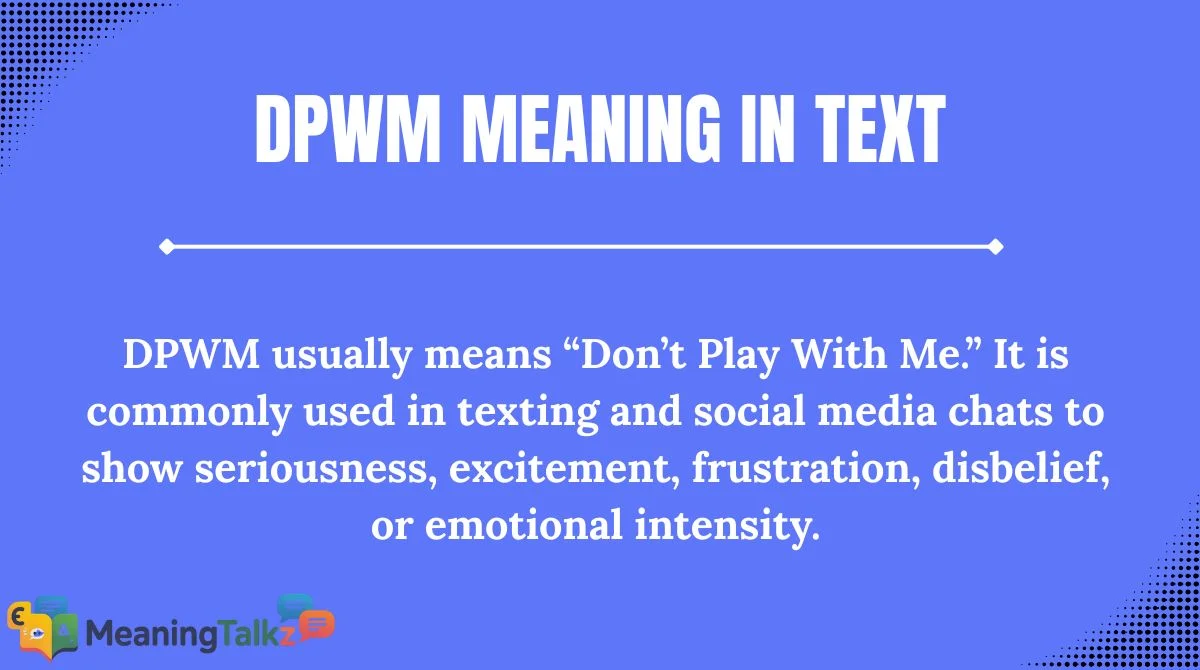
DPWM usually means “Don’t Play With Me.” It is commonly used in texting and social media chats to show seriousness, excitement, frustration, disbelief, or emotional intensity.
Depending on the conversation, it can sound:
- Playful
- Flirty
- Defensive
- Serious
- Dramatic
Some people also use it jokingly when reacting to good news, shocking gossip, or emotional moments online.
The Most Common Meanings of “dpwm”
“Don’t Play With Me” (Most Common Meaning)
This is the meaning most people use today.
It tells someone:
- Be serious
- Stop joking
- Don’t lie
- Don’t test me
- Don’t mess around emotionally
Example:
- “You got us concert tickets? DPWM!”
In this case, the person is shocked and excited.
Another example:
- “If you’re serious about leaving, dpwm.”
Here, the tone is emotional and serious.
A Dramatic Reaction
Sometimes dpwm is not literal. It’s just used for dramatic internet reactions.
Example:
- “The new season drops tomorrow? DPWM.”
The person is basically saying:
- “No way.”
- “You better be serious.”
- “I can’t believe it.”
A Warning or Boundary
In arguments or emotional talks, dpwm can feel stronger.
Example:
- “I already told you how I feel. DPWM.”
This version sounds more defensive or frustrated.
A Flirty Phrase
On dating apps or romantic chats, dpwm can sound playful.
Example:
- “You miss me already? Dpwm.”
This creates teasing tension and flirt energy.
How “dpwm” Is Used in Real Conversations
Friends & Casual Texting
Friends use dpwm constantly in casual chats when reacting to:
- Gossip
- Surprises
- Plans
- Drama
- Funny news
Examples:
- “You actually quit your job? DPWM.”
- “Bro said he met a celebrity. Dpwm.”
- “Free food at the party? DPWM.”
Among friends, it usually sounds funny or exaggerated rather than aggressive.
Instagram & Snapchat
On Instagram and Snapchat, dpwm often appears:
- In DMs
- Story replies
- Comment sections
- Reaction posts
People use it because it feels fast and emotional.
Examples:
- “You’re in Dubai right now? DPWM.”
- “That outfit is fire, dpwm.”
- “You met him for real? DPWM.”
The phrase works well in short reactions, which is why it became popular on visual social apps.
Dating Apps
Dating culture uses dpwm in a playful and emotional way.
Common situations:
- Flirting
- Testing interest
- Teasing
- Romantic tension
Examples:
- “You stayed up waiting for my text? Dpwm.”
- “You already miss me? DPWM.”
- “You deleted Tinder for me? Don’t play with me.”
Tone matters heavily here. Depending on delivery, it can sound:
- Cute
- Cocky
- Flirty
- Emotionally intense
Gaming & Online Communities
Gamers and online communities use dpwm when reacting to:
- Impossible wins
- Shocking gameplay
- Rare rewards
- Competitive moments
Examples:
- “You beat the boss first try? DPWM.”
- “Legendary skin on the first pull? Dpwm.”
In gaming spaces, it usually means:
- “No way.”
- “That’s outrageous.”
- “You’re joking.”
Work or Professional Chat
DPWM is usually avoided in professional settings because it sounds too casual and emotional.
Using it at work can:
- Confuse people
- Sound unprofessional
- Create awkward tone issues
Bad example:
- “The client approved everything? DPWM.”
Better version:
- “That’s great news.”
- “Seriously?”
- “Glad to hear it.”
Is “dpwm” Rude, Flirty, or Offensive?
The answer depends completely on context.
When It Sounds Positive
DPWM often sounds playful when:
- Friends are joking
- Someone shares exciting news
- People flirt casually
- The tone is light
Example:
- “You bought me food? DPWM.”
This feels warm and funny.
When It Sounds Rude
It can sound rude when:
- Someone is angry
- There’s conflict
- The message feels aggressive
- The conversation is emotional
Example:
- “I already warned you. Dpwm.”
This version feels more serious and confrontational.
When It Sounds Flirty
Flirty dpwm usually appears with:
- Teasing
- Compliments
- Romantic attention
- Emotional tension
Example:
- “You really jealous over me? DPWM.”
The phrase adds playful drama.
Tone Psychology Behind DPWM
People use dpwm because it creates emotional emphasis quickly.
Instead of writing:
- “I can’t believe that.”
- “Please be serious.”
- “Stop joking.”
They shorten everything into one dramatic phrase.
That emotional energy is why the slang became popular online.
How to Respond When Someone Says “dpwm”
Casual Replies
Use relaxed responses with friends.
Examples:
- “I’m dead serious.”
- “Why would I lie?”
- “Facts.”
- “No joke.”
- “I swear.”
Funny Replies
Humor works well with dpwm.
Examples:
- “I stay playing.”
- “Too late.”
- “I would never.”
- “Caught me.”
- “Maybe just a little.”
These replies keep the conversation playful.
Neutral Replies
Sometimes you just want to continue the conversation normally.
Examples:
- “Yeah, it’s true.”
- “Seriously though.”
- “I’m not kidding.”
- “That actually happened.”
Professional Replies
If someone uses slang in semi-formal chats, stay neutral.
Examples:
- “Yes, that’s correct.”
- “That’s accurate.”
- “I’m being serious.”
- “Confirmed.”
Avoid copying internet slang in formal communication unless you know the person well.
Common Misunderstandings About “dpwm”
Thinking It Always Means Anger
Many people assume dpwm is aggressive.
That’s not always true.
Most of the time, it’s just dramatic internet language used for reactions and jokes.
Confusing It With Threats
“Don’t play with me” can sound threatening in certain situations, but online slang often softens the phrase.
Friends may use it in completely harmless ways.
Example:
- “You got VIP tickets? DPWM.”
No anger exists there.
Misreading Flirty Tone
On dating apps, people sometimes mistake playful dpwm for emotional pressure.
Tone clues matter:
- Emojis
- Previous messages
- Relationship style
- Conversation mood
Confusing It With Similar Slang
DPWM gets mixed up with:
- “bffr”
- “fr”
- “istg”
- “ong”
But each slang term has a different tone and purpose.
Similar Slang Terms You Should Know
FR
Means “for real.” Used to confirm seriousness.
Example:
- “That movie was amazing fr.”
BFFR
Means “be for real.” Often sarcastic or dismissive.
Example:
- “You think that’s a good idea? BFFR.”
ONG
Means “on God.” Used to swear honesty.
Example:
- “I didn’t do it ong.”
ISTG
Means “I swear to God.” Shows frustration or seriousness.
Example:
- “ISTG that noise is annoying.”
NGL
Means “not gonna lie.” Used before honest opinions.
Example:
- “Ngl, that was embarrassing.”
SMH
Means “shaking my head.” Shows disappointment.
Example:
- “SMH people still believe that.”
TBH
Means “to be honest.”
Example:
- “TBH I expected better.”
ATP
Means “at this point.”
Example:
- “ATP just go home.”
LMK
Means “let me know.”
Example:
- “LMK when you arrive.”
IYKYK
Means “if you know, you know.”
Example:
- “That party was mistaken IYKYK.”
Bet
Means:
- Okay
- Sure
- Agreed
Example:
- “Meet at 8?”
- “Bet.”
No Cap
Means:
- No lie
- Seriously
Example:
- “That food was amazing no cap.”
When You Should Avoid Using “dpwm”
Professional Settings
Avoid dpwm in:
- Emails
- Work chats
- Client communication
- School assignments
Not everyone understands internet slang, especially across age groups.
Cross-Cultural Conversations
Slang changes by region and platform.
Someone outside your online culture may misunderstand the tone completely.
They might think:
- You’re angry
- You’re rude
- You’re threatening them
Sensitive Situations
Avoid using dpwm during:
- Serious arguments
- Emotional conflicts
- Mental health discussions
- Family problems
The phrase can sound dismissive or aggressive when emotions are already high.
Talking to Older Audiences
Older users may not recognize the slang and could interpret it literally.
Simple language works better in mixed-age conversations.
Final Thoughts.
DPWM mainly means “Don’t Play With Me,” and it is one of the internet’s favorite dramatic reaction phrases.
People use it in texting, TikTok comments, Snapchat messages, gaming chats, and dating apps to show excitement, disbelief, frustration, or playful emotion.
The tone changes based on context. With friends, it usually sounds funny or exaggerated.
In dating chats, it can sound flirty. During arguments, it may feel serious or defensive.
Understanding modern slang is less about memorizing definitions and more about reading tone, timing, and conversation style.
Once you understand the mood behind dpwm, the phrase becomes easy to recognize and use naturally.
FAQs
What does dpwm stand for in texting?
DPWM usually stands for “Don’t Play With Me.”
Is dpwm rude?
Not always. It can sound playful, funny, flirty, or serious depending on the conversation.
What does dpwm mean on Snapchat?
On Snapchat, dpwm usually means someone is shocked, excited, or asking another person to be serious.
Can dpwm be flirty?
Yes. Many people use dpwm playfully during flirting or teasing conversations.
Is dpwm popular on TikTok?
Yes. The phrase became popular through social media culture, especially TikTok and short-form reactions.
Should I use dpwm at work?
Usually no. It sounds too casual and emotional for professional communication.
How do you reply to dpwm?
You can reply casually with:
- “I’m serious.”
- “No joke.”
- “I swear.”
- “Facts.”
Conclusion
DPWM is a modern texting slang term that mainly means “Don’t Play With Me.” It helps people express disbelief, excitement, frustration, or playful emotion in a short and dramatic way.
The phrase is most common in casual texting, social media apps, dating conversations, and gaming communities. While it is usually harmless and expressive, tone matters a lot.
Understanding when and where to use dpwm can help you avoid awkward misunderstandings and communicate more naturally online.