You’re texting someone. Everything is normal. Then suddenly the message ends with one word:
“luv”.
Now you pause.
Did they mean love? Are they flirting? Are they just being friendly? Or is it just casual internet slang?
This small word creates a lot of confusion in modern texting. People see it on Instagram comments, Snapchat chats, gaming messages, and even dating apps.
Because texting language keeps changing, many users search for “luv meaning in text” to understand what someone really meant.
The truth is simple: “luv” is one of the most common casual texting words online today. But the tone can change depending on the situation, relationship, and platform.
In this guide, you’ll learn exactly what luv means in text, how people use it in real conversations, whether it sounds flirty or friendly, and how to respond without sounding awkward.
By the end, you’ll never second-guess this slang again.
What Does “luv meaning in text” Mean in Text?
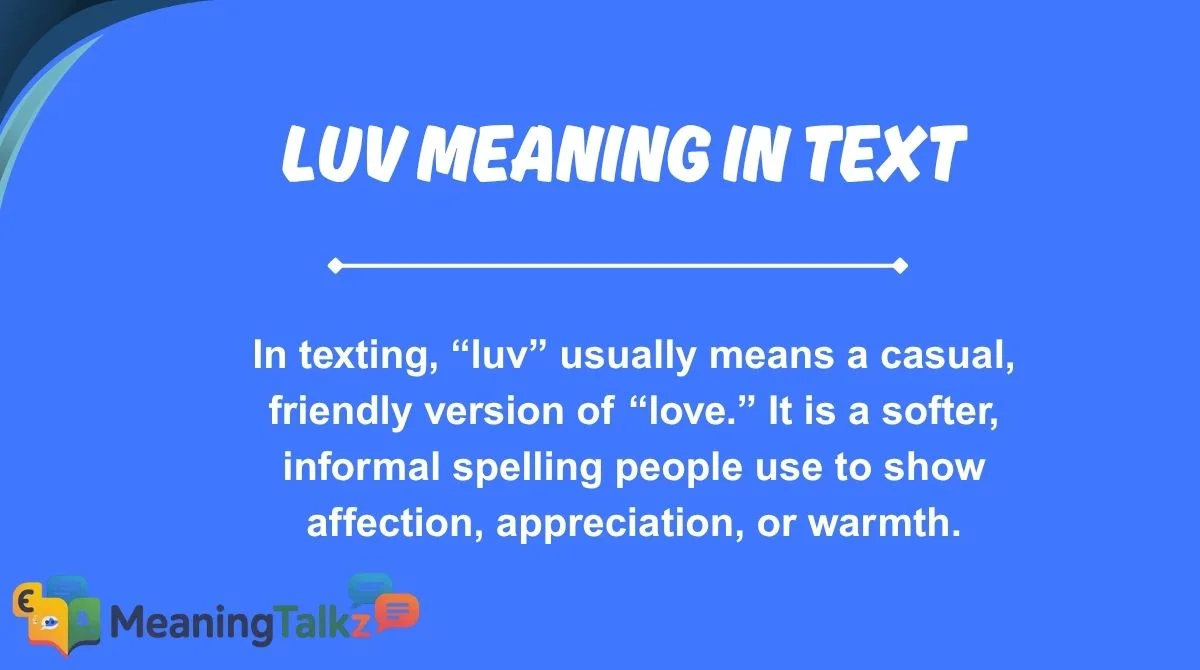
In texting, “luv” usually means a casual, friendly version of “love.” It is a softer, informal spelling people use to show affection, appreciation, or warmth.
Common interpretations include:
- Friendly care between friends
- Light romantic interest
- Playful or cute texting tone
- Simple appreciation or support
Unlike the full word “love,” “luv” feels less serious and more relaxed in online conversations.
The Most Common Meanings of “luv meaning in text”
Even though the spelling is simple, “luv” can carry different meanings depending on the conversation.
Friendly Affection
This is the most common use.
People use “luv” when talking to close friends or people they feel comfortable with. It expresses warmth without sounding too emotional.
Example:
“Thanks for helping me today luv”
Here it simply means appreciation and friendliness.
Casual Romantic Interest
Sometimes “luv” is used in a slightly flirty way.
It can appear in messages between people who like each other but want to keep the tone light and playful.
Example:
“Goodnight luv”
This can feel sweet and romantic, but still casual.
Playful or Cute Tone
Gen Z and younger users often type “luv” because it looks cute in text messages.
It makes the conversation feel relaxed and informal.
Example:
“Luv this outfit!”
This doesn’t mean romantic love. It just means they really like something.
Appreciation or Support
“Luv” is also used when showing support or kindness.
Example:
“Stay safe luv”
In this case, it simply means “take care.”
How “luv meaning in text” Is Used in Real Conversations
Different platforms use slang in slightly different ways. Here’s how “luv” usually appears in everyday messages.
Friends & Casual Texting
Among friends, “luv” feels normal and friendly.
It’s often used to end a message in a warm way.
Examples:
“See you tomorrow luv”
“Thanks luv”
“Miss you luv”
It creates a relaxed and caring tone.
Instagram & Snapchat
On social media, “luv” appears in comments and replies.
Examples:
“Luv this photo”
“Luv your vibe”
“Luv it!”
Here it simply means really like or appreciate.
It’s quick, positive, and easy to type.
Dating Apps
In dating conversations, “luv” can feel slightly flirty.
Example:
“Morning luv”
“Sleep well luv”
But tone matters. If the conversation is already romantic, it may feel more intimate.
If the chat is still casual, it may just be playful texting.
Gaming & Online Communities
Gamers sometimes use “luv” jokingly or sarcastically.
Example:
“Luv that strategy bro”
In this context, it often just means “nice” or “good job.”
It’s more playful than emotional.
Work or Professional Chat
In professional chats, “luv” is rarely appropriate.
Work messages usually avoid slang.
Example of what not to send:
“Thanks for the report luv”
Instead, people usually say:
“Thanks for the report.”
Keeping communication professional avoids misunderstandings.
Is “luv meaning in text” Rude, Flirty, or Offensive?
Most of the time, “luv” is not rude or offensive.
But the tone depends on context and relationship.
When It Feels Positive
“Luv” usually feels warm and friendly when used between:
- Close friends
- Romantic partners
- Family members
- Casual social media interactions
Example:
“Take care luv”
This sounds kind and supportive.
When It Feels Flirty
“Luv” can sound flirty when used between two people who are interested in each other.
Example:
“Goodnight luv”
In dating conversations, this can feel affectionate.
When It Feels Weird
Sometimes “luv” can feel strange if the relationship is too formal.
For example:
- Work colleagues
- Someone you just met
- A serious professional conversation
In those cases, the word may sound too personal.
How to Respond When Someone Says “luv meaning in text”
If someone sends you “luv,” you might wonder how to reply. The best response depends on the tone of the conversation.
Casual Replies
These work well with friends.
Examples:
“Thanks!”
“Appreciate it”
“Right back at you”
Funny Replies
If the conversation is playful, humor works well.
Examples:
“Only a little?”
“Stop being nice”
“Okay that was smooth”
Neutral Replies
These keep things friendly without adding emotion.
Examples:
“Got it”
“Sounds good”
“Thanks for that”
Professional Replies
If someone casually says “luv” in a semi-professional chat, keep your response neutral.
Example:
“Thank you.”
This keeps the tone respectful and safe.
Common Misunderstandings About “luv meaning in text”
Because texting slang is short, people sometimes misread the tone.
Here are common mistakes.
Thinking It Means Serious Love
Many people assume “luv” means strong romantic love.
In most cases, it doesn’t.
It’s usually just friendly or casual affection.
Confusing It With “Love”
“Love” feels deeper and more emotional.
“Luv” is lighter and more playful.
That small spelling change makes a big difference in texting tone.
Assuming It’s Always Flirty
Not every “luv” message is flirting.
Example:
“Luv your new car”
This just means admiration.
Misreading Cultural Tone
In some cultures, words like “luv,” “dear,” or “sweetie” are used casually in conversation.
So the intention may simply be friendly.
Similar Slang Terms You Should Know
Online slang changes fast. These related words often appear in the same types of messages.
Love ya – Friendly way to say love you.
LY – Short form for love you.
ILY – Stands for “I love you”.
ILYSM – Means “I love you so much”.
XOXO – Hugs and kisses.
Bestie – Close friend.
Bae – Romantic partner or crush.
Fam – Close group of friends.
Bro – Friendly nickname for a friend.
Slay – Doing something very well.
Bet – Agreement or approval.
Lowkey – Something subtle or quiet.
Knowing these terms helps you understand modern texting conversations better.
When You Should Avoid Using “luv meaning in text”
Even though “luv” is popular online, there are situations where using it may not be the best choice.
Professional Settings
Work emails, business chats, and client messages should stay formal.
Avoid slang like “luv” to maintain professionalism.
Cross-Cultural Conversations
Not everyone understands internet slang.
Using simple language avoids confusion.
Sensitive Situations
Serious topics deserve clear and respectful communication.
Example situations:
- Apologies
- Conflict discussions
- Work feedback
Using slang can make the message feel careless.
Final Thoughts
Texting slang evolves constantly, but some words stay popular for years. “Luv” is one of them.
In most cases, luv simply means a casual, friendly version of love. It adds warmth to a message without sounding too serious.
People use it with friends, romantic partners, and social media followers to create a relaxed tone.
Still, context matters. The same word can feel friendly, flirty, or slightly awkward depending on the relationship and conversation.
Understanding slang like “luv” helps you read messages more accurately and respond with confidence.
Once you know the tone behind the word, texting becomes much easier.
FAQs
What does luv mean in text messages?
Luv is an informal spelling of love used in texting. It usually expresses friendliness, appreciation, or light affection.
Is luv the same as love?
Not exactly. Love sounds more serious and emotional, while luv feels casual and playful.
Is saying luv flirty?
It can be slightly flirty depending on the conversation, but most of the time it is simply friendly.
Why do people spell love as luv?
People use luv because it looks cute, feels casual, and fits the relaxed style of texting.
Can luv mean friendship?
Yes. Many friends use luv to show appreciation or kindness without romantic meaning.
Is luv common in social media comments?
Yes. People often write “luv this” or “luv it” on Instagram, Snapchat, and other platforms.
Should you use luv in work messages?
No. It’s better to avoid slang in professional communication and use clear, formal language.
Conclusion
Understanding luv meaning in text helps you avoid confusion in modern digital conversations. While the word comes from “love,” its tone is much lighter and more casual.
People use it to show friendliness, appreciation, or playful affection in chats, social media comments, and dating conversations.
The key is context. Between friends or partners, “luv” can feel warm and natural. In professional or serious situations, it may sound out of place.
Once you recognize how the word is used across different platforms, you can respond confidently and keep your conversations smooth.
Texting slang will keep evolving, but knowing simple words like “luv” makes modern communication easier.