You open a message and see: “idek what to say.”
For a second, you pause.
Is it sarcasm? Is the person annoyed? Are they confused? Or is it just another random internet shortcut?
If you spend time on social media, texting apps, or gaming chats, you’ve probably seen “idek” pop up more and more.
Many people search for “idek meaning in text” because the phrase looks simple but the tone can change depending on the conversation.
Online slang moves fast. New words appear every year, and short forms like “idek” are now common in everyday texting. Teenagers, Gen Z users, gamers, and even coworkers sometimes use it.
But what does it really mean? Is it rude? Is it lazy texting? Or is it just a casual way to talk?
This guide breaks down the true meaning of “idek” in text, how people actually use it, when it sounds friendly or negative, and how you should respond when someone sends it.
By the end, you’ll understand the word completely and never feel confused when it appears in a chat again.
What Does “idek” Mean in Text?
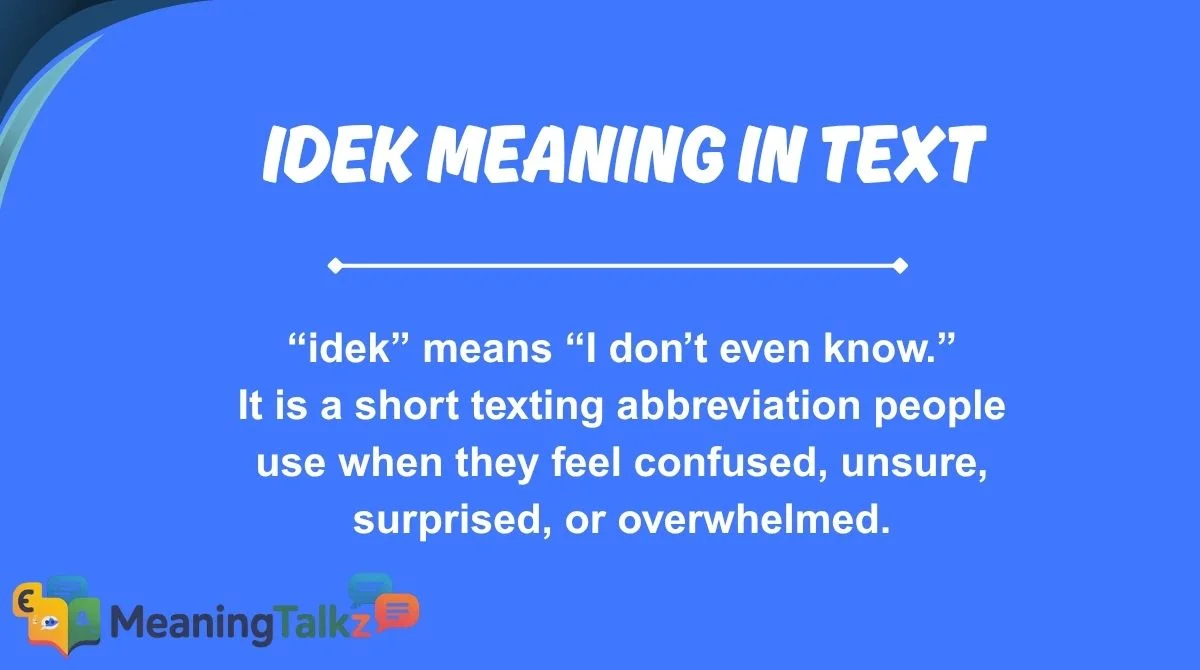
“idek” means “I don’t even know.”
It is a short texting abbreviation people use when they feel confused, unsure, surprised, or overwhelmed.
In most conversations, it can mean:
- Not knowing the answer
- Being too shocked to explain something
- Feeling confused about a situation
- Expressing frustration or disbelief
The tone depends heavily on the context of the message.
The Most Common Meanings of “idek”
Although the basic meaning is “I don’t even know,” people use “idek” in several slightly different ways depending on the situation.
Here are the most common meanings you will see in real messages.
1. Genuine Confusion
Sometimes people truly don’t know the answer to something.
In this case, “idek” is simply a quick way to say they have no idea.
Example:
- “Why is the internet so slow today?”
- “idek maybe the router is broken.”
Here the person is just admitting they don’t know.
2. Shock or Surprise
People also use “idek” when something unexpected happens.
It shows they are too surprised to explain the situation.
Example:
- “How did he win the game after being last?”
- “idek that was confused.”
The phrase shows disbelief.
3. Emotional Overwhelm
Sometimes a person uses “idek” when they feel stressed or overwhelmed.
They might not know how to react or what to say.
Example:
- “Everything is going wrong today.”
- “idek what to do anymore.”
Here the message carries emotional weight.
4. Casual Laziness in Texting
In many cases, “idek” is simply fast texting.
Instead of typing “I don’t even know,” people shorten it.
Example:
- “Why is the store closed?”
- “idek.”
Short and simple.
5. Playful or Dramatic Reaction
Friends often use it jokingly.
Example:
- “Why do you have 7 alarms in the morning?”
- “idek my life is chaos.”
The phrase adds humor.
How “idek” Is Used in Real Conversations
Understanding where people use “idek” helps you read the tone correctly.
Different platforms use slang differently.
Friends & Casual Texting
This is where “idek” appears the most.
Friends use it casually when chatting about daily life.
Examples:
- “Why did you stay up until 3 AM?”
- “idek I was watching videos.”
Or:
- “Why are we like this?”
- “idek honestly.”
It keeps the conversation relaxed.
Instagram & Snapchat
Short messages dominate these apps.
Captions, comments, and replies often use slang like “idek.”
Examples:
- “idek why this made me laugh so hard.”
- “idek what’s happening in this video.”
The phrase works well because it is quick and expressive.
Dating Apps
People also use “idek” during casual flirting or awkward conversations.
Example:
- “What made you swipe right?”
- “idek you looked cool.”
Sometimes it makes the reply sound playful.
But it can also sound uninterested if used too often.
Gaming & Online Communities
Gaming chats move fast.
Players rarely type full sentences, so abbreviations are common.
Examples:
- “How did we lose that match?”
- “idek bro.”
Or:
- “Why did the boss glitch?”
- “idek.”
It simply keeps the conversation moving.
Work or Professional Chat
This is where things get tricky.
“idek” is not common in professional communication.
Example of bad usage:
- “Why is the file missing?”
- “idek.”
This can sound careless.
A better reply would be:
- “I’m not sure yet. Let me check.”
Is “idek” Rude, Flirty, or Offensive?
The phrase itself is neutral.
But tone changes depending on context and delivery.
When It Sounds Positive
“idek” feels friendly when used casually with friends.
Example:
- “Why do we always end up buying snacks?”
- “idek but it’s tradition.”
It feels relaxed and natural.
When It Sounds Playful
In joking situations, “idek” can add humor.
Example:
- “Why do you have 200 screenshots?”
- “idek don’t judge me.”
It makes the message light.
When It Sounds Dismissive
Sometimes “idek” can feel careless.
Example:
- “Why didn’t you respond yesterday?”
- “idek.”
This can sound like the person does not care.
When It Feels Frustrated
In emotional messages, it may show stress.
Example:
- “Why is everything going wrong?”
- “idek anymore.”
Here it reflects frustration.
How to Respond When Someone Says “idek”
Your reply should match the tone of the conversation.
Here are several ways to respond.
Casual Replies
These work well with friends.
Examples:
- “Same honestly.”
- “Fair enough.”
- “Yeah that happens.”
- “I get it.”
Funny Replies
Humor keeps chats fun.
Examples:
- “Classic chaos energy.”
- “Mood.”
- “Sounds about right.”
- “Welcome to life.”
Neutral Replies
These are safe in most conversations.
Examples:
- “Got it.”
- “No worries.”
- “That’s okay.”
- “Makes sense.”
Professional Replies
If “idek” appears in work chat, stay polite.
Examples:
- “Let’s figure it out.”
- “I’ll check the details.”
- “We can review it together.”
Professional responses maintain clarity.
Common Misunderstandings About “idek”
Many people misread internet slang.
Here are common mistakes.
Thinking It Means “I Don’t Care”
“idek” usually means confusion, not indifference.
But short replies can sometimes feel dismissive.
Assuming It Is Always Rude
Most of the time it is harmless.
Friends use it casually without negative meaning.
Confusing It With Similar Abbreviations
Some people mix it with other slang.
Examples include:
- idk
- ik
- idc
Each one has a different meaning.
Reading the Tone Incorrectly
Tone depends on the message around it.
Compare these:
“idek that was hilarious.”
“idek anymore.”
The same word carries different emotions.
Similar Slang Terms You Should Know
Modern texting uses many short forms.
Here are common ones related to “idek.”
IDK – I don’t know.
IDC – I don’t care.
IKR – I know, right?
TBH – To be honest.
NGL – Not gonna lie.
SMH – Shaking my head.
IMO – In my opinion.
FR – For real.
LMK – Let me know.
BTW – By the way.
BRB – Be right back.
TBF – To be fair.
Knowing these helps you understand online conversations faster.
When You Should Avoid Using “idek”
Although the phrase is popular, it is not always appropriate.
Here are situations where you should avoid it.
Professional Settings
Work emails, reports, and business messages should stay clear and respectful.
Instead of writing:
“idek what happened.”
Try:
“I’m not sure what happened yet.”
Cross-Cultural Conversations
Not everyone understands internet slang.
Using abbreviations may confuse people.
Clear communication is better.
Sensitive Situations
If someone shares something serious, avoid casual slang.
Example:
If a friend talks about a problem, replying with “idek” might feel dismissive.
A thoughtful message works better.
Important Discussions
Serious conversations deserve full responses.
Short slang can seem careless.
Final Thoughts.
The phrase “idek” simply means “I don’t even know.”
But like most internet slang, its tone changes depending on the situation.
People use it to show confusion, surprise, humor, or emotional overwhelm. Among friends and online communities, it feels natural and relaxed. In professional settings, however, it may sound too casual.
Understanding how slang works helps you read conversations more accurately. Instead of guessing the meaning, you can focus on the context, the tone, and the relationship between people in the chat.
Once you know how “idek” works, you will notice it everywhere—from texts and social media comments to gaming chats and memes.
And the next time someone sends “idek,” you won’t be confused anymore.
You’ll know exactly what they mean.
FAQs
What does idek mean in texting?
“Idek” means “I don’t even know.” It is a short way to show confusion, surprise, or uncertainty in text messages.
Is idek the same as idk?
Not exactly.
“IDK” means “I don’t know,” while “idek” adds extra emotion, meaning “I don’t even know.”
Is idek rude to say?
Usually no. It is casual slang. However, in serious conversations it might sound dismissive if used alone.
Who uses idek the most?
Teenagers, Gen Z users, gamers, and social media users use it the most because it fits fast texting styles.
Can idek be used in professional messages?
It is better to avoid it in professional communication. Full sentences sound more respectful and clear.
Why do people shorten phrases like idek?
Short texting saves time and matches the fast pace of online conversations.
Is idek still popular in 2026?
Yes. The phrase remains common on social media, messaging apps, and online communities.
At the provide me Conclusion paragraph.
Understanding the idek meaning in text helps you navigate modern digital conversations with confidence. The phrase simply means “I don’t even know,” but its tone can shift depending on the context—sometimes playful, sometimes confused, and sometimes emotional. It works well in casual chats with friends, social media comments, and gaming discussions.
However, it’s best avoided in professional or serious situations where clear communication matters more.
By recognizing how and when people use “idek,” you can interpret messages more accurately and respond in a way that keeps conversations smooth and natural.